

Search for Missing F-15 Crew Member Enters Second Day as Iran Conflict Intensifies
US search and rescue operations for the missing second crew member of a downed F-15E Strike Eagle fighter jet have continued into a second day, amid escalating conflict in the Middle East. Iran has come under heavy bombing, while Israel has extended its military operations into Lebanon, creating a volatile regional crisis.
First US Jet Downed in Over Two Decades
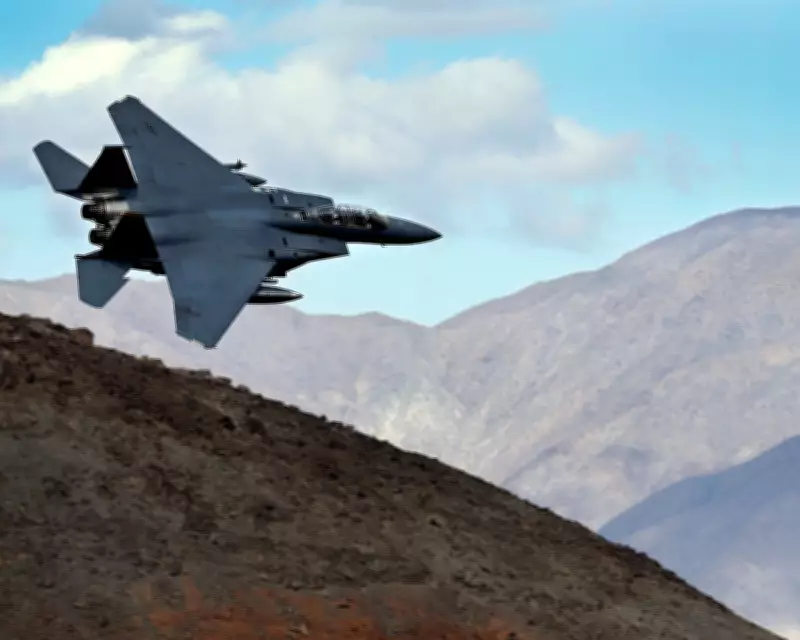
The F-15E Strike Eagle became the first US aircraft to be shot down over Iran during the five-week-long war, with one pilot rescued on Friday. The second crew member remains unaccounted for, marking a significant event as the US military had not lost a jet to enemy fire in more than 20 years—since the 2003 invasion of Iraq, according to retired Air Force Brigadier General Houston Cantwell.
Iranian media released images of wreckage, including a distinctive F-15 tail fin and a used ejector seat, on Friday. State media and businesses in Iran have offered a bounty for the capture of the missing crew member, adding tension to the ongoing search efforts.

Intense Search and Rescue Operations Underway
The US Air Force has launched a massive search and rescue mission, deploying low-flying Pave Hawk helicopters and specialized C-130 Hercules transport aircraft. Military pilots suggest the missing crew member is likely hiding from Iranian forces and may attempt to transmit their location relative to a known secret point, hoping for rescue by US special forces via helicopter.
It remains unclear exactly how the F-15 was downed, though Iran claims to have shot it down. The US military has not publicly commented, while President Donald Trump stated on Friday that the incident would not affect peace negotiations with Iran.
Additional Incidents and Regional Escalation
During the rescue operation, a Pave Hawk helicopter was hit by ground fire but managed to fly away successfully. In a separate incident, an A-10 Warthog attack aircraft crashed near the Strait of Hormuz, with Iran claiming responsibility for shooting it down; its pilot was rescued. These events demonstrate Iran's continued ability to inflict damage on the US Air Force, despite repeated bombings by the US and Israel.
Recent attacks have targeted several facilities, including a petrochemical complex in Khuzestan province. On Saturday morning, a building near Iran's civil Bushehr nuclear power plant was struck, killing a guard. The International Atomic Energy Agency confirmed the incident but reported no increase in radiation levels.
Expanding Conflict and Humanitarian Impact
Israel conducted a wave of strikes on Tehran overnight, targeting air defense, ballistic missile storage, and weapons development facilities. Heavy blasts were heard in the capital around 7:30 AM, described as terrifying by residents. Meanwhile, Iran's foreign minister clarified that Tehran has not walked away from potential peace talks in Pakistan, despite US reports.
President Trump reiterated demands for Iran to reopen the Strait of Hormuz to oil tankers and merchant shipping, threatening escalation if compliance is not met. He has previously threatened to bomb Iran's power plants if peace agreements are not accepted.
Further military activity includes air transports from US bases to the Middle East, sparking speculation about potential ground deployments to seize strategic locations like the Kharg Island oil terminal or islands in the Strait of Hormuz.
Humanitarian Crisis and Regional Damage
The conflict has resulted in significant casualties, with estimates from the International Federation of Red Cross and Red Crescent Societies indicating at least 1,900 deaths and 20,000 injuries in Iran since the war began. In Lebanon, Israeli attacks on Tyre destroyed multiple buildings, including an 11-story structure and a five-story building, with strikes killing over 1,200 people and displacing more than 1.1 million.
Missile attacks continue into Israel, with four people lightly wounded in central cities. Iran has been accused of using banned cluster munitions in these assaults, including one landing near Israel's Kirya military headquarters in Tel Aviv.
The situation remains fluid, with ongoing military operations and diplomatic tensions shaping the trajectory of the Middle East crisis.






