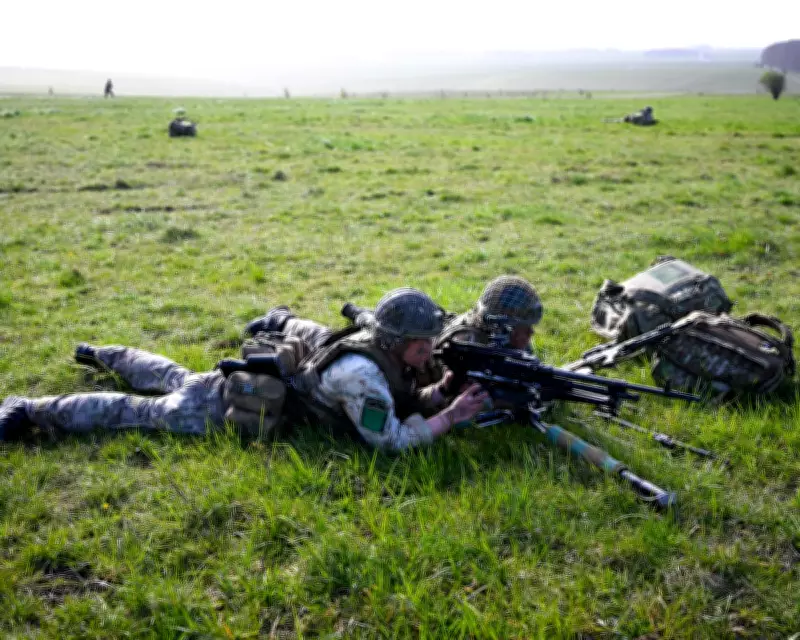
MoD Loses Track of Veterans on Strategic Reserve Recall List, Adviser Warns
A key government adviser has exposed a critical flaw in the United Kingdom's defence preparedness, revealing that the Ministry of Defence has lost track of military veterans intended for recall during national emergencies. This alarming disclosure comes as concerns mount over the country's ability to respond to potential threats.
Strategic Reserve in Disarray
According to George Robertson, a former defence secretary and co-author of last year's strategic defence review, about 95,000 former soldiers and officers form the strategic reserve, but officials have failed to maintain comprehensive records of their contact details. Robertson made these claims at an event in Salisbury, Wiltshire, highlighting a systemic failure that undermines national security.
"What the review talks about is having the strategic reserve, that is, all of the people in this room who've been in the forces who have got a continuing obligation," the Labour peer stated. "But the Ministry of Defence at the present moment doesn't even know where most of them are. So we need to sort of round up those who are available and fit and willing to be able to do it."

Legal Obligations and Historical Neglect
Under existing law, all former officers, both regular and reserve, retain recall liability for life. The MoD maintains contact with veterans in the first six years after leaving full-time service through annual reporting letters. However, it is understood that records for personnel whose service ended more than six years ago have not been similarly maintained, a practice that lapsed after the Cold War.
The strategic defence review, chaired by Robertson alongside General Richard Barrons and Fiona Hill, a former White House adviser on Russia, recommended in June last year that the government urgently address rejuvenating the strategic reserve. Proposed plans included mapping reservists' locations and skillsets and enhancing engagement through a refreshed veterans' communications strategy.
Government Response and Criticisms
In January, the government announced measures as part of the armed forces bill to increase the maximum age for military recall from 55 to 65 and broaden the legal threshold to include 'warlike operations' beyond just an 'actual attack' on the UK. Despite this, Robertson expressed frustration this week over delayed funding and preparedness, accusing British leaders of "corrosive complacency" that puts the country "in peril".
"We are underprepared. We are underinsured. We are under attack. We are not safe ... Britain's national security and safety is in peril," he warned.
Expert Analysis and Broader Context
The Royal United Services Institute has also criticised the scope and pace of changes to the strategic reserve's management. In a February briefing paper, the defence thinktank argued that the government has not explained how recalled personnel would be funded, armed, trained, or integrated into existing forces. This comes as Prime Minister Keir Starmer echoed NATO warnings that Russia could be ready to attack the alliance within three years.
An MoD spokesperson responded, stating: "We recognise the importance of the strategic reserve, which is why we are delivering on the Strategic Defence Review through our armed forces bill. The bill will expand our pool of reserves by increasing the maximum age limit for recall, enable seamless transfer between regular and reserve forces and give the defence secretary power to authorise recall for warlike operations. We are also constantly improving our data and communicating with our strategic reserve community to mobilise talent rapidly when it matters most."
The strategic reserve complements an active reserve of about 32,000 part-time and full-time volunteers, but the loss of contact details for the larger veteran cohort raises serious questions about the UK's defence readiness in an increasingly volatile global landscape.