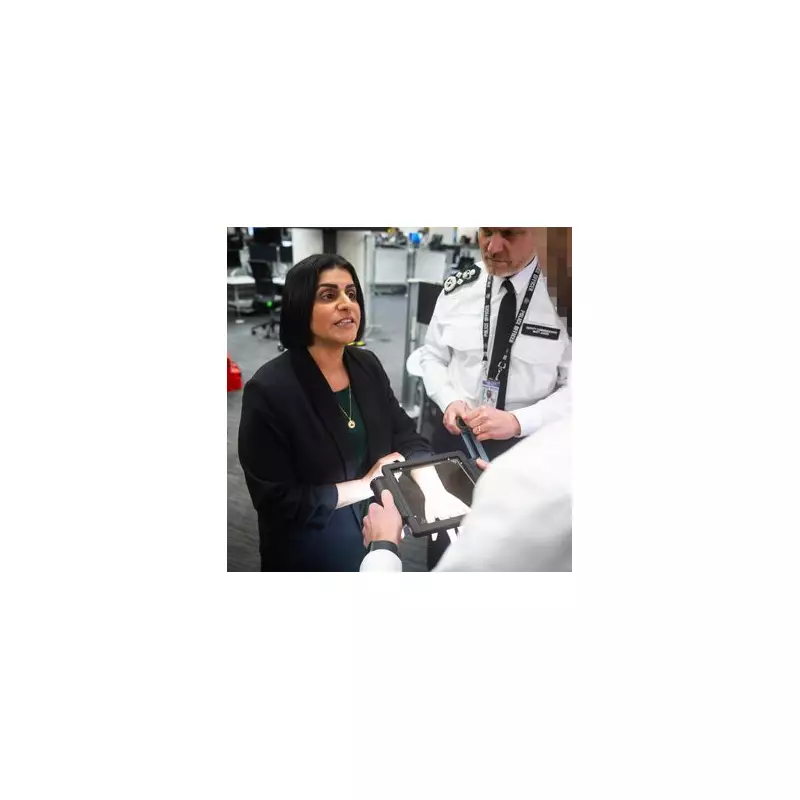
In a landmark announcement set for Monday, January 26, Home Secretary Shabana Mahmood will unveil sweeping policing reforms that include the creation of a new national force, informally dubbed the "British FBI". This National Police Service (NPS) is designed to take over investigations into counter-terrorism, fraud, and organised criminal gangs, aiming to streamline efforts and enhance national security.
A Unified Approach to Serious Crime
The NPS will consolidate the work of existing agencies, including the National Crime Agency (NCA) and regional organised crime units, into a single, cohesive organisation. This move is intended to address complex modern crimes that often transcend local boundaries, such as online child abuse and sophisticated fraud schemes.
Key Mergers and Integrations
Under the reforms, several specialised units will be merged into the new NPS:

- Counter Terror Policing (CTP), currently led by the Metropolitan Police.
- The National Police Air Service, managed by West Yorkshire Police.
- National Roads Policing operations.
This integration is expected to pool resources, intelligence, and technology, creating a more efficient and effective response to national threats.
Relieving Local Police Burdens
One of the primary goals of the NPS is to alleviate the pressure on local police forces. Currently, many forces divert significant time and resources from everyday community issues, like shoplifting and antisocial behaviour, to tackle national-level crimes. By centralising these responsibilities, the NPS aims to allow local officers to focus more on neighbourhood policing and public safety.
Home Secretary Shabana Mahmood emphasised the need for modernisation, stating, "The current policing model was built for a different century. Some local forces lack the skills or resources they need to fight complex modern crime such as fraud, online child abuse or organised criminal gangs." She added that the NPS will deploy world-class talent and state-of-the-art technology to track down dangerous criminals, thereby enabling local forces to concentrate on their communities.
Leadership and Operational Framework
The NPS will be headed by a National Police Commissioner, who will become the most senior police chief in the country. Once operational, the service will set standards and training for policing across England and Wales, and procure new technologies, such as facial recognition systems, on behalf of all police forces. It will also facilitate the sharing of intelligence and resources across borders, operating in stages alongside existing agencies like the NCA and CTP during the transition period.
Support and Concerns from Stakeholders
The reforms have garnered support from key figures in law enforcement. A joint statement from the Metropolitan Police, CTP, and the National Police Chiefs' Council (NPCC) welcomed the move, noting, "Modern crime requires a modern policing response. We support and have been calling for this ambitious step to bring together some of the most capable policing teams in the country into a single National Police Service." However, they cautioned that maintaining strong connections with local policing and communities is essential for success.
Former head of Counter Terrorism Policing, Neil Basu, backed the plans, describing the new system as "far more capable as one national security system dealing more effectively with major crime, organised crime and terrorism in all its forms." Similarly, Graeme Biggar, director general of the NCA, supported the proposals, highlighting the need for a single, stronger national law enforcement body to tackle evolving threats.
Potential Challenges and Opposition
Despite the support, some concerns have been raised. The Association of Police and Crime Commissioners (APCC) warned that creating regional forces could be expensive, time-consuming, and risk distancing police from their communities. Additionally, the City of London Police expressed confidence in retaining its national role in fraud investigations, underscoring its critical function in protecting the UK's economic security.

Broader Context of Policing Reforms
These changes are part of a broader White Paper that may also reduce the number of police forces in England and Wales from the current 43. Home Secretary Mahmood has previously criticised this structure as "irrational," with figures like Met Commissioner Sir Mark Rowley advocating for fewer, larger forces. Concurrently, ministers have announced plans to scrap police and crime commissioners by 2028, transferring their responsibilities to mayors and council leaders to save costs and fund neighbourhood policing.
As the reforms unfold, the focus will be on balancing national efficiency with local engagement, ensuring that the new National Police Service strengthens, rather than severs, the bond between policing and the public.