Nuclear War Fears Reach Fever Pitch Amid Escalating Global Conflicts
Concerns about nuclear war are intensifying to alarming levels, marking another grim sign of our times. News stories increasingly weigh nuclear risks as experts muse on the possibility of global warfare, with intimations of World War III—the big one, nuclear Armageddon—becoming more urgent since Donald Trump's second election.
Escalating Threats and Expert Warnings
In December 2024, Newsweek published a map of the "safest US states to live during nuclear war," but the article offered little reassurance. The senior policy director of the Center for Arms Control and Non-Proliferation stated that nowhere is truly safe from consequences like contamination of food and water supplies and prolonged radiation exposure. Another expert noted that even a small nuclear war could kill at least a billion people.
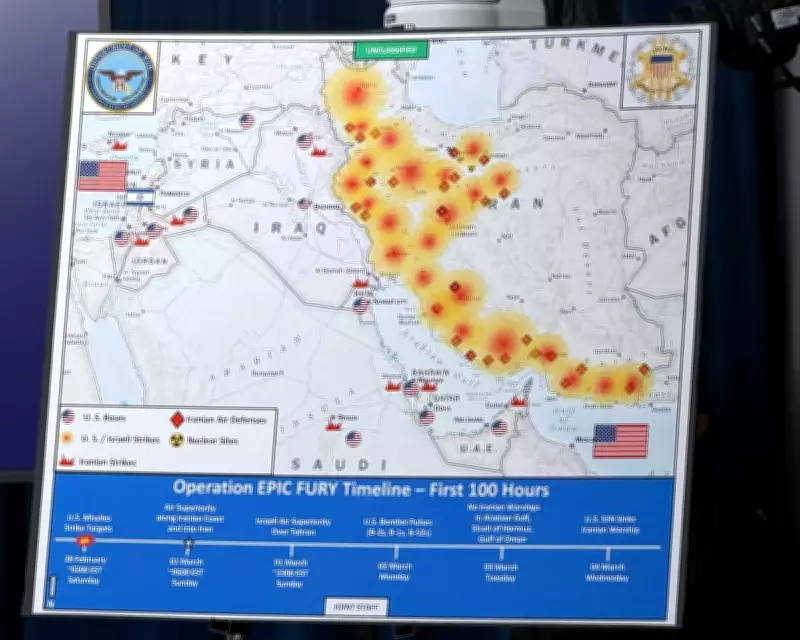
Since February 28, when the US and Israel began their bombardment of Iran, chatter about a world war has spiked, with everyone from anonymous social media users to Harvard policy wonks weighing in. Columbia University economist Jeffrey Sachs, speaking with Norwegian political scientist Glenn Diesen, ticked off many current or potential theaters of war, from Ukraine to Cuba, concluding, "We are probably in the early days of World War III."

Global Military Buildups and Rising Tensions
China continues to raise its defense spending to catch up with the US, while Europe has turned increasingly hawkish on nukes in response to Russia's aggression against Ukraine and Trump's ambitions for Greenland. Last week, France and Britain sent defensive warships to the eastern Mediterranean, with Macron announcing plans for ten more. Australia deployed a reconnaissance aircraft to protect the Gulf's airspace, and Axios named nine more countries, including Russia and North Korea, that might soon get involved.
ABC reported that Iran might be activating sleeper cells worldwide, with a terrorist act within US borders potentially legitimizing a widening war. Trump's militarization of immigration enforcement at home and the inauguration of the Shield of the Americas could turn the Latin American front of the global war on drugs into a literal combat zone. At a Florida summit, Trump offered missiles to Latin American attendees, boasting about their accuracy in targeting cartel members.
Trump's Nuclear Policies and Their Consequences
Trump has had an on-again-off-again relationship with nuclear weapons. In 2017, he moved nuclear aircraft carriers into Korean waters during tensions with North Korea, escalating to threats of "fire and fury." The following year, he pulled the US out of the Iran nuclear deal, promising a better one but failing to deliver, arguably leading to the current crisis. A year ago, he mused on restarting arms control negotiations with Russia and China, acknowledging the overkill capacity of existing arsenals. However, last month, he allowed the New Start treaty with Russia to expire, with UN secretary-general António Guterres calling it a grave moment and warning of the highest nuclear war risk in decades.
Public Discourse Shifts to Acceptance and Preparation
The prospect of World War III is so unimaginable yet real that public discourse seems to have leapt from denial to acceptance. While the Washington Post advises on war-proofing budgets, other outlets publish survival guides for nuclear winter as if it were a snowstorm. Articles answer FAQs about drafts and target lists, with maps like Under the Nuclear Cloud simulating fallout from hypothetical attacks. The takeaway: while Washington is an obvious target, areas like Montana, Wyoming, or North Dakota near silos are also dangerous.
Disaster Capitalism and Dark Humor
Amid the crisis, disaster capitalism thrives. A Texan manufacturer of nuke-resistant bunkers has seen business boom, catering to clients, including Christians awaiting the End Times. Bunkers range from multi-million-dollar compounds to budget-friendly boltholes, featuring amenities like cinemas and swimming pools. Online prediction markets like Polymarket attracted over $800,000 in wagers on nuclear detonation odds before public outcry forced their removal.

Dark times call for dark humor, but there is nothing funny about the world's most powerful person making existential decisions while appearing unperturbed, even titillated, by death and destruction. Denial of the worst is unacceptable, but so is acceptance. The last thing we need to feel about Armageddon is closure.