

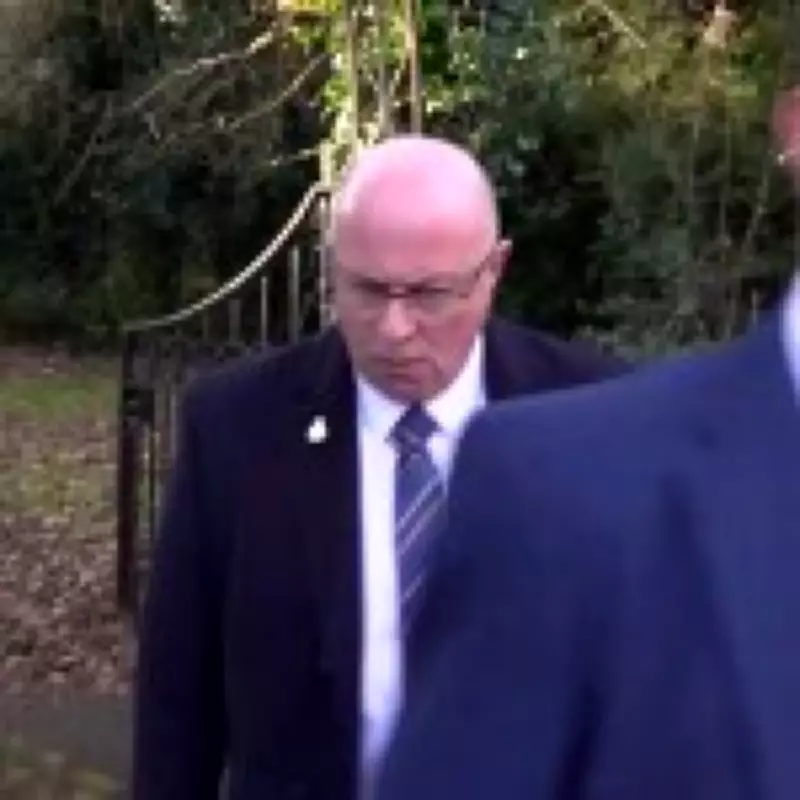
Police Officer Sentenced to Prison After Fatal Collision During Emergency Call
In a tragic incident that has sparked widespread debate, a police officer has been jailed for causing the death of a pensioner in a crash while responding to an emergency call about a choking baby. The case unfolded at Teesside Crown Court, where PC Mark Roberts was convicted and sentenced, despite heartfelt appeals from the victim's family for leniency.
Details of the Fatal Crash
The collision occurred in July 2022 on a 30mph road near the MetroCentre in Gateshead. PC Roberts, 57, from Darlington, was driving a marked police car with activated blue lights and sirens when he went through a red light, striking a motorcycle carrying Ronald and Muriel Pinkney. According to the Independent Office for Police Conduct (IOPC), Roberts was traveling at 43mph as he approached the junction and was still moving at approximately 25mph at the moment of impact.
Mrs. Pinkney suffered fatal head and neck injuries, while Mr. Pinkney sustained a brain bleed and multiple fractures. Roberts was found guilty of causing death by dangerous driving and causing serious injury by dangerous driving, leading to a prison sentence of 27 months.

Family's Emotional Plea and Impact
During the sentencing hearing, a victim impact statement from the couple's daughter, Dawn Hunter-Pinkney, was read aloud. She expressed that the family does not blame the officer for the accident, stating, 'We don't want him to go to prison for doing his job.' She described the incident as a 'very tragic accident' and emphasized that imprisonment would not bring her mother back.
Ms. Hunter-Pinkney highlighted the devastating effect on her father, noting that he has become reclusive and inactive since his wife's death. The family acknowledged understanding the officer's motives, given the urgency of the choking baby call, but the legal proceedings proceeded regardless.
Legal and Mitigating Factors
In mitigation, the court heard that Roberts was 'heartbroken' by the accident and had a distinguished career in public service, including military deployments in conflict zones before joining the police. However, Judge Francis Laird KC emphasized that police exemptions for speed limits and red lights must be exercised with caution. He stated that Roberts' speed was excessive and that he failed to notice the Pinkneys, who were visible at the junction, due to his focus on reaching the emergency.
The prosecution argued that Roberts should have approached the junction more slowly, citing police roadcraft guidance that prohibits risk-taking even in noble causes. Roberts was also banned from driving for over five years and must pass an extended retest to regain his license.
Officer's Account and Aftermath
In a prepared statement, Roberts described the moments before the crash, noting that he saw a white van make an emergency stop but did not see the motorcycle. He recalled a bang, airbag deployment, and briefly losing consciousness before seeing the injured couple on the ground. Roberts maintained that the incident was a 'tragic accident,' and he was treated at the scene and hospitalized afterward.
Assistant Chief Constable Andy Hill of Northumbria Police expressed condolences to the Pinkney family, acknowledging the rarity of such tragedies in emergency responses. He stated that officers are highly trained to ensure safety, but in this case, the driving standard fell short, leading to devastating outcomes.
Broader Implications and Community Response
This case raises important questions about the balance between emergency response protocols and public safety. While the family's plea for mercy highlights the complexities of such situations, the judicial decision underscores the legal accountability for dangerous driving, regardless of intent. The incident serves as a somber reminder of the risks involved in high-speed police pursuits and the profound impact on all parties involved.






