

The Enduring Myth of Aerial Dominance in Modern Warfare
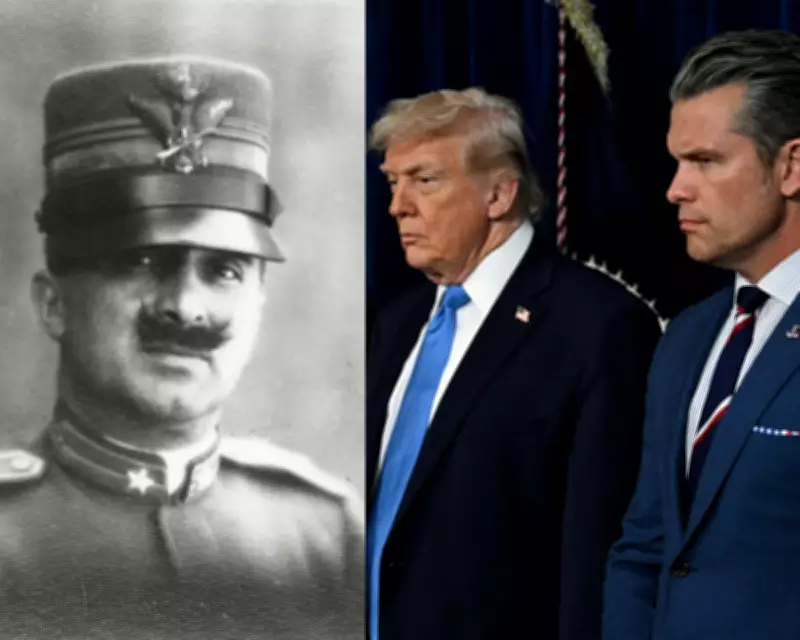
To understand the roots of Donald Trump's military strategy against Iran and the combative rhetoric of his defense secretary, Pete Hegseth, one must look back over a century. In 1921, Italian General Giulio Douhet published The Command of the Air, proposing a radical shift in warfare. He argued that future victories would not come from the grueling trench combat of World War I but from large-scale aerial bombardments targeting civilians, infrastructure, and logistics.
Douhet's Legacy and Its Influence on US Policy
Douhet's theories, which emphasized demoralizing civilian populations through airpower, inspired figures like Hitler and later American strategists such as General Curtis LeMay. LeMay oversaw the firebombing of Japanese cities and the nuclear attacks on Hiroshima and Nagasaki. Today, echoes of Douhet's thinking are woven into Hegseth's briefings on Epic Fury, the air war Trump is waging against Iran.
Despite Hegseth's claims of a new American strategy and his dismissal of past leaders as "foolish," his promise of "the most lethal and precise air power campaign in history" appears less innovative and more a recycled version of old doctrines. From Desert Storm in 1991 to the 2003 invasion of Iraq, military leaders have repeatedly believed that advancements in technology would revolutionize warfare, yet history tells a different story.

The Pattern of Exaggerated Success and Unfulfilled Promises
Douhet was obsessed with delivering massive bomb volumes quickly, a theme resonant in Hegseth's briefings. "Quantity has a quality all its own," Hegseth said, boasting of increasing strike numbers. Similarly, Douhet focused on bombing civilian infrastructure to incite revolts, a concept Hegseth touches on by urging the Iranian people to seize "this incredible opportunity."
However, critics argue that such strategies often backfire. Winslow Wheeler, a former Government Accountability Office official, notes that bombing can build resistance and solidarity among populations, as seen in World War II when German attacks united the British. Human nature remains unchanged despite technological sophistication.
Historical Failures of Air Superiority Claims
The delusion of omniscient control from the skies was evident in Vietnam, where attempts to shut down the Ho Chi Minh trail with high-tech sensors failed due to low-tech countermeasures like animal urine. In Desert Storm, early enthusiasm for precision bombing was tempered by a GAO study revealing exaggerated success rates. For instance, the F-117A stealth aircraft's claimed 80% accuracy was actually between 41% and 60%.
In Kosovo, NATO's bombing campaign damaged just 13 of 300 Serb tanks, and the 2003 "shock and awe" campaign under Donald Rumsfeld failed to topple Saddam Hussein without ground troops. These examples highlight that claims of air domination have never solely won a war.
The Current Conflict and AI Boasts
Hegseth continues this tradition by boasting about US weaponry and AI integration in the Iran conflict. "We've got a lot of autonomous systems," he said, "incorporated with smart AI aspects to them." Yet, this raises the question: has the US finally solved the long-standing problem of air superiority, or is it succumbing to the same century-old delusion of easy victory?
As the US engages in another violent muddle, the lessons from Douhet's era remind us that technology alone cannot guarantee triumph. The allure of quick wins from the air may have seduced the nation into conflicts where human unpredictability and resilience prevail, challenging the very foundation of modern military strategy.






