

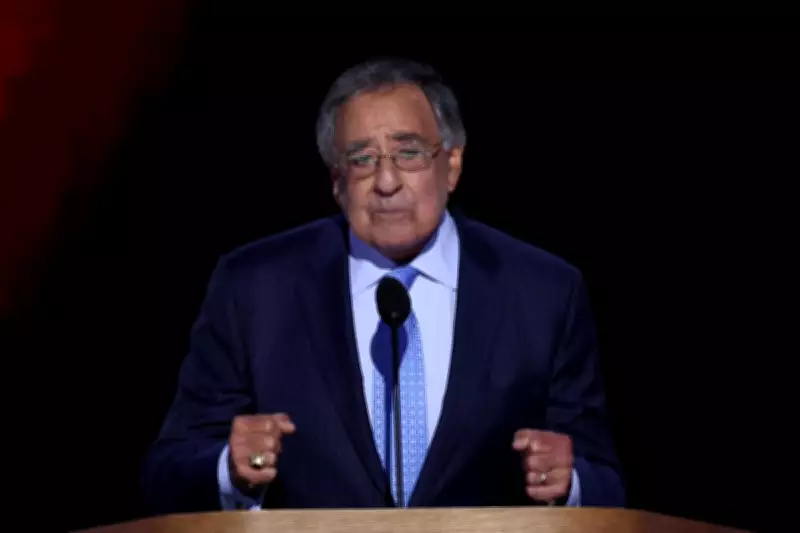
Leon Panetta, the former US defence secretary and CIA director, has issued a stark warning about the escalating crisis in Iran, placing the blame squarely on President Donald Trump. In an exclusive interview, Panetta described Trump as "naive" and asserted that the president's actions have led to a dire situation with no clear exit strategy.
Trump's War in Iran: A Self-Inflicted Crisis
Panetta, who served under Presidents Bill Clinton and Barack Obama, highlighted that national security officials have long been aware of Iran's capability to block the Strait of Hormuz, a critical chokepoint for global oil trade. He expressed disbelief that the Trump administration failed to anticipate this outcome, noting that the closure has thrown energy markets into chaos and driven fuel prices to unprecedented highs.
"This is not rocket science," Panetta stated. "If you're going to conduct a war with Iran, one of the great vulnerabilities is the Strait of Hormuz. It could create an immense oil crisis. For some reason, they didn't consider that could be a consequence."

Strategic Missteps and Global Fallout
The conflict, which began with a surprise Israeli strike on February 28 that killed Iran's supreme leader, has resulted in significant casualties. According to Panetta, the war has backfired, replacing an aging leader with a younger, more hardline successor and strengthening the Iranian regime. He criticized Trump's handling of the situation, pointing to mixed signals and a failure to secure international support.
Panetta emphasized that Trump's alienation of NATO allies has left the US isolated. "He takes a callous approach to alliances," he said. "Now he suddenly finds himself in a place where he's got to turn to allies, all of whom he certainly hasn't treated well, to try to help bail him out."
The Strait of Hormuz: A Critical Flashpoint
With the Strait of Hormuz effectively closed, Panetta warned that Trump faces a grim choice: escalate the war to reopen the waterway or admit failure. He advised that the US must use military force to neutralize Iranian defenses and escort oil tankers, despite the risk of further casualties.
"There's no question there's going to be lives lost," Panetta acknowledged. "But I don't see the alternative. He's got to do it. Otherwise, he will clearly have failed to find a solution."
Broader Implications for US Leadership
Panetta also condemned the Trump administration's use of tasteless propaganda, such as meme-style videos and fundraising emails featuring images of fallen soldiers. He argued that these actions project weakness rather than strength, undermining global confidence in US leadership.
"He's basically sending a message of weakness, not a message of strength to the world," Panetta said. "That, unfortunately, is what the world sees right now."
Reflecting on Trump's refusal to apologize for a missile strike that killed children in Iran, Panetta lamented the damage to America's international image. "Any other president would have recognized the mistake and apologized," he remarked. "It sends an image of America that fits the ugly American image."
Conclusion: A Warning for the Future
As the crisis deepens, Panetta's critique serves as a sobering assessment of Trump's foreign policy. With oil prices soaring and the potential for a global recession looming, he stressed that the president must act decisively to avert further disaster.
"The chickens are coming home to roost," Panetta concluded, underscoring the gravity of the situation and the urgent need for a coherent strategy.






