

UK Counter-Terror Chief Warns: Prevent Scheme Overwhelmed by Rising Referrals
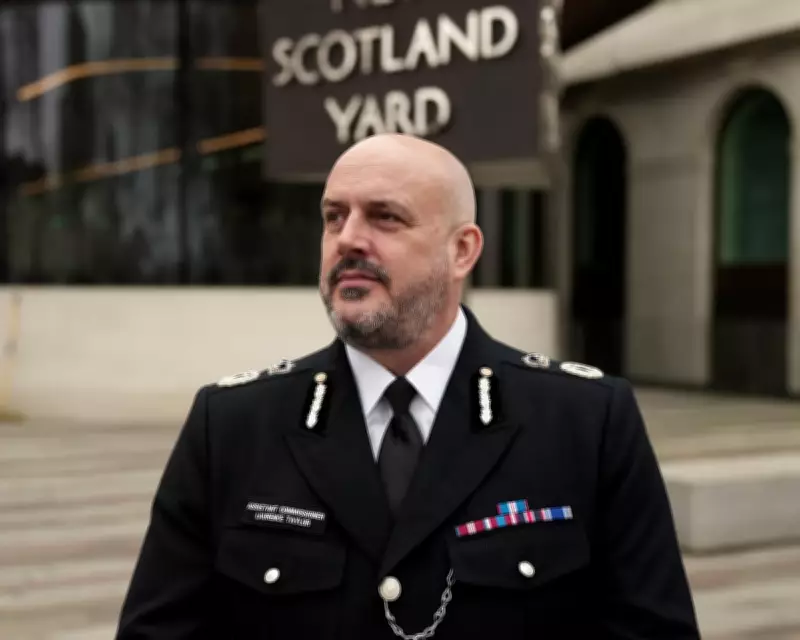
Britain's head of counter-terrorism has issued a stark warning that the government's flagship Prevent program is being "overwhelmed" by a dramatic surge in referrals, potentially causing the system to miss genuine threats. Assistant Commissioner Laurence Taylor revealed in an exclusive interview with the Guardian that more than 10,000 cases are expected to be referred to Prevent this year alone.
Surge in Referrals Strains System
The projected 10,000 referrals represent an increase of more than one-third compared to just two years ago. Taylor emphasized that this volume increase directly impacts assessment times, creating significant operational challenges for counter-terrorism professionals. "When you increase the volume, then the time to do the assessments increases," Taylor explained, highlighting how this could compromise the scheme's effectiveness.
Prevent was specifically designed to identify individuals vulnerable to radicalization before they become terrorists. However, Taylor noted that the system now faces a critical dilemma: "The more time spent assessing people who were not vulnerable in this way increases the risk of us not spotting somebody that is ... because the system is overwhelmed with referrals."

Non-Ideological Violence Cases Dominate
A particularly concerning trend has emerged in the nature of referrals. More than half of those referred to Prevent last year were assessed as having no fixed ideology. Taylor described a disturbing pattern of individuals consuming violent content without specific ideological motivation.
"We see people with material from Isis and neo-Nazis. We see people watching beheadings and school shootings. We see the gamification of that," Taylor stated. "So it's people who are just absorbing horrible stuff that is creating concern for the people who refer them, but they're not motivated by an ideology specifically."
The counter-terrorism chief pointed to a fundamental mismatch between Prevent's original purpose and current realities. "Prevent is set up to deal with an ideology. So when you are driven by an ideology, then Prevent is absolutely the right forum for referral for you to be dealt with. If there is no ideology and there are mental health issues, Prevent is not the right place."
Southport Attack Exposes Systemic Gaps
The limitations of the current system became tragically apparent following the 2024 Southport knife attack. The Guardian previously revealed that the teenager who killed three schoolgirls at a dance class had been referred to Prevent three times but was dismissed because his fascination with violence was assessed as not being driven by jihadist or extreme right-wing ideologies.
Reports to Prevent began increasing significantly after the Southport tragedy. Taylor acknowledged that part of the referral surge stems from a lack of alternative reporting mechanisms. "The challenge we have in the Prevent system is there is no triage that sits above it, so Prevent currently is the only bucket into which all of these referrals can sit."
An independent review into the Southport attack, expected later this month, is anticipated to be critical of how Prevent, health services, and local authorities handled the killer before the atrocity. Concerns had been repeatedly raised about Axel Rudakubana, who was subsequently found guilty of the murders.
Calls for New Reporting Framework
Taylor endorsed recommendations from a review by David Anderson conducted after Southport, which suggested the government should consider establishing a new scheme specifically designed to identify individuals fascinated with violence and direct them to appropriate support services.
The counter-terrorism chief emphasized the need for a more nuanced approach: "If there is no ideology and there are mental health issues, Prevent is not the right place to challenge and deal and provide support to an individual with those challenges."
Broader Security Landscape Intensifies
Taylor, who became head of counter-terrorism last year, also addressed wider security concerns. Threats from hostile states such as Iran and Russia increased during the first three months of 2026, following a staggering 500% surge in the year to December 2025.

"They are looking for more sophisticated attacks," Taylor warned about both hostile states and terrorist groups like Islamic State. Regarding the Iran conflict, he noted: "With any global conflict, any sort of geopolitical instability, it's sort of invariably the case that we see an impact on our casework."
While the national threat level hasn't increased, Taylor acknowledged: "I think it's fair to say the risk has probably increased in terms of activity we might see."
Political Polarization and Security Implications
When questioned about potential radicalizing effects of the Trump presidency, Taylor carefully avoided direct political commentary but acknowledged broader societal trends. "We've seen for a number of years an increasing polarisation, without doubt," he observed.
"You only need to look at the level of protest in London and the diversity of protest in London to see how many different views there are," Taylor continued. "Whether you could directly attribute that to the US and Trump, I wouldn't like to say. I think there are many, many things at play here, of which that is but one."
The revelations about Prevent's challenges come at a critical juncture for UK security services, balancing increased referral volumes, evolving threat patterns, and the need for more sophisticated approaches to violence prevention beyond traditional counter-terrorism frameworks.





