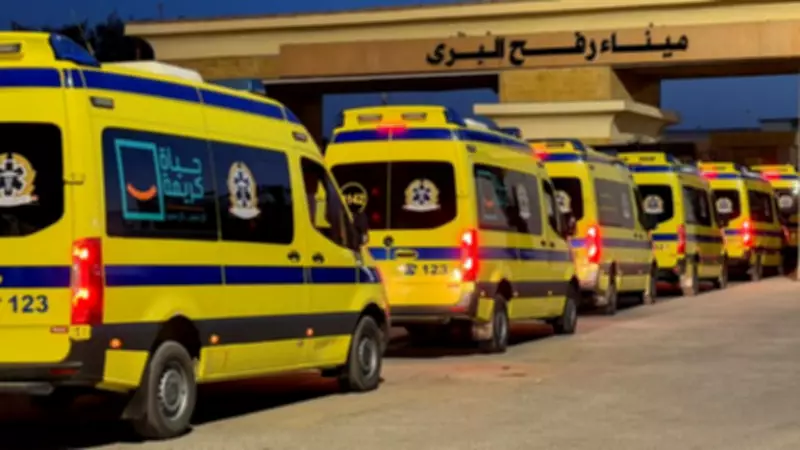
The highly anticipated reopening of the Rafah border crossing, a critical gateway between Gaza and Egypt, has unfolded with significant complexity and delay, starkly highlighting the ongoing humanitarian challenges in the region.
A Slow and Limited Start
Despite announcements from Israeli authorities that the crossing would open for civilians in the morning, the first actual movements did not occur until sunset. This initial phase resulted in just a handful of individuals successfully crossing from Gaza into Egypt.
This slow start underscores the immense logistical and security hurdles involved. The crossing, while geographically situated between Gaza and Egypt, remains under stringent Israeli oversight for security screening and monitoring of all traffic in both directions.

Overwhelming Medical Need Meets Minimal Evacuation
The stark reality of the situation is most evident in the medical evacuation efforts. Out of the many thousands of Gazans requiring urgent medical attention that is unavailable within the Strip, only five patients managed to cross on the first day to receive treatment in Egypt.
Medical sources within Gaza report that the vast majority of applications for exit permits have been refused so far. This leaves a dire backlog of nearly 20,000 patients, many in critical condition, awaiting a chance for life-saving care.
Glimmers of Hope Amidst Desperation
Among those evacuated was Ahmed, a young man living with a bullet lodged in his head. His father explained that the World Health Organisation had endorsed his desperate need for surgery, which is impossible to perform in Gaza's devastated healthcare system. Even in a modern facility, his chances of success are estimated at a mere 10%, yet this represents a crucial sliver of hope.
Sam Rose, director of affairs in Gaza for UNRWA, the UN agency supporting Palestinian refugees, emphasised the scale of the challenge. "We've got a backlog of almost 20,000 patients that need to get out. A lot of these people are critically ill and they don't have time on their hands," he stated.
The Path Forward and Political Complexities
The current plan aims to evacuate 50 patients per day, a figure that aid workers acknowledge is woefully insufficient against the backdrop of need. "50 people is one coach-load," noted Rose, expressing hope that numbers could increase if the initial, fragile operations prove successful.
However, the ultimate flow of people across the border is subject to Israeli discretion. Israel can easily adjust the rate, influenced by a complex array of factors including its own security assessments, domestic political pressures—with a general election looming—and international diplomacy, notably from the US administration.
The reopening was a component of the US-led Gaza peace deal, and its limited operation is viewed by many as long overdue. Aid officials, while acknowledging the fragility of the moment, are striving to maintain optimism. "The stakes are too high," Rose asserted, warning that a return to conflict would likely be worse than previous phases.
The coming days and weeks will be a critical test of whether this vital humanitarian corridor can be scaled up to meet the profound medical needs of Gaza's population, or if it remains a tightly controlled trickle amidst a vast sea of suffering.