Landmark Rohingya Genocide Case: Myanmar Faces Historic ICJ Hearings
For the first time, the harrowing accounts of the Rohingya people are being heard directly in an international court, as Myanmar stands accused of committing genocide in a landmark case at the International Court of Justice (ICJ). The hearings, which began last week in The Hague, are expected to set crucial precedents for how genocide is defined and proven under international law.
Blood-Curdling Accounts of Violence
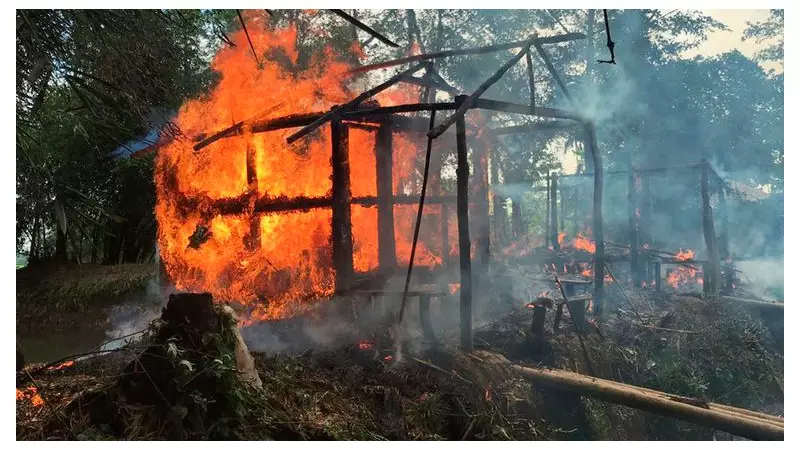
Dr Ronan Lee, an academic and author, has described hearing "blood-curdling accounts" from Rohingya community members detailing killings and sexual violence allegedly perpetrated by Myanmar's security forces. Victims reported that hundreds of villages were burned to the ground, with Myanmar's military treating Rohingya males "as fair game for extermination". They also alleged a "monstrous campaign of sexual violence" against women and girls from this predominantly Muslim minority group.
More than 700,000 Rohingya refugees fled Myanmar into neighbouring Bangladesh during the 2017 military crackdown. Myanmar has denied allegations of genocide, claiming the campaign was a response to an attack by a Rohingya insurgent group.

The Gambia's Role and Legal Arguments
The case was first filed by the Gambia, which argues that Myanmar's military engaged in a "clearance operation" violating the 1948 Genocide Convention. Gambian justice minister Dawda Jallow stated his country acted out of "a sense of responsibility" based on its own experiences with military rule. At the opening, he told the court the Rohingya have "endured decades of appalling persecution" and were "targeted for destruction".
Myanmar's Defence and Broader Context
Myanmar, under military control since 2021, opened its defence with representative Ko Ko Hlaing asserting the country was "not obliged to remain idle and allow terrorists free rein" in northern Rakhine State. He emphasised the case should be decided on "proven facts, not unsubstantiated allegations".
The Rohingya, with their own language and culture, say they are descendants of Muslim traders in the region for generations. However, Myanmar, a predominantly Buddhist country, has long considered them illegal immigrants from Bangladesh and denied them citizenship. Following the 2017 crackdown, over a million Rohingya now reside in overcrowded camps in Bangladesh. A UN fact-finding mission concluded the offensive included "genocidal acts", which Myanmar rejected as a legitimate counter-terrorism campaign.
Facebook's Alleged Role in Hate Speech
The ICJ hearings are groundbreaking in exploring Facebook's use as a primary medium for distributing hate speech. Dr Lee notes that Facebook, virtually unregulated in Myanmar at the time, allowed anti-Rohingya posts to proliferate, providing "political cover and public support" for the military's violence without significant backlash.
Potential Outcomes and Global Implications
Dr Lee believes the Gambia has a strong chance of success, citing evidence that Myanmar's military targeted Rohingya civilians due to their ethnicity. This trial is the first full genocide case the ICJ has taken up in over a decade, and its outcome could influence future allegations, such as South Africa's case against Israel in Gaza. A final ruling is expected by late 2026.
The case may also impact ongoing investigations at the International Criminal Court, where in 2024, the chief prosecutor sought an arrest warrant for Myanmar's Senior General Min Aung Hlaing for crimes against the Rohingya. Initially, Myanmar was represented by Nobel Peace Prize winner Aung San Suu Kyi, who denied genocide claims in 2019 but is now imprisoned after a military takeover.