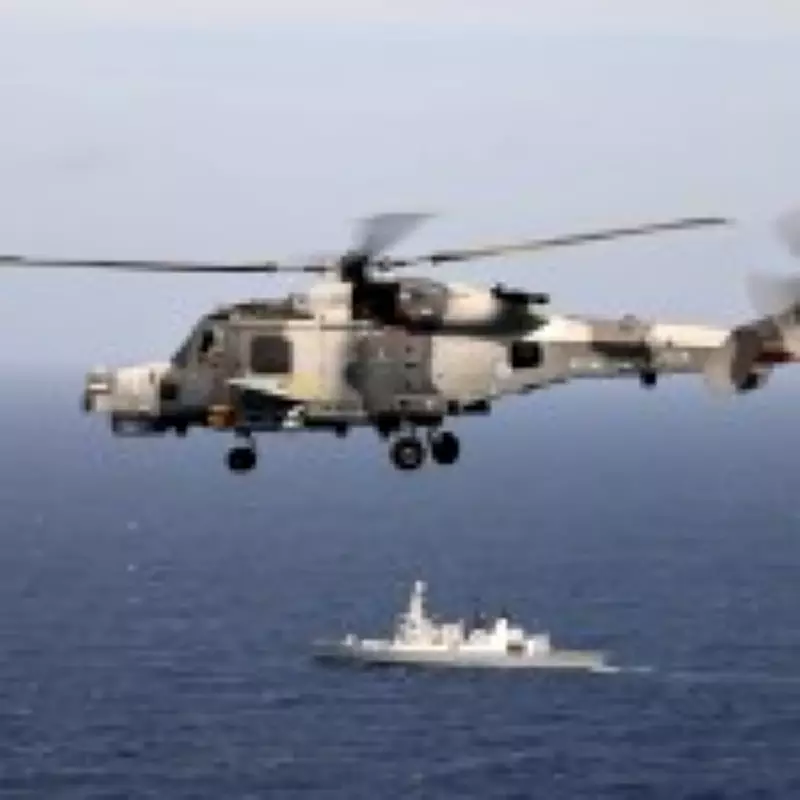
Royal Navy Helicopter Forces Russian Vessel from Sensitive UK Waters
A Russian cargo ship that anchored dangerously close to critical undersea telecommunications infrastructure was chased away by the Royal Navy this week, raising significant security concerns. The incident occurred near the Somerset coastal town of Minehead, where the vessel Sinegorsk had positioned itself less than two miles from shore.
Proximity to Vital Infrastructure Raises Alarm
The Sinegorsk had dropped anchor just two miles from Minehead, placing it worryingly close to submarine cables that form essential communication links between the United Kingdom and multiple nations including the United States, Canada, Spain, and Portugal. These cables represent crucial infrastructure for international data transmission and telecommunications.
Russian authorities claimed the vessel was conducting essential safety repairs, but this explanation failed to satisfy British security officials. In response, the Royal Navy dispatched an RN Wildcat attack helicopter to intercept the ship. The military aircraft successfully chased the Sinegorsk back into open international waters, ending its presence in the sensitive area.

Pattern of Suspicious Russian Maritime Activity
The Sinegorsk had departed from a major Russian port earlier in the week before anchoring near Minehead on Tuesday. It remained in position until Wednesday afternoon when the Royal Navy intervention occurred. While this particular vessel isn't believed to belong to Russia's notorious shadow fleet, its actions have caused considerable alarm among security experts.
This incident represents the latest in a series of concerning Russian maritime incursions into UK waters in recent months. Earlier in January, a sanctioned Russian shadow tanker sailed through the English Channel while operating under a false identity. The vessel Arcusat, sanctioned by the United States in 2024, was flying a Cameroonian flag and had previously been named Tia and Tavian.
Government and Security Experts Express Concern
The close encounter has prompted government ministers to speak publicly about the threats facing the United Kingdom from Vladimir Putin's Russia. Shadow Security Minister Alicia Kearns commented: The movements of this Russian ship are deeply suspicious.
Rachel Ellehuus, Director-General of the Royal United Services Institute, had previously warned that the UK is only beginning to comprehend these state threats. At a RUSI event discussing foreign policy challenges, she stated: Russia's shadow fleet will come, the disinformation will come, the drones will fly again, the irresponsible air incursions will happen.
Ellehuus emphasized the need for resilience, both in public attitude and in creating redundancy across critical systems including communications infrastructure and shipping lanes.
The Growing Shadow Fleet Challenge
Russia has faced longstanding accusations of interfering in European affairs, even before its full-scale invasion of Ukraine. The shadow fleet phenomenon represents a particularly challenging aspect of this interference. Hundreds of unregulated, potentially unsafe tankers carrying Russian oil to countries including China and India regularly transit European waters.
These vessels employ various tactics to circumvent international sanctions:
- Intentionally disabling identification systems
- Tampering with location tracking equipment
- Falsifying registry documentation
By early this year, analysts estimated that approximately one-sixth of the world's active tanker fleet belonged to Russian operators using obscure flags and shell companies, totaling more than 900 vessels. The European Union has been developing regulations to address this challenge, designating 444 shadow fleet vessels by July.
The Royal Navy's successful interception near Minehead highlights ongoing concerns about maritime security and the protection of critical national infrastructure against potential state-sponsored threats.