

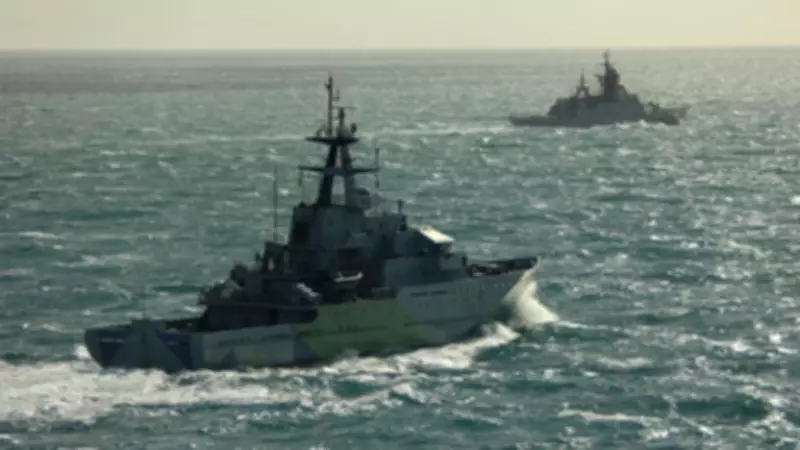
The Royal Navy has conducted a significant maritime surveillance operation, closely monitoring a Russian warship and a sanctioned oil tanker as they navigated through the English Channel. This incident underscores ongoing tensions and the strategic importance of UK waters in global security dynamics.
Intensive 48-Hour Surveillance Operation
HMS Mersey, a patrol ship based in Portsmouth, along with a Wildcat helicopter from Yeovilton, was deployed to track the Russian Steregushchiy-class frigate RFN Soobrazitelny and the tanker MV Anatoly Kolodkin. The operation lasted for 48 hours, during which the Royal Navy utilized advanced radars and sensors to gather critical intelligence on the vessels' movements.
A Royal Navy spokesperson emphasized that this mission was coordinated with NATO allies, highlighting the collaborative effort to enhance maritime security. The spokesperson stated, "Patrol ship Mersey and the Yeovilton-based Wildcat kept close watch, utilizing powerful radars and sensors to gather valuable intelligence, as the two Russian vessels sailed westward through the English Channel."

Separation and Continued Tracking
At the western end of the Channel, the two Russian ships diverged in their routes. The Royal Navy continued to monitor the frigate Soobrazitelny as it turned eastward back through the Channel, while the tanker Anatoly Kolodkin proceeded into the Atlantic Ocean. The exact timing of this incident has not been disclosed by authorities, adding an element of operational secrecy.
Commanders Highlight Readiness and Coordination
Lieutenant Commander Dan Wardle, commanding officer of HMS Mersey, praised the operation as a demonstration of the ship's preparedness. He remarked, "This operation provides a clear example of Mersey's readiness and operational capability in monitoring Russian vessel movements through our waters. Our coordination with allied forces further amplifies our situational awareness and response capacity, ensuring we are able to safeguard the integrity of our maritime environment."
Fleet Commander Vice Admiral Steve Moorhouse reinforced this sentiment, noting, "In an increasingly contested and uncertain world, the work of HMS Mersey and 815 Naval Air Squadron is another example of the Royal Navy's enduring commitment to protecting UK home waters."
Recent Context of Similar Incidents
This event follows a similar occurrence just two weeks prior, where the Royal Navy shadowed two sanctioned Russian cargo ships and their escorting warships from the Mediterranean to the North Sea. In that instance, HMS Tyne, also based in Portsmouth, and a Wildcat helicopter from 815 Naval Air Squadron monitored the Russian Navy Ropucha-class landing ship Aleksandr Otrakovsky and merchant vessel Sparta IV.
Forty-eight hours later, HMS Tyne and the Wildcat were again deployed to track another Russian Ropucha-class warship, Aleksandr Shabalin, and cargo vessel MV Sabetta as they sailed westward through the English Channel. These repeated incidents highlight a pattern of heightened naval activity and surveillance in response to Russian maritime movements.
Implications for UK Maritime Security
The consistent monitoring of Russian vessels by the Royal Navy reflects broader geopolitical tensions and the UK's proactive stance in defending its territorial waters. Such operations are crucial for maintaining situational awareness and deterring potential threats in an era of global uncertainty.
As naval activities in the English Channel and surrounding areas continue to evolve, the Royal Navy's role in coordinating with NATO and other allies remains pivotal. These efforts ensure that UK waters are protected, reinforcing national security and stability in the region.






