Russia's 'Cynical' Assault on Ukrainian Cities Coincides with UAE Peace Negotiations
In what Ukrainian officials have described as a "barbaric" and "cynical" assault, Russia launched hundreds of missiles and drones against Ukraine's two largest cities during crucial peace negotiations in the United Arab Emirates. The attacks on Kyiv and Kharkiv occurred early Saturday morning as diplomatic talks continued in Abu Dhabi, creating a stark contrast between diplomatic efforts and military aggression.
Power Outages and Casualties Amid Freezing Temperatures
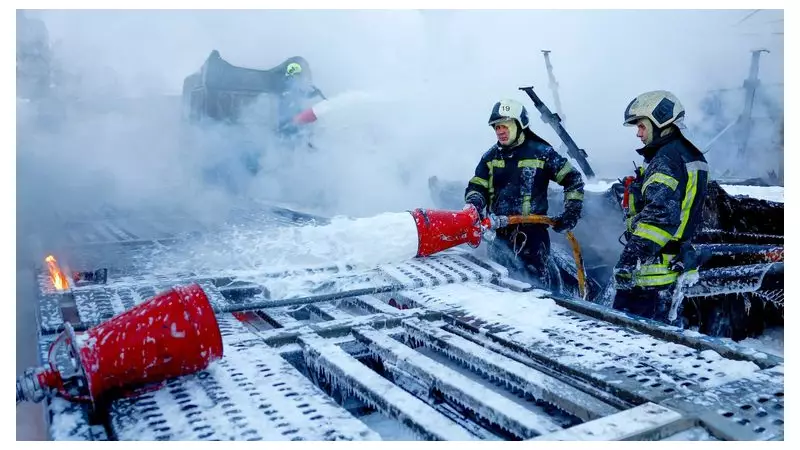
The coordinated strikes left approximately 1.2 million buildings without power across Ukraine, with temperatures plummeting to -13°C in the capital Kyiv. Emergency services reported one fatality and thirty-one injuries from the attacks, with footage showing firefighters desperately battling blazes ignited by the strikes. The widespread power outages occurred during one of the coldest periods of winter, compounding the humanitarian crisis for affected civilians.
Peace Talks Continue Despite Military Escalation
Ukrainian President Volodymyr Zelenskyy revealed that further trilateral negotiations involving the United States, Russia, and Ukraine could resume "as early as next week," despite the military escalation. The Abu Dhabi talks, which spanned Friday and Saturday, were described as "productive" by Washington and "constructive" by Ukrainian officials, though no breakthrough was achieved. The discussions marked the first time all three delegations had convened at short notice since the conflict began.

Diplomatic Deadlock Over Territory and Reconstruction
The negotiations revealed persistent divisions between the warring parties. The Kremlin maintained its demand for Ukraine to surrender all territories occupied by Russian forces, including the complete eastern Donbas region. Meanwhile, Russia proposed using nearly $5 billion in frozen assets held in the United States to fund reconstruction in Donbas cities destroyed by its own military operations - a suggestion President Zelenskyy dismissed as "nonsense."
Military Analysis and International Condemnation
Military analyst Professor Michael Clarke suggested the timing of the strikes was deliberately calculated to influence negotiations by demonstrating Russia's military capabilities. The attacks prompted strong international condemnation, with UN human rights chief Volker Turk stating that targeting civilian infrastructure represents "a clear breach of the rules of warfare." Ukrainian Foreign Minister Andrii Sybiha declared the assault proved "Putin's place is not at the Board of Peace, but in the dock of the special tribunal."
Potential Framework for Future Negotiations
Despite the military escalation, diplomatic channels remain open with discussions potentially moving toward establishing a demilitarised economic zone in eastern Ukraine. President Zelenskyy had previously described this framework in December as involving a ceasefire and mutual withdrawal of forces to agreed positions. However, Ukraine maintains its refusal to surrender strategically critical territory in Donbas, where it currently controls approximately 10% of the region after nearly four years of conflict.
The continuation of talks into a second day, despite the devastating attacks, suggests all parties maintain some commitment to diplomatic engagement. However, the stark contrast between negotiation tables in Abu Dhabi and missile strikes in Ukrainian cities underscores the profound challenges facing peace efforts as civilians endure another brutal winter of conflict.