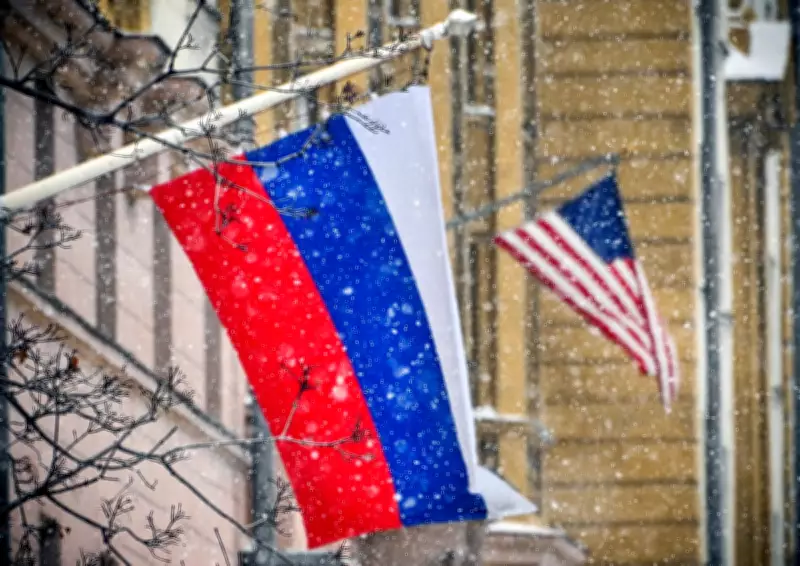
Russian 'Honeytrap' Operative Convicted in US Espionage Case
Nomma Zarubina, a 35-year-old Russian national, now sits in a New York jail awaiting sentencing after pleading guilty last week to charges of lying to the FBI about her contacts with Russia's Federal Security Service (FSB). The case highlights a resurgence of Cold War-era espionage tactics, with Zarubina allegedly using her charm and connections to infiltrate American circles for intelligence purposes.
Espionage Under the Guise of Diplomacy
According to U.S. prosecutors, Zarubina—known by the code name "Alyssa" to her Russian handlers—attended numerous seminars, forums, and conventions frequented by prominent figures in academia, foreign policy, U.S. government, and media. Her mission was to identify and cultivate contacts who could be persuaded to adopt pro-Russian viewpoints, with the ultimate goal of inviting them to Russia for ideological conversion.
The Siberian-born Zarubina operated under the cover of her role as a representative to the United Nations for the Coordinating Council of Russian Compatriots of the U.S. (KSORS). She also spoke at events organized by the Free Nations of Post-Russia in Washington and Ottawa, all while secretly working for the FSB.

A Pattern of Deception and Intrigue
Zarubina's activities came under scrutiny during an FBI investigation into Elena Branson, the godmother of Zarubina's daughter, who was charged with acting as an unregistered foreign agent. Branson, who had founded a Russian propaganda center in New York, was married to William Branson, a former economic adviser to President Richard Nixon.
In 2022, prosecutors revealed that Elena Branson had corresponded directly with Russian President Vladimir Putin and promoted an "I Love Russia" campaign targeting American youth. This connection further implicated Zarubina in broader Russian influence operations.
The 'Honeytrap' Tactic in Modern Espionage
Zarubina's case follows a pattern of Russian women using romantic and sexual relationships as tools for espionage. Notable predecessors include Maria Butina, who infiltrated the National Rifle Association and is now a Russian legislator, and Anna Chapman, a sleeper agent arrested in 2010 and later exchanged in a prisoner swap.
Chris Costa, executive director of the International Spy Museum and a former U.S. counterintelligence agent, notes that Zarubina's mission involved network-building rather than traditional spycraft. "Intelligence operations can look a lot like professional relationship building or lobbying until someone pulls the curtain back and discovers there are Russian intelligence connections," Costa explained.
Flirtatious Texts and Legal Consequences
After her arrest in December 2024, Zarubina sent a series of flirtatious and threatening texts to an FBI agent, including messages like "Catch me baby" and "I am sooooo bad." Despite judicial warnings, she continued this behavior, texting the agent 65 times in a single night in November 2025.
Prosecutors also charged Zarubina with interstate transport of women for prostitution, alleging involvement with a massage parlor in East Brunswick, New Jersey. She ultimately pleaded guilty to making false statements to the FBI and naturalization fraud for lying about her involvement in prostitution on her citizenship application.
Unclear Loyalties and Emotional Manipulation
In court, Zarubina claimed she developed "feelings" for the FBI agent and felt emotionally controlled by him. She denied being a spy, stating, "They frame people, they build cases, you know," and compared FBI tactics to those of Russian intelligence. However, her guilty plea suggests otherwise.
Filip Kovacevic, a professor specializing in Russian intelligence history at the University of San Francisco, noted that Zarubina's work for the FSB—a counterintelligence agency—likely involved honeytrapping, as such tactics are common in counterintelligence operations. "The indictment says she was directed to get to know somebody in the United States, and we know that she was connected to prostitution, so I guess that's what the FSB knew, too," Kovacevic said.

Sentencing and Future Implications
Zarubina is scheduled for sentencing in June and faces up to five years in prison on each count. If deported, she could face retaliation from the FSB for cooperating with U.S. authorities. "The FSB is going to be angry because she was supposed to deny everything. That's what they tell their agents. But she did not—she made a deal," Kovacevic warned.
This case underscores the ongoing threat of foreign espionage on U.S. soil and the sophisticated methods employed by intelligence agencies to exploit personal relationships for geopolitical gain.