Escalating Global Tensions Spark Fears of World War III
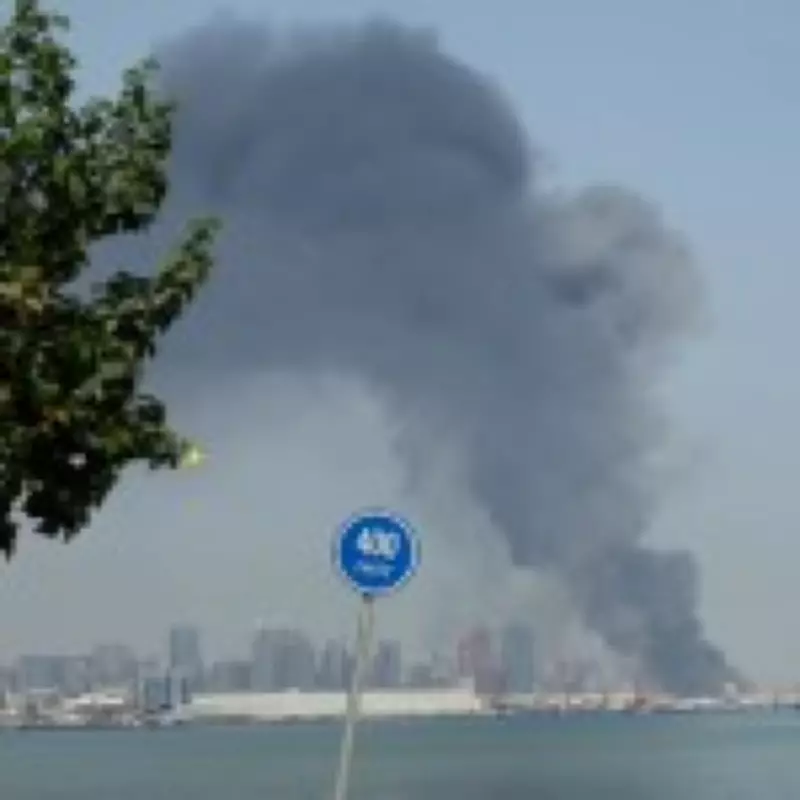
In a dramatic escalation of international hostilities, the United States and Israel have launched coordinated airstrikes against Iran, with Tehran swiftly ordering retaliatory measures against neighboring states. This aggressive military action has ignited widespread concerns that the world may be on the brink of a third global war. Former US President Donald Trump has publicly confirmed that the US military has initiated 'major combat operations' targeting Iran, while Iranian authorities assert they are executing counterattacks in response.
Reports indicate that the airstrikes in Tehran were aimed at Iran's supreme leader, Ayatollah Ali Khamenei, further intensifying the conflict. In a joint statement with the leaders of France and Germany, UK Prime Minister Keir Starmer has urgently called on Iran to 'refrain from indiscriminate military strikes' to prevent further destabilization.
Simultaneously, Russian President Vladimir Putin continues his relentless bombardment of Ukraine, with Ukrainian President Volodymyr Zelensky declaring that Putin has already commenced World War III. In an interview with the BBC, Zelensky emphasized, 'I believe that Putin has already started it. The question is how much territory he will be able to seize and how to stop him. Russia wants to impose on the world a different way of life and change the lives people have chosen for themselves.'

Potential Safe Havens in a Global Conflict
Amid these alarming developments, analysts have identified several countries and regions that might offer relative safety if a full-scale global war erupts. These locations are selected based on factors such as political neutrality, geographic isolation, and resource availability.

- Antarctica: Positioned at the planet's southernmost point, Antarctica is considered one of the safest places to survive a nuclear conflict due to its vast distance from nations with nuclear arsenals. Spanning over 14 million square kilometers, it provides ample space for refuge, though its harsh, freezing climate poses significant challenges.
- Iceland: Consistently ranked at the top of the Global Peace Index, Iceland has never participated in a full-scale war or invasion. While it has signed bilateral agreements with Ukraine, its support is limited to financial aid and minimal transportation assistance. Its remote island geography shields it from conventional warfare in Europe, although nuclear fallout could still affect it in minor ways.
- New Zealand: Ranking second on the Global Peace Index, New Zealand maintains a neutral stance in most conflicts and benefits from mountainous terrain that offers natural protection. The government has provided financial support to Ukraine and assisted in actions against Russia at the International Court of Justice, but it is highly unlikely to face direct attacks in a Western-Russian conflict.
- Switzerland: Renowned for its political neutrality, even during World War II, Switzerland is safeguarded by its landlocked geography, rugged terrain, and extensive network of nuclear shelters. It has not provided assistance to Ukraine and has faced accusations of favoring Russia through its neutrality, making it an improbable target for Putin's aggression.
- Indonesia: Often adopting a neutral position in global affairs, Indonesia follows a 'free and active' foreign policy, prioritizing world peace and acting independently in international matters.
- Tuvalu: Located in the Pacific Ocean between Hawaii and Australia, Tuvalu's small population of 11,000, weak infrastructure, and limited natural resources make it an unattractive target for aggressors.
- Argentina: Despite past conflicts like the Falklands War, Argentina is a prime location to survive famine due to its abundant crops, including wheat. In a scenario where nuclear dust blocks sunlight, Argentinians would have existing food supplies to rely on.
- Bhutan: Since joining the United Nations in 1971, Bhutan has declared neutrality in conflicts. Its landlocked position and mountainous surroundings enhance its defensibility.
- Chile: With a coastline stretching 4,000 miles—equivalent to the distance between Moscow and Madrid—Chile boasts diverse crops and natural resources, alongside advanced infrastructure, making survival more feasible.
- Fiji: Situated 2,700 miles from Australia, Fiji lacks a clear military strategy and has a small army of 6,000 soldiers, contributing to its high ranking on the Global Peace Index. Its dense forests, minerals, and fishing spots add to its resilience.
- South Africa: Equipped with multiple food sources, fertile land, fresh water, and modern infrastructure, South Africa offers favorable conditions for survival in a crisis.
This analysis provides a comprehensive overview of potential refuges as global tensions reach critical levels, highlighting the importance of preparedness in an increasingly volatile world.