

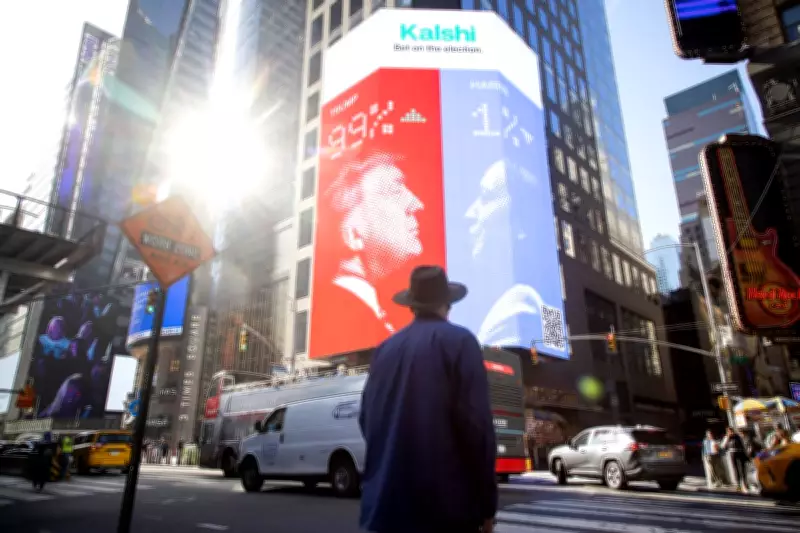
Bipartisan Senate Bill Seeks to Ban Sports Betting on Online Prediction Markets
A bipartisan bill introduced in the US Senate on Monday aims to prohibit federally regulated prediction markets from allowing wagers on sporting events. This legislation represents a significant challenge to platforms such as Kalshi and Polymarket, where billions of dollars have been traded on major events like the Super Bowl and NCAA March Madness.
Growing Scrutiny and State-Level Actions
The bill emerges as prediction markets face increasing scrutiny from both federal and state authorities. Recently, a Nevada judge issued a temporary restraining order against Kalshi, banning most of its operations in the state for two weeks following a lawsuit. Additionally, Arizona's attorney general has filed criminal charges against Kalshi, accusing the company of illegal gambling related to election bets.
Online prediction markets are currently overseen by the Commodity Futures Trading Commission (CFTC), which has asserted exclusive regulatory control under the Trump administration. However, critics argue that this federal oversight is insufficient.

Senators' Statements and Bill Provisions
Democratic Senator Adam Schiff of California, who introduced the bill with Republican Senator John Curtis of Utah, stated that the CFTC is "greenlighting these markets and even promoting their growth." Schiff emphasized, "Sports prediction contracts are sports bets – just with a different name. It’s time for Congress to step in and eliminate this backdoor which violates state consumer protections, intrudes upon tribal sovereignty, and offers no public revenue."
The legislation also seeks to ban casino-style games, including virtual poker, slot machines, and blackjack, from these platforms. Curtis added that "addictive sports betting and casino-style gaming contracts" should be "under state control, not under federal regulators."
Industry Response and Broader Context
In response, Kalshi argued that banning sports on regulated prediction markets would drive such activities offshore, where no regulation exists. The company stated, "It’s clear this bill is motivated by casino interests that are threatened by competition. They’re more worried about protecting their monopolies than protecting consumers. Sports trading on regulated prediction markets offer a fairer choice to consumers, with no house that restricts winners and hooks people the more they lose."
Polymarket and the CFTC did not immediately comment on the bill. Sports betting was largely illegal in the US until 2018, when the Supreme Court overturned a federal ban, leading to a surge in prediction markets with fewer age and event restrictions. These platforms now see hundreds of millions in weekly trading volume, allowing bets on diverse events from Oscar winners to military conflicts.
State-Level Regulatory Pushback
Much of the regulatory opposition has come from states. Arizona Attorney General Kris Mayes asserted, "Kalshi may brand itself as a 'prediction market,' but what it’s actually doing is running an illegal gambling operation and taking bets on Arizona elections, both of which violate Arizona law. No company gets to decide for itself which laws to follow."
In Nevada, the gaming control board sued Kalshi last month, arguing that the company requires a state license for wagering. A judge's recent temporary order prohibits Kalshi from operating in Nevada until a hearing on April 3, banning event-based contracts related to sports, elections, and entertainment, and restricting users under 21.
Mike Dreitzer, chair of the Nevada Gaming Control Board, explained, "Prediction markets, to the extent they facilitate unlicensed gambling, are illegal in Nevada, and we have a statutory duty to protect the public. We want people in the state to wager safely at a licensed book."
This legislative and legal landscape highlights the ongoing tension between innovation in online betting and regulatory efforts to ensure consumer protection and state sovereignty.






