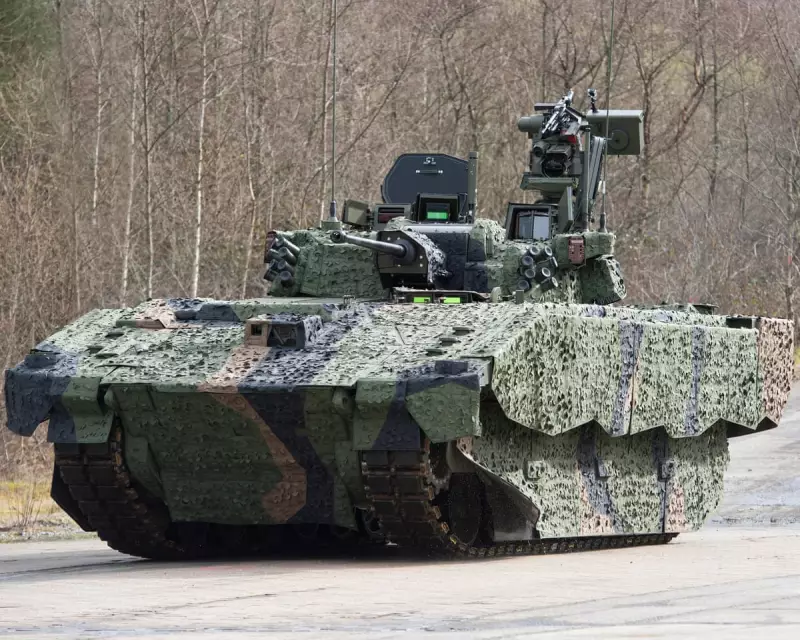
Soldiers Receive Medical Care During Controversial Ajax Testing
British soldiers required medical treatment for hearing problems this summer during final testing of the Army's new Ajax armoured vehicle, despite the Ministry of Defence subsequently declaring the troubled programme fit for service. The £5.5 billion project, which has been delayed for several years primarily due to concerns about noise and vibration affecting troops, continues to face serious health and safety questions from military personnel.
Persistent Health Concerns Despite Official Approval
The Ajax model, costing taxpayers £5.5 billion for 589 vehicles, was officially classified as ready for army deployment in September following an investigation that found "no systemic issues". However, defence sources reveal that soldiers continue to report health problems, with one insider stating bluntly that "people are still being hurt".
During the summer tests, a small number of soldiers reported significant noise and vibration concerns and had to be processed at a military medical centre. While the Ministry of Defence would not disclose exactly how many personnel required treatment, they confirmed the incidents occurred in a primary GP-style care facility and noted there had been no reports of tinnitus or motion sickness.

Contrasting Official Statements and Ground Reality
At a recent launch event where the Ajax was formally accepted into army service, junior defence minister Luke Pollard declared the vehicle's noise and vibration problems were "firmly in the past". "If it were not safe, we would not be putting it in the hands of our frontline troops," Pollard asserted, adding that he had received safety reassurances from army leadership down to platform operators.
Yet when specifically questioned about soldiers' ongoing health concerns, an MoD spokesperson acknowledged problems had occurred during summer testing. "Where concerns were raised over the summer, these were investigated by a safety team and no systemic issues were found," the spokesperson stated, highlighting the contradictory narratives emerging from the defence establishment.
The Ajax programme is eight years behind schedule, having initially been intended for introduction in 2017. Trials were temporarily halted in June 2021 due to safety concerns, and a review published in December 2021 revealed that 11 out of 310 test personnel had received medical recommendations for long-term noise exposure restrictions, while 17 others required specialist outpatient care.
This latest controversy over military hearing protection comes as thousands of UK veterans launched a legal claim against manufacturer 3M in September, alleging its combat earplugs used in Afghanistan and other deployments were ineffective. The manufacturer maintains its products worked correctly when used properly.
During recent demonstrations for journalists at the General Dynamics factory in Merthyr Tydfil, the 7.6-metre-long tracked vehicle weighing approximately 40 tonnes displayed noise levels reaching 90 decibels from just a few metres away. The Health and Safety Executive notes that prolonged exposure to sounds above 85 decibels can cause hearing loss, requiring employers to provide protection.
The Ministry of Defence emphasised that crews now receive dual-layer hearing protection comprising both earplugs and headphones, claiming this system has significantly improved safety. Defence sources stated that soldiers operating or travelling in a moving Ajax could function for six hours while remaining three-quarters below safety limits.