

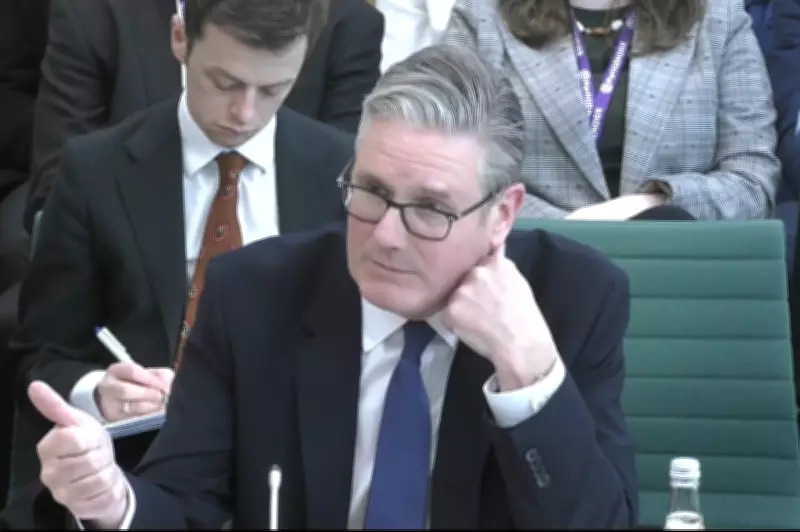
Prime Minister Confronts Defence Funding Shortfall in Parliamentary Hearing
Prime Minister Keir Starmer has openly acknowledged that the government's proposed defence enhancement plan faces significant funding challenges. During an appearance before the Liaison Committee in Parliament, Starmer admitted that the ambitious target to increase defence spending from 2.5 percent of GDP in 2027 to 3.5 percent by 2035 lacks sufficient financial backing.
Funding Details Remain Unclear as Starmer Pledges Resolution
Starmer emphasized that his administration must provide concrete details about the funding sources for this substantial military investment. "We have to make sure the investment we need is going in and it is sustained over a 10-year period in accordance with the strategic review," the Prime Minister stated before the committee of cross-party MPs.
The government's commitment to spending 2.5 percent of GDP on defence starting next year now faces scrutiny regarding the pathway to reach NATO's 2035 target of 3.5 percent. According to the Office for Budget Responsibility's March forecast, achieving this through a "linear path" would require an additional £6 billion by 2029. In today's economic terms, reaching the NATO target would necessitate the Treasury finding approximately £40 billion in extra funding.

Tensions Between Treasury and Defence Ministry Surface
Starmer vowed to personally address the growing rift between the Treasury and the Ministry of Defence, declaring: "It is my job to resolve it, and resolve it I will." The Prime Minister promised to outline specific funding details "in due course," though this timeline faced criticism from Conservative MP Sir Bernard Jenkin.
Jenkin challenged the delay in publishing the Defence Investment Plan (DIP), originally scheduled for autumn 2025, suggesting the government's reluctance to comment on timing "smacks of enormous complacency." Starmer countered by blaming previous administrations, stating: "This smacks of the fact that for years there wasn't any investment by the last government."
Internal Ministry Problems Complicate Planning
The Prime Minister revealed that comprehensive investment planning had uncovered systemic issues within the Ministry of Defence, including unfulfilled commitments and productivity challenges that have complicated the DIP drafting process. "When I opened the books and saw the way it had been done for years I needed to change it," Starmer explained to committee members.
Starmer also deflected questions about military preparedness concerning the ongoing Middle East conflict, expressing reluctance to "raise levels of public anxiety" through detailed discussions of military capabilities.
Global Developments Influence Domestic Planning
The parliamentary hearing occurred hours after President Trump announced the United States would pause strikes in the Middle East due to "productive" negotiations with Iran. This development caused Brent Crude oil prices to drop by over 12 percent, potentially easing concerns about interest rate increases and prolonged economic downturn.
Following his committee appearance, Starmer was scheduled to lead an emergency COBRA meeting with key officials including Chancellor Rachel Reeves, Foreign Secretary Yvette Cooper, and Bank of England Governor Andrew Bailey. The Prime Minister indicated that Reeves would provide updates on the meeting's outcomes, as officials continue working "on the basis that [the war] could go on for some time."
Economic Support Measures Under Consideration
Starmer cautioned against premature optimism about conflict resolution, warning: "We mustn't fall into the false comfort that there will be a quick and early end to this." While acknowledging that Reeves would not announce "concrete" policy measures immediately, the Prime Minister confirmed the government's focus would center on supporting vulnerable households.
"We're looking this afternoon at the approach we might take," Starmer revealed. "I am acutely aware of how much it cost last time round. I'm acutely aware of the state of public finances. But we will look this afternoon at what appropriate approach might be."

The Prime Minister's admissions highlight the complex balancing act between national security requirements and fiscal responsibility, with the government now tasked with developing a credible funding strategy for long-term defence modernization while addressing immediate economic pressures.





