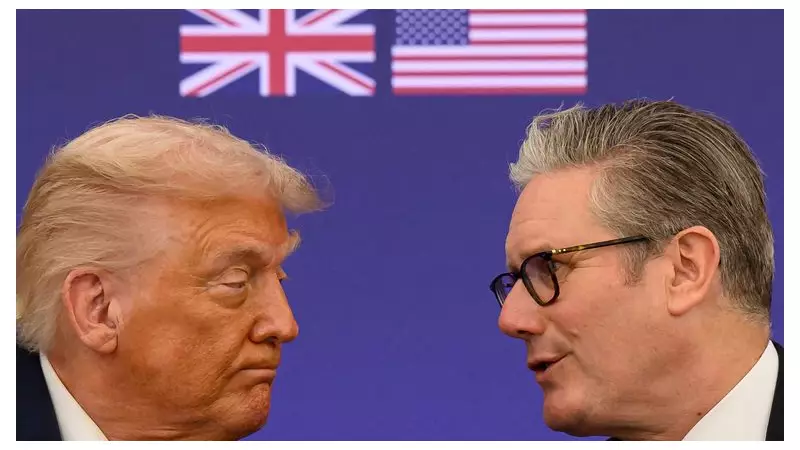
In a rare display of public anger, Prime Minister Sir Keir Starmer has delivered a blistering condemnation of US President Donald Trump, demanding an apology for what he termed "insulting and frankly appalling" remarks about the role of non-US NATO troops in Afghanistan.
A Stark Departure from Diplomatic Restraint
Sir Keir Starmer, a politician known for his measured and controlled public demeanour, was visibly brimming with fury as he addressed the media from Downing Street on Friday. This forceful intervention marks a significant escalation in his response to the US president, moving beyond previous general condemnations to direct, personal criticism.
The Provocative Comments That Sparked Outrage
The prime minister's ire was directed at Mr Trump's claim that NATO allies in Afghanistan "stayed a little off the front lines." Sir Keir, in his strongest rebuke to date, labelled this a disgraceful slur that casually belittles profound sacrifice.

For the record, the human cost of the conflict tells a very different story:
- A total of 1,160 non-US coalition soldiers lost their lives in Afghanistan.
- Thousands more sustained wounds, with many suffering life-altering injuries.
- Among them, 457 British troops made the ultimate sacrifice, fighting alongside American forces.
The prime minister argued that Mr Trump's comments were an insult not only to the armed forces but to the entire UK-US relationship, a bond forged through shared language and exceptionally close cultural, political, military, and economic ties over many decades.
A 'Toxic' Turn for the Special Relationship
This incident arrives on the heels of other concerning actions from the Trump administration, including threats of sanctions and discussions of invading a NATO ally. Sir Keir suggested that these cumulative events are rapidly transforming the so-called 'special relationship' into a far more toxic partnership.
For a British prime minister, whose foremost duty is national security, a fellow leader insulting the nation's armed forces represents a particularly low blow. Sources indicate that Sir Keir was determined to make his position unequivocally clear and to act as a vocal champion for UK service personnel.
A Clear Call for an Apology
Until now, Sir Keir has typically described Mr Trump's actions or statements merely as "wrong." His comments on Friday represent a definitive step change. He not only strongly criticised the president personally but explicitly suggested that Mr Trump should issue an apology for his remarks.
Despite the severe diplomatic rupture, Downing Street's stated approach will be to attempt to continue cooperation with the US on vital matters of defence, security, and intelligence, adhering to Britain's core principles and values.
The Political Fallout and a Strategic Pivot
However, there is a broad consensus that the events of this past week have irrevocably broken a spell. Mr Trump's increasingly erratic and outlandish behaviour has left Sir Keir with little choice but to shift strategy—from an approach of 'Trump containment' to one of direct confrontation.
In different circumstances, a prime minister who had emphasised managing the Trump relationship might face significant political risk if ties deteriorated so badly. Sir Keir finds cover in the fact that condemnation of Mr Trump's remarks has been universal across the UK political spectrum.
If anything, the prime minister may now face increased pressure to adopt a more hostile stance towards what is being perceived as an increasingly toxic American partner. Allies of Sir Keir have been quick to stress that this is not the beginning of the end for the UK-US alliance, but they concede that the bond now feels far less stable and secure.
This diplomatic crisis may accelerate a pre-existing foreign policy trend. Sir Keir Starmer was already seeking to deepen and tighten Britain's ties with European allies. In the wake of the behaviour exhibited by the Trump White House this week, there is a sense in Westminster that the prime minister may now wish to turbocharge that European outreach, seeking stronger partnerships elsewhere as the transatlantic relationship faces unprecedented strain.