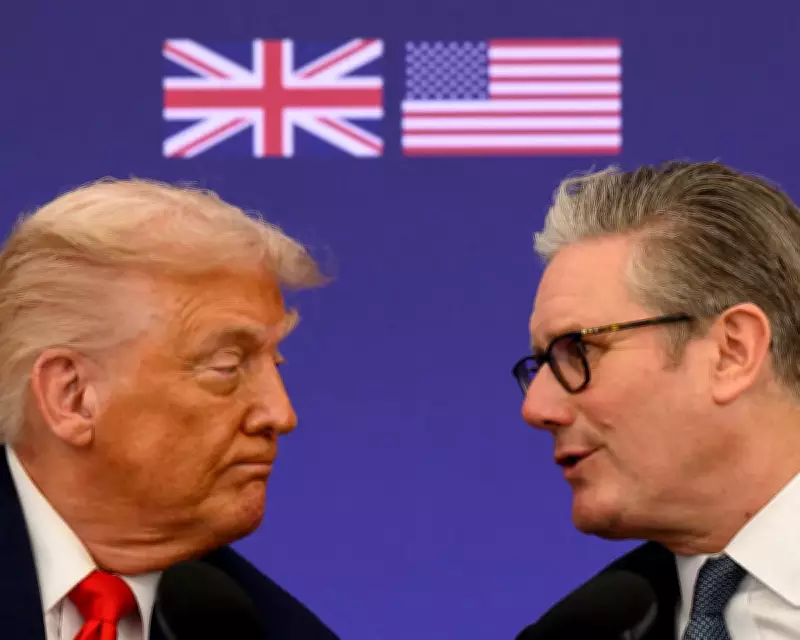
Prime Minister Keir Starmer has indicated support for President Donald Trump's assertive approach towards Iran, stating that preventing Tehran from developing nuclear weapons represents a critical international priority. During diplomatic engagements in China, the UK leader emphasised the shared objective of nuclear non-proliferation while carefully avoiding explicit endorsement of hypothetical future US military actions.
Guarded Language on Potential Strikes
When questioned specifically about whether Britain would back additional American strikes against Iranian targets, Starmer maintained a deliberately measured position. "We support the goal and we are talking to allies about how we get to that goal," he stated during broadcast interviews conducted in Shanghai. Downing Street officials reinforced this cautious stance, noting they could not comment on speculative military scenarios.
Focus on Nuclear Programme and Protest Repression
The Prime Minister articulated twin concerns regarding Iran's behaviour on the international stage. "The goal or the aim here is that Iran shouldn't be able to develop nuclear weapons and that is hugely important," Starmer told the BBC. "And, of course, we need to deal with the fact they are repressing protesters, killing protesters. It is grotesque what is happening so that is where our focus is and we are working with allies to that end."

This positioning comes as President Trump has issued stark warnings to Iranian leadership, demanding an end to both nuclear development activities and the violent suppression of domestic protests. The American president has deployed a substantial naval presence to the region, declaring these forces "prepared to rapidly fulfil its missions with speed and violence if necessary."
International Context and Diplomatic Moves
The diplomatic landscape surrounding Iran has grown increasingly complex in recent days. On Thursday, the European Union formally designated Iran's Islamic Revolutionary Guard Corps as a terrorist organisation. Meanwhile, British Foreign Secretary Yvette Cooper has committed to developing new legislative mechanisms that would enable the UK to proscribe state organisations like the IRGC without relying on existing terrorism designation frameworks.
Humanitarian Concerns and Communication Blackouts
Human rights organisations estimate that many thousands of Iranian citizens have been killed by authorities during recent protests, though precise figures remain difficult to verify due to widespread internet and communications restrictions imposed by the Tehran government. This information vacuum has complicated international efforts to assess the true scale of repression within the country.
When pressed by Sky News about whether President Trump's confrontational rhetoric represents appropriate diplomacy, Starmer again deflected from direct commentary on American methods. "The big issue, the big challenge here is to ensure that Iran doesn't get a nuclear programme," he reiterated. "We're all absolutely agreed on that and we're working with allies to that end."
The Prime Minister's statements suggest a careful balancing act: aligning with Washington's fundamental security objectives regarding Iranian nuclear capabilities while maintaining diplomatic distance from the most bellicose elements of Trump's public pronouncements. This nuanced position reflects both the UK's special relationship with the United States and the complexities of Middle Eastern geopolitics.