

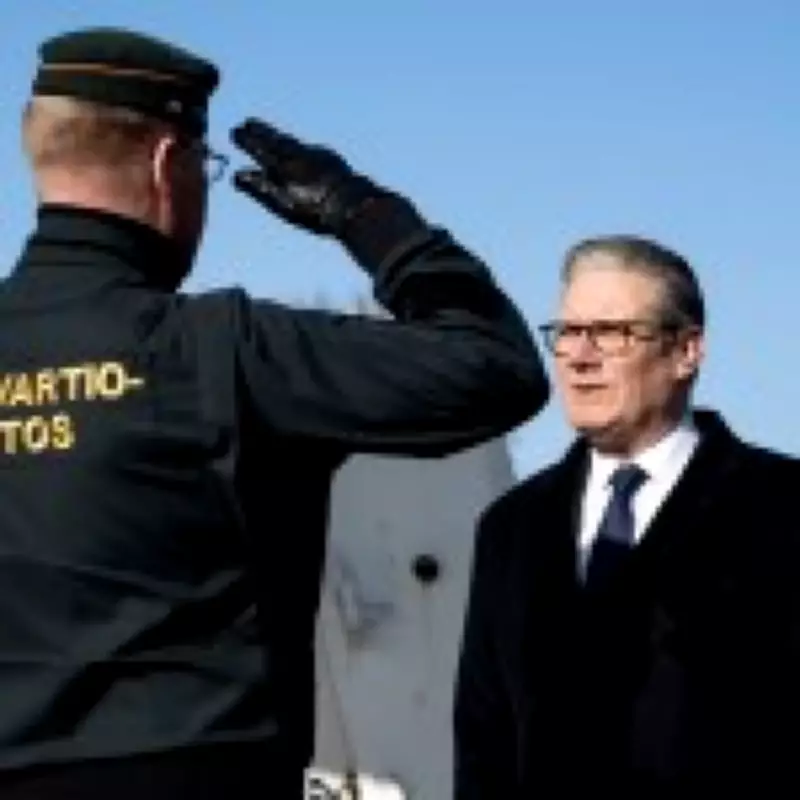
Prime Minister Warns of Simultaneous Global Conflicts
Prime Minister Sir Keir Starmer has declared that Western nations are currently engaged in what he describes as a 'war on two fronts', with simultaneous conflicts raging in Ukraine and the Middle East. The Prime Minister made these remarks during the Joint Expeditionary Force summit in Helsinki, Finland, where European leaders gathered to address growing concerns about global security challenges.
Dual Crises Diverting Resources and Attention
Starmer emphasized that the ongoing conflict in Iran is drawing significant attention and resources away from the Russian invasion of Ukraine, creating a complex strategic dilemma for Western allies. 'We have to accept that there's a war on two fronts – there's the Iranian conflict and the continuing Ukrainian conflict,' Starmer told broadcasters during his visit to Finland.
The Prime Minister's comments come at a critical juncture, as reports suggest the Middle East conflict has provided an unexpected economic boost to Russian President Vladimir Putin. With oil prices spiking due to ships being blocked from passing through the crucial Strait of Hormuz, Russia's sanctioned oil exports have gained increased market leverage.

UK Authorizes Interception of Russian 'Shadow Fleet'
In a significant move to counter Russian aggression, Starmer announced he has given permission for British forces to board and seize ships belonging to Russia's so-called 'shadow fleet' operating off the UK coast. These aging tankers, which fly flags of various nations to evade sanctions, have been illicitly transporting Russian oil out of the country.
'Today I'll be making clear to them that I'm giving permission for the UK to intercept shadow fleet, Russian shadow fleet ships,' Starmer stated, adding that this action is designed to force these vessels to take longer and more costly routes to avoid interception.
Strategic Discussions with Finnish President
During his visit, Starmer met with Finnish President Alexander Stubb to discuss coordinated efforts to maintain pressure on Moscow. Finland, which shares the longest border with Russia of any NATO member country, represents a crucial strategic partner in these efforts. The leaders focused on enhancing sanctions enforcement and developing more effective methods to tackle the shadow fleet operations that circumvent international restrictions.
Questions About UK Military Preparedness
The Prime Minister's visit comes amid growing questions about the United Kingdom's military readiness. Recent revelations that the Royal Navy needed to borrow a German warship for an Arctic operation have raised concerns about resource allocation and capability.
Defence Secretary John Healey addressed these concerns, stating: 'This is what good allies do. The Germans have stepped in to supply their warship, while I can deploy HMS Dragon to reinforce defences in the Middle East.' Healey emphasized that despite the ship borrowing arrangement, the operation would still be commanded by a Royal Navy Commodore.
However, the Defence Secretary expressed dissatisfaction with the current state of British naval capabilities, blaming previous Conservative governments for cutting the number of frigates and destroyers by approximately 25%.
Focus on Defence Spending and Capability
Starmer indicated that his discussions with allies would include critical conversations about defence spending and capability enhancement. With simultaneous conflicts stretching military resources, Western nations face increasing pressure to bolster their defence budgets and improve coordination between allied forces.
The Prime Minister's warning about a 'war on two fronts' represents a sober assessment of the current global security landscape, where conflicts in Eastern Europe and the Middle East are creating interconnected challenges that demand coordinated international responses and strategic resource allocation.






