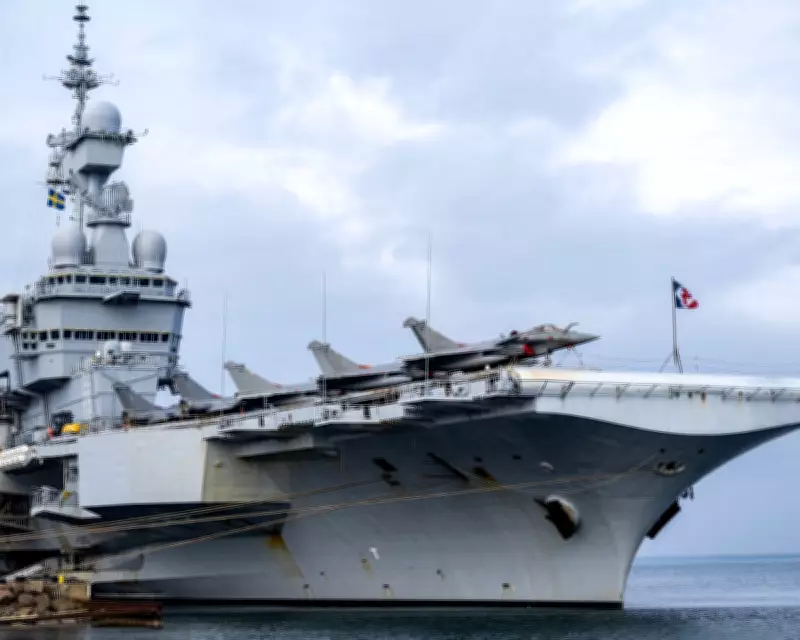
Sweden Confirms Russian Drone Jamming Incident Near French Aircraft Carrier
The Swedish military has officially confirmed that a drone it jammed near the French aircraft carrier Charles de Gaulle earlier this week was of Russian origin. This alarming incident occurred in the Oresund waters, strategically located between Denmark and Sweden, raising significant concerns about Moscow's deployment of hybrid warfare tactics against European nations that have steadfastly supported Ukraine.
Details of the Oresund Incident
On Thursday, a Swedish navy vessel took decisive action by jamming the drone approximately 13 kilometers, or eight miles, from France's flagship carrier, the Charles de Gaulle. The carrier was navigating the Oresund stretch at the time, a critical maritime passage. French Foreign Minister Jean-Noel Barrot, speaking from the deck of the Charles de Gaulle on Friday, issued a stern response, stating that if Russian involvement is definitively confirmed, "the only conclusion I would draw is that it would be a ridiculous provocation." In a swift rebuttal, Kremlin spokesperson Dmitry Peskov dismissed Barrot's remarks as "quite an absurd statement," highlighting the escalating diplomatic tensions.
Broader European Security Concerns
This incident is not isolated. It follows a similar security breach on Thursday, when Romania scrambled fighter jets after a drone violated its national airspace during a Russian attack on Ukraine. NATO's easternmost member states have reported a surge in drone sightings in recent months, with many attributing these incursions to Russia. Adding to the geopolitical strain, Denmark's intelligence service issued a stark warning on Friday, indicating that a foreign power, likely Russia, may attempt to influence voters in the country's upcoming general election on March 24th. Denmark has been identified as a priority target due to its unwavering support for Ukraine.

In a joint statement, Denmark's police and military intelligence services cautioned that the election campaign could be marred by disinformation campaigns and sophisticated cyber-attacks. Prime Minister Mette Frederiksen, who called the election on Thursday, emphasized that the shadow cast by Russia represents one of Denmark's most significant threats. Meanwhile, in Hungary, Prime Minister Viktor Orbán, who trails in most polls ahead of April's election, is leveraging the Ukraine conflict as a diversion from domestic issues such as deteriorating social services, rising living costs, and economic stagnation. Orbán's right-wing, populist government has employed AI-generated billboard posters depicting Ukrainian leader Volodymyr Zelenskyy and EU officials with outstretched hands, accompanied by the taxpayer-funded message: "Our message to Brussels: We won't pay!" This rhetoric echoes across radio, television, and social media platforms.
Regional Disputes and International Developments
Further complicating the regional landscape, the leaders of Ukraine and Slovakia agreed on Friday to hold a face-to-face meeting to resolve a dispute over the blocked Druzhba pipeline, which transports Russian oil to Slovakia and Hungary. Slovak Prime Minister Robert Fico and Hungarian counterpart Viktor Orbán have accused President Zelenskyy of employing "blackmail" tactics regarding the pipeline, which traverses Ukrainian territory. Ukraine contends that the pipeline was damaged in Russian airstrikes on January 27th, while Slovakia and Hungary insist repairs have been completed. Orbán has exacerbated tensions by blocking an EU emergency loan to Ukraine as the disagreement intensifies.

In a positive development, the International Atomic Energy Agency announced on Friday that it successfully negotiated a temporary local ceasefire between Ukraine and Russia, facilitating the restoration of a backup power supply to Ukraine's Zaporizhzhia nuclear power plant. This marks the fifth such ceasefire brokered by the IAEA, according to Director General Rafael Grossi. However, the human cost of the conflict continues to mount. Ghana's Foreign Minister, Samuel Okudzeto Ablakwa, revealed on Thursday that at least 55 Ghanaians have been killed in Russia's war with Ukraine after being "lured into battle." During a visit to Kyiv, officials raised concerns about Russian recruitment of African nationals, with reports indicating that 272 Ghanaians have been enticed since 2022, resulting in 55 fatalities and 2 captured as prisoners of war. Ukraine asserts that over 1,780 Africans from 36 countries are currently fighting in the Russian army, a claim Russian authorities deny.