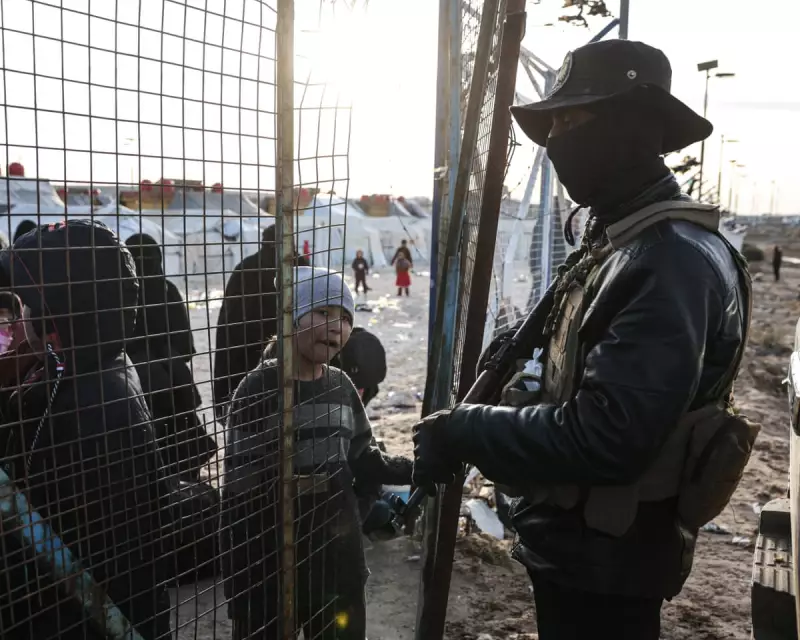
Security personnel more familiar with battlefield confrontations find themselves in an unfamiliar role: attempting to prevent children from breaching the confines of the sprawling al-Hawl detention camp in north-east Syria. In recent days, numerous youngsters have made determined bids for freedom, testing the resolve of their new guards.
Transition of Power Sparks Camp-Wide Turmoil
The atmosphere within al-Hawl shifted dramatically on Monday as residents witnessed their Kurdish prison guards abruptly withdraw, only to be replaced hours later by unfamiliar fighters representing Syria's Damascus-based government. This transfer of authority marked a significant development in the region's complex political landscape.
Syrian government forces formally assumed control of the facility on Tuesday as part of a broader military operation across north-eastern Syria. This territorial expansion follows the collapse of a fragile ceasefire between government forces and separatist Kurdish groups over the weekend.

Immediate Consequences of the Handover
The transition triggered immediate chaos throughout the camp's different sections. In the foreigners' annex, women and children began cutting through perimeter fencing in escape attempts. Meanwhile, Syrian and Iraqi residents initiated protests that escalated into rioting, including the arson attack on a camp bakery.
"The situation has descended into complete chaos. There needs to be a proper plan in place," explained Jihan Hanan, the camp's director who evacuated alongside Kurdish forces and now contemplates seeking asylum abroad due to safety concerns.
Humanitarian Crisis Deepens Amid Administrative Change
Essential services deteriorated rapidly following the withdrawal of Kurdish authorities and non-governmental organizations that previously supplied basic provisions. "We haven't had bread for two days. Today there's no water either," reported Um Mohammed, a 38-year-old resident originally from Idlib, through the camp's fencing.
Her ten-year-old daughter exemplifies the camp's tragic reality, having entered al-Hawl at just two years old and knowing little beyond its confines. Many children detained here have spent most or all of their lives within the camp's boundaries because their parents were suspected of involvement with Islamic State.
International Concerns and Local Realities
The global community observes apprehensively as Syria's relatively new government, led by former jihadist fighters, assumes responsibility for what represents the world's largest detention facility for individuals with alleged IS connections. The camp currently holds approximately 24,000 people from 42 different nations.
Originally conceived as a temporary displacement solution during the military campaign against IS's so-called caliphate, al-Hawl has evolved into a semi-permanent settlement where residents endure conditions described as inhumane by human rights organizations. Most detainees lack access to due process or any clear timeline for their release.
Complex Demographics Present Formidable Challenges
The camp population divides into distinct categories presenting different challenges. Many Syrian and Iraqi residents maintain minimal or no connections to IS, having simply lived in territories the extremist group controlled before being displaced by fighting. Their repatriation has proceeded slowly throughout Syria's prolonged civil conflict.
Foreign nationals, particularly women and children from Western and other nations, represent perhaps the most complicated demographic. Their home countries have largely avoided repatriation efforts, with some nations like the United Kingdom revoking citizenship in notable cases.
Ideological Indoctrination and Generational Impact
Kurdish authorities previously warned that foreign women within al-Hawl actively perpetuated IS ideology, raising their children to become the extremist group's next generation. This concern manifests in disturbing interactions, such as when a teenager challenged a Syrian soldier about religious practices, or when a Turkmen child named Ali expressed his aspiration to "go to war" upon leaving the camp.

Yet other children display different priorities, like an Azerbaijani boy who simply inquired when he might reunite with his brother, separated from the family and transferred to another detention facility.
Government Response and Future Uncertainties
Syrian authorities insist they will maintain security while preventing escapes, coordinating with the US-led International Coalition regarding camp management. They have appealed for international organizations to resume essential services and indicate they may accelerate releases of Syrian and Iraqi detainees lacking substantive evidence against them.
Security personnel express surprising sympathy for many detainees' plight. "I understand why they want to escape. If I'd been stuck here for years, I'd want out too. They've been oppressed here," acknowledged one officer after thwarting an escape attempt, appearing overwhelmed by children's persistent efforts to breach the perimeter.
Broader Regional Implications
The camp's transfer occurs against a backdrop of potential further military advances by Damascus into Kurdish-controlled territories. The International Coalition has already responded by announcing plans to transfer over 7,000 individuals with IS links to Iraq, anticipating possible Syrian government expansion.
For Hayat Tahrir al-Sham members now forming Syria's government, al-Hawl long represented a profound injustice, with some personally acquainted with detainees. This history adds complexity to their current responsibility for the facility's management and its occupants' fate.
As security forces patrol the perimeter with determined professionalism, small groups of children like the Turkmen youngsters with packed backpacks wait patiently near fence openings. "They're waiting to be smuggled out," explained an observing officer, capturing the camp's enduring tension between containment and the desperate human desire for freedom.