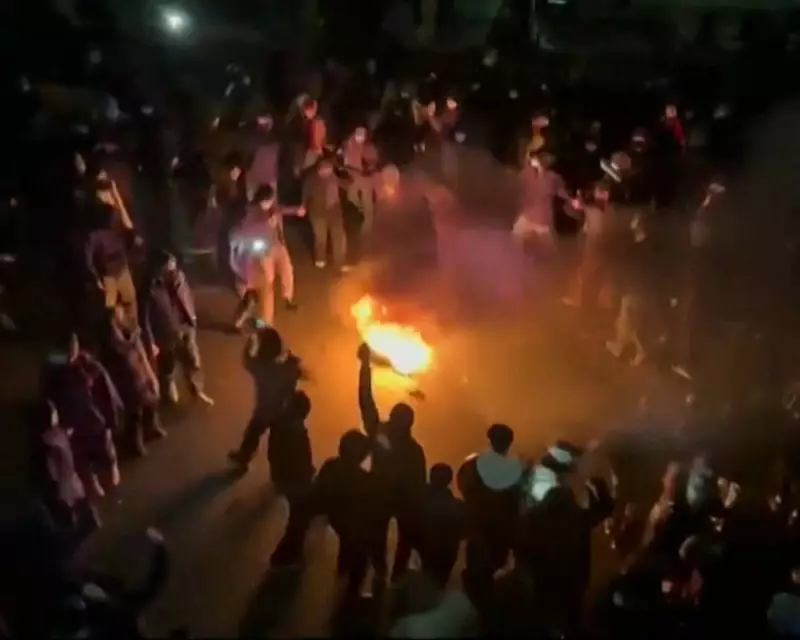
President Donald Trump is actively considering a range of potential actions against Iran, including military strikes, as a violent crackdown on widespread protests within the country escalates. The demonstrations, which began over economic grievances, have transformed into a significant challenge to Iran's ruling theocracy.
From Economic Grievance to Systemic Challenge
The unrest, initially ignited by public anger over the spiralling cost of living, has evolved into a broader movement opposing the Islamic Republic's theocratic system, which has held power since the 1979 revolution. This shift marks a pivotal moment in the country's recent history.
According to information from sources familiar with the deliberations, possible US responses under consideration include targeted military strikes, deploying cyber weapons against Iranian military and civilian infrastructure, imposing further sanctions on the government, and boosting support for anti-regime voices online.

The Perilous Calculus of Military Action
However, the option of military intervention is fraught with difficulty. Analysts warn that any overt attack could play directly into the hands of the Iranian government's narrative, which claims the protests are being orchestrated by foreign powers like the United States and Israel.
The high population density in cities like Tehran also presents a major obstacle, making it extremely challenging to conduct a precision air campaign without risking substantial civilian casualties. Furthermore, key potential targets, such as Supreme Leader Ayatollah Ali Khamenei, are reported to have significantly enhanced their personal security.
Trump, who has repeatedly threatened to intervene, took to social media on Saturday, stating: "Iran is looking at FREEDOM, perhaps like never before. The USA stands ready to help!!!"
Mounting Death Toll and International Tensions
As Trump weighs his options, the human cost of the unrest continues to rise sharply. The US-based Human Rights Activists News Agency reports that more than 500 people have been killed in the violence surrounding the demonstrations, including at least 490 protesters. The same group states that over 10,600 individuals have been arrested by Iranian authorities. The regime has not released its own official figures, and the numbers cannot be independently verified.
In response to the escalating rhetoric from Washington, Iran has issued a stark warning to the US against any form of attack over the internal protests.
The situation presents the Trump administration with one of its most complex foreign policy dilemmas, balancing a desire to support the protestors against the severe risks of military entanglement and the potential for bolstering the very regime it seeks to pressure.