

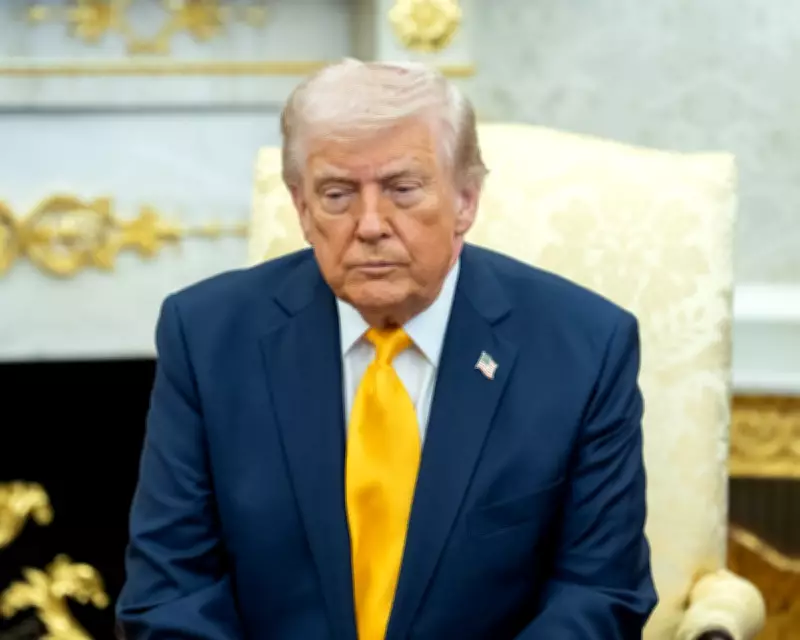
Trump Distances Himself from Israeli Strike on Iranian Gas Infrastructure
In a revealing Oval Office statement on Thursday, former US President Donald Trump claimed he had no advance knowledge of Israel's recent attack on Iran's South Pars gasfield, creating visible tension between the two allied nations. Trump asserted he directly instructed Israeli Prime Minister Benjamin Netanyahu to refrain from further strikes that could escalate regional warfare targeting energy infrastructure.
"I told him, 'Don't do that,' and he won't do that," Trump declared regarding Netanyahu. "We didn't discuss [the strikes]. We do independent, but get along great. It's coordinated. But on occasion he'll do something, and if I don't like it ... and so we're not doing that any more."
Diverging Military Strategies Exposed
The Israeli assault on South Pars—part of a massive gas reserve shared with Qatar—has triggered retaliatory strikes against Gulf energy facilities, including pipelines and natural gas processing plants crucial for global LNG supplies, particularly to Asian economies. This development highlights fundamental differences in US and Israeli military approaches toward Iran.

While American forces have concentrated on targeting Iran's military, naval, and ballistic missile capabilities, Israel has pursued targeted assassinations and civilian infrastructure bombing campaigns. These Israeli strikes have raised significant ecological concerns, especially following attacks on Tehran's oil depots, and prompted Iranian retaliation against Qatar's Ras Laffan Industrial City and Saudi Arabia's Samref refinery near Yanbu.
Conflicting Accounts and Diplomatic Fallout
Trump attempted to distance himself from the Israeli operations without outright condemnation, posting on Truth Social that he had no prior knowledge of the gasfield targeting and would oppose future attacks—unless Iran strikes Qatar's energy infrastructure first.
Israeli officials immediately contradicted Trump's claims, telling both US and Israeli media outlets that Washington had indeed been informed about the South Pars attack before it occurred. This public disagreement exposes deepening fractures in the US-Israel alliance as the conflict escalates.
Omani Foreign Minister Badr Albusaidi articulated growing concerns among US allies, writing: "The American administration's greatest miscalculation was allowing itself to be drawn into this war in the first place. This is not America's war, and there is no likely scenario in which both Israel and America will get what they want from it."
Nuclear Claims and Administration Defections
Netanyahu countered criticism on Thursday evening, denying he had dragged the United States into the conflict and claiming that US-Israeli attacks had successfully halted Iran's uranium enrichment and ballistic missile production capabilities.
These assertions followed testimony from Trump's Director of National Intelligence Tulsi Gabbard, who told House lawmakers that Iran had not pursued uranium enrichment since Israel attacked its nuclear infrastructure last year. Gabbard acknowledged divergent US and Israeli war objectives, noting Israel's focus on disabling Iranian leadership versus American priorities of destroying missile and naval capabilities.
The controversy has already prompted significant defections within the administration. Joe Kent, former director of the US National Counterterrorism Center and a Gabbard ally, resigned this week, stating: "I cannot in good conscience support the ongoing war in Iran. Iran posed no imminent threat to our nation, and it is clear that we started this war due to pressure from Israel and its powerful American lobby."
The public disagreement between Trump and Israeli officials, combined with growing international criticism and internal administration dissent, signals potentially significant shifts in Middle East geopolitics as the conflict continues to evolve with unpredictable consequences for global energy markets and regional stability.






