Trump Orders Major Marine Deployment to Middle East Amid Escalating Oil Crisis
In a significant military escalation, former President Donald Trump has authorized the deployment of approximately 5,000 US Marines to the Strait of Hormuz. This move comes as the ongoing conflict with Iran continues to disrupt global energy markets, sending oil prices to unprecedented levels.
Military Details of the Deployment
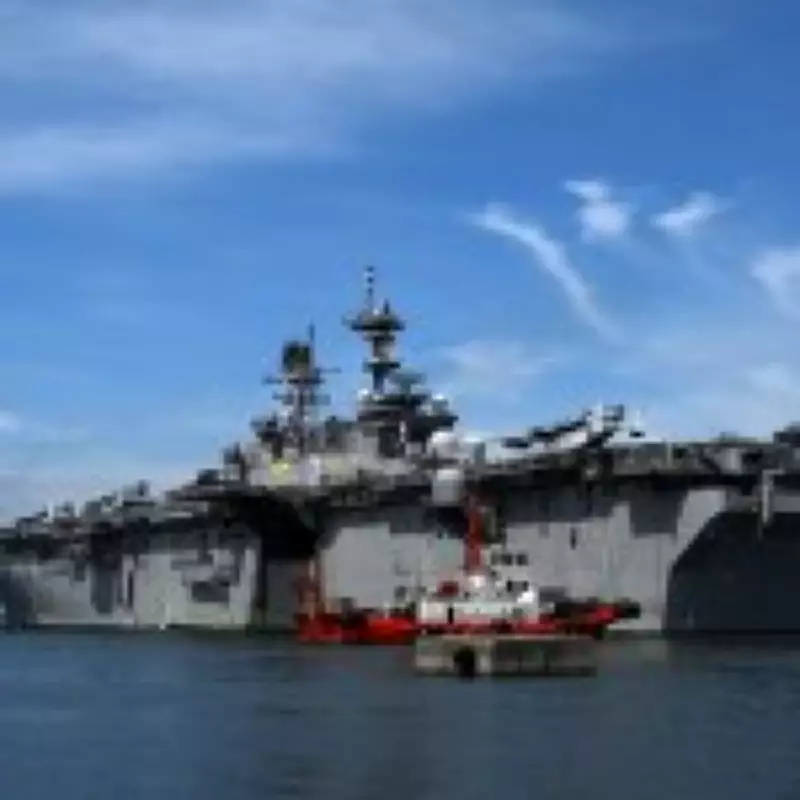
Secretary of War Pete Hegseth has approved the dispatch of an amphibious ready group, which includes multiple warships and the USS Tripoli. This massive 18,500-ton amphibious assault ship alone carries 2,000 Marines. According to reports from Axios, the deployment also features an attached Marine expeditionary unit, specialized mobile military groups that operate from naval vessels at sea.
The strategic deployment will introduce America's premier fighter jet, the F-35, to the volatile region. Three American officials confirmed to The Wall Street Journal that the request originated from US Central Command (Centcom), which oversees all military operations throughout the Middle East.

Official Statements and Strategic Objectives
Secretary Hegseth emphasized Washington's firm stance, stating that the US will "defeat, destroy, disable" Iran's military capabilities. He elaborated on Iran's diminished military capacity, noting: "Iran doesn't have a functioning Air Force, their entire Navy is at the bottom of the Persian Gulf, and their missile force is shrinking daily. They also lack the ability to rebuild these assets, which is the most critical point I want to emphasize today."
The Strait of Hormuz: Global Oil Chokepoint
At the heart of this deployment lies the Strait of Hormuz, a narrow, S-shaped channel in the Persian Gulf that facilitates approximately 20% of the world's oil transportation. In retaliation for US and Israeli attacks on February 28, Iran has intensified assaults on commercial oil tankers, utilizing missiles, drones, and naval mines.
US officials report that Iran possesses over 5,000 naval mines in its arsenal, according to the Defense Intelligence Agency. These aggressive tactics have created massive insurance premium increases for vessels attempting to navigate the strait, effectively paralyzing oil shipments through this critical passageway.
Global Economic Consequences
The International Energy Agency has declared this situation "the largest supply disruption in the history of the global oil market." With minimal oil flowing through the Strait of Hormuz, consumers worldwide are feeling the impact. In the United Kingdom, petrol and diesel prices have reached their highest levels in more than twenty months.
Current prices show petrol at 135.7p per litre (up 3.53p from last week) and diesel at 149p per litre (up from 142.14p). US Treasury Secretary Scott Bessent indicated that US Navy escorts for commercial vessels could commence operations "soon" to help stabilize the situation.
Humanitarian and Regional Impact
The conflict has resulted in significant casualties. Human rights organization HRANA reports that US-Israeli attacks have killed at least 1,200 Iranians since late February, including approximately 200 women and 200 children under twelve years old. In Lebanon, nearly 700 people have died in fighting between Israel and Iran-backed Hezbollah militants.
Additional casualties include seven American service members, fourteen people in Israel, and seventeen people in Gulf states (eleven of them civilians). This deployment represents a major escalation in a conflict that continues to expand both militarily and economically, with global energy markets and regional stability hanging in the balance.