

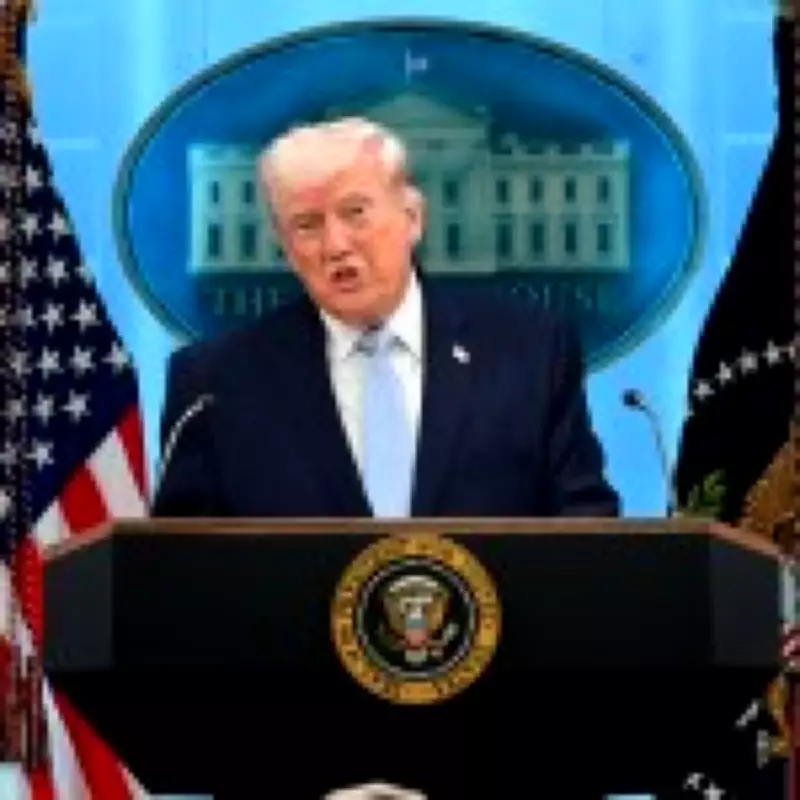
In a stark escalation of tensions, former US President Donald Trump has openly dismissed concerns that his latest threats against Iran could constitute war crimes, asserting he is "not at all" worried about such allegations. The controversial statements came as Trump issued a direct ultimatum to Iran, demanding the reopening of the strategically vital Strait of Hormuz by 8pm Eastern Time (1am BST) or facing severe military consequences.
Trump's Ultimatum and Dismissal of Legal Concerns
Trump has threatened that if Iran fails to comply with his demand to reopen the critical waterway, he plans to authorize strikes targeting Iran's bridges and power plants. When pressed by reporters about whether such actions might violate international laws of war, particularly regarding attacks on civilian infrastructure, Trump responded bluntly: "I'm not worried about it." He further argued, "You know the war crime? The war crime is allowing Iran to have a nuclear weapon."
Escalating Rhetoric and Characterization of Iranian Leadership
The former president doubled down on his aggressive posture when questioned again about the potential legal implications, referring to Iran's leaders as "animals" and accusing them of killing "tens of thousands of protesters." Trump also revealed that, if it were solely his decision, he would seize Iran's oil resources, claiming, "I'd keep the oil, and I would make plenty of money." However, he acknowledged political constraints, stating that "unfortunately, the American people would like to see us come home" and end the conflict.

White House Confirms Ceasefire Proposal Under Consideration
Earlier on the same day, White House officials confirmed that a proposal for a 45-day ceasefire with Iran was under active consideration. However, they emphasized that Trump had "not signed off" on the proposal and that military operations continue unabated. A White House official stated, "This is one of many ideas, and POTUS (Trump) has not signed off on it. Operation Epic Fury continues," referring to the ongoing military campaign against Iran.
Iran's Rejection and Alternative Proposal
According to reports from Iran's state-run media, the country has rejected the US ceasefire proposal and instead put forward an alternative plan that has garnered support from several other nations. This diplomatic move is widely viewed as a last-ditch effort to prevent the threatened attacks on Iranian civilian infrastructure that Trump has explicitly promised.
Recent Escalations and Intelligence Official's Death
The latest threats follow significant recent escalations in the conflict. Just yesterday, Iran confirmed that Major General Majid Khademi, a top intelligence official within the Islamic Revolutionary Guard Corps (IRGC), was killed in airstrikes conducted jointly by the US and Israel. Iranian authorities have vowed revenge for this targeted killing, further heightening regional tensions.
Trump's Social Media Rant Preceding Official Statements
On the preceding Sunday, Trump unleashed an expletive-filled rant on his Truth Social platform, directly addressing Iran with the message: "open the f***in Strait, you crazy b******s" or face the consequence of "living in hell." This social media outburst preceded his more formal, though equally confrontational, statements to the press regarding the ultimatum and potential military actions.
Trump concluded his remarks by labeling Americans who oppose the war with Iran as "foolish," asserting, "Because the war is about one thing. Iran cannot have a nuclear weapon." This framing positions the conflict as primarily about nuclear non-proliferation, despite the immediate focus on the Strait of Hormuz and threats against civilian infrastructure.






