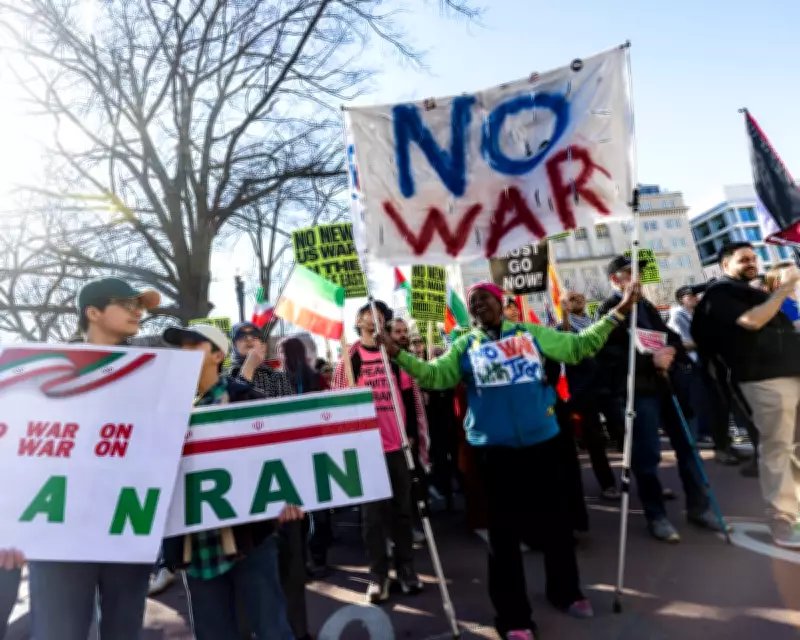
Trump and Netanyahu's Attack on Iran: An Illegal Act of Aggression
In a stark condemnation, Kenneth Roth asserts that the military attack on Iran by Donald Trump and Benjamin Netanyahu constitutes an illegal act of aggression under international law. This action, he argues, is indistinguishable from Russian President Vladimir Putin's invasion of Ukraine or Rwandan President Paul Kagame's incursion into the Democratic Republic of Congo. The United Nations Charter permits the use of military force only in two scenarios: with Security Council authorization or in self-defense against an actual or imminent armed attack. Neither condition was met in this case, rendering the strike unlawful.
Flawed Justifications and Diplomatic Failures
Trump's video justification cited an "imminent threat" from Iran, but no evidence supports this claim. He listed past attacks attributed to Iran, none of which are ongoing or imminent. Netanyahu used the term "pre-emptive," but prevention alone does not justify war, as it could open Pandora's box to countless conflicts. Governments must rely on diplomacy and non-military pressure to address future threats. Iran is already under comprehensive sanctions, yet Trump and Netanyahu abandoned diplomacy, seemingly unwilling to accept a negotiated solution. With both leaders facing domestic political challenges ahead of elections, they appeared eager to resort to military action.
The negotiations, now suspended, lacked clarity. Trump demanded Iran never acquire nuclear weapons, a stance Iran has repeatedly affirmed. Iran seemed open to inspections and diluting its highly enriched uranium. The sticking point was uranium enrichment, with the US historically demanding Iran forsake it entirely, despite the Nuclear Non-Proliferation Treaty granting every government that right. Washington had shown signs of backing away from this absolute demand, and Tehran offered compromises like limiting enrichment to low levels for medical or scientific use. Other US demands included limits on ballistic missiles and support for regional groups, but these may not have been central in recent talks.

Consequences and International Response
Trump launched the attack, claiming Iran wasn't serious about a deal, while Netanyahu preferred a military solution. This avoidable war, a choice rather than a necessity, blatantly violates international law. The bombing killed Iran's Supreme Leader, Ayatollah Ali Khamenei, prompting Trump to urge Iranians to overthrow their government. Although the Iranian regime is despicable, having killed thousands in protests, regime change is not a defense for aggression. Humanitarian intervention is unjustified here, as it requires stopping ongoing or imminent mass slaughter, which was absent.
The international response has been cool. Britain refused to allow US bombers to use Diego Garcia, and Britain, France, and Germany issued a joint statement critical of Iran without endorsing the invasion. This disquiet stems from the attack undermining efforts to hold Russia accountable for its Ukraine invasion, as it provides Putin with a hypocrisy argument. When the world's most powerful government flouts international law, defending it becomes harder.
Unpredictable Outcomes and Global Ramifications
As with any military attack, consequences are difficult to predict. Khamenei, an 86-year-old hard-liner, likely had a successor in place. Regime change from the air is challenging, as seen in Venezuela where Trump removed Nicolás Maduro but left the regime intact. A successor might be more accommodating, but Iran would remain far from democratic. The Iranian people may rise up again, but the regime could respond with brutality, leading to uncertain outcomes.
Global ramifications are troubling. Trump's might-makes-right worldview could encourage other aggressions, such as China seizing Taiwan or conflicts in Ethiopia and Pakistan. By attacking Iran without nuclear weapons while sparing North Korea with its arsenal, Trump signals that nuclear capability deters aggression. This sets a dangerous precedent where sovereignty is disregarded, and disputes are resolved by force rather than diplomacy. A world where destiny is dictated by those with the biggest guns is perilous, even if one desires an end to oppressive regimes like Iran's Islamic Republic.