

Trump Administration Invokes Emergency Powers to Boost Domestic Oil Supply
In a significant move to address rising energy costs, the Trump administration has utilized emergency powers to order Sable Offshore Corp. to resume offshore oil production along California's coast. This directive aims to increase domestic supply as global oil markets face turbulence due to the ongoing U.S.-Israel war with Iran.
Jones Act Temporarily Waived to Facilitate Foreign Shipping
On Wednesday, the White House announced a 60-day waiver of the Jones Act, a century-old law designed to protect the U.S. shipping industry. This temporary suspension permits foreign-flagged vessels carrying oil and gas to travel between American ports, a measure intended to mitigate short-term disruptions in oil markets.
The administration stated that this action supports the military objectives of Operation Epic Fury while addressing economic pressures. "This is another step to mitigate the short-term disruptions to the oil markets as the U.S. military continues meeting the objectives of Operation Epic Fury," the White House emphasized in an official statement.

Global Oil Market Strains and Iranian Blockade Impact
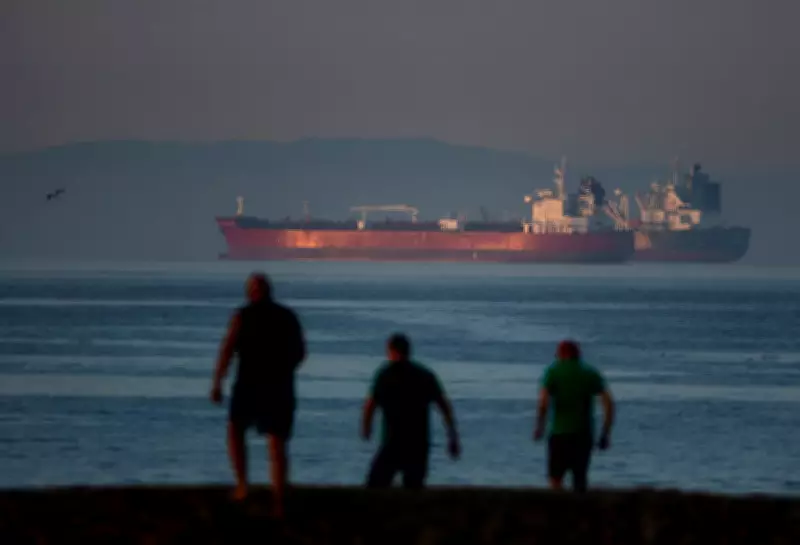
The conflict with Iran has severely impacted global oil trade, particularly through the Strait of Hormuz, a critical passage for approximately one-fifth of the world's oil. Reports indicate that Iran continues to export millions of barrels daily, earning an estimated $140 million from oil sales, while simultaneously blocking other tankers and attacking commercial ships.
According to the Financial Times, at least 13 Iranian supertankers carrying 24 million barrels of oil have traversed the strait since hostilities began. The New York Times notes that attacks have targeted at least 16 ships, including tankers, exacerbating supply chain issues.
Rising Prices and Diplomatic Tensions
The market repercussions have been substantial. Brent crude prices reached $108 per barrel, with U.S. crude at $97 per barrel. U.S. gasoline prices hit $3.84 per gallon, the highest since September 2023, according to AAA.
U.S. Treasury Secretary Scott Bessent acknowledged on CNBC that the U.S. is allowing Iranian tankers to pass through the strait to maintain global supply. "We think that there will be a natural opening that the Iranians are letting out, and for now we're fine with that. We want the world to be well supplied," he stated.
Military Actions and International Diplomacy
Last week, U.S. strikes targeted military installations on Iran's Kharg Island, a major oil processing hub, while deliberately avoiding energy infrastructure. Despite these efforts, President Trump has faced challenges in garnering international support to reopen the strait.
After European allies, including British Prime Minister Keir Starmer, declined assistance, Trump criticized their stance as a "very foolish mistake." He asserted on social media that the U.S. does not require NATO support, highlighting diplomatic rifts amid the crisis.
This series of actions underscores the administration's multifaceted approach to balancing military engagements with economic stability, as oil prices continue to influence global and domestic markets.






