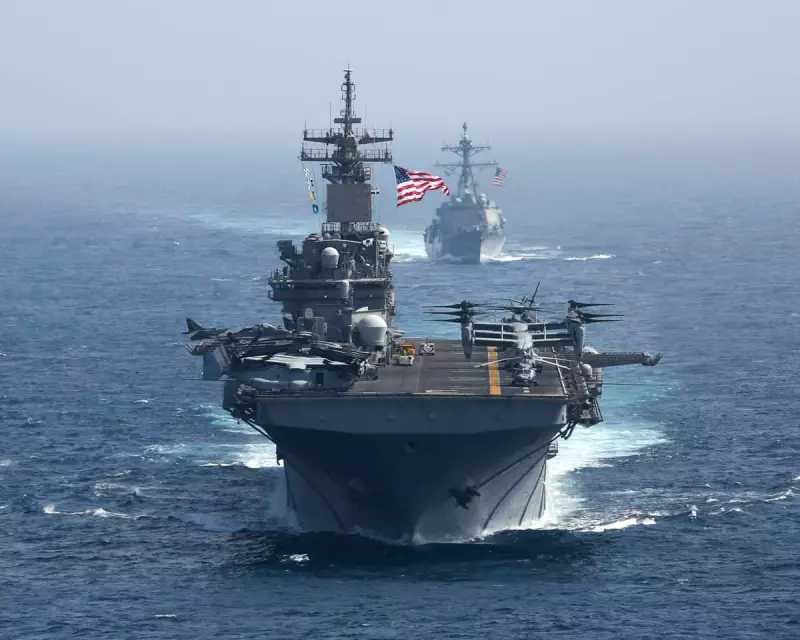
Trump Issues Stark Warning to Iran as US Naval Fleet Advances
Donald Trump has dramatically escalated tensions with Iran, warning that time is running out for Tehran to negotiate a nuclear deal as a substantial United States naval force moves toward the region. The US president declared that the fleet, spearheaded by the aircraft carrier USS Abraham Lincoln, represents a formidable military presence prepared to act with decisive force if necessary.
Comparisons to Venezuela Deployment and Explicit Threats
In social media statements, Trump explicitly compared the current deployment to previous military actions, noting that the armada heading toward Iran is larger than the force sent to Venezuela before the removal of President Nicolás Maduro earlier this month. He emphasised that this naval group is "prepared to rapidly fulfill its missions with speed and violence if necessary", marking one of his most direct military warnings to date.
The president framed his message as a final opportunity for Iran, stating: "Hopefully Iran will quickly 'Come to the Table' and negotiate a fair and equitable deal – NO NUCLEAR WEAPONS – one that is good for all parties. Time is running out, it is truly of the essence!" He referenced previous military actions against Iran, warning that "the next attack will be far worse" if Tehran refuses to engage in negotiations.

Expanding Demands Beyond Nuclear Programme
Recent developments indicate that Trump's administration has broadened its demands beyond Iran's nuclear capabilities. Diplomatic sources reveal that Washington now seeks to curb Iran's ability to fire long-range missiles, which has long been considered central to Iranian military projection in the region. Additionally, Trump has suggested that Iranian Supreme Leader Ali Khamenei should leave the world stage – a demand Tehran is certain to reject outright.
European diplomats had anticipated a crisis developing over the weekend, with noticeable signs of Israeli apprehension about potential Iranian reprisals should military action occur. The timing of these escalated threats coincides with Trump facing domestic political pressure regarding violence administered by homeland security officers in Minnesota, leading some observers to view the situation as a potential distraction strategy.
Iran's Response and Diplomatic Maneuvering
Iranian officials have responded cautiously but firmly to the escalating situation. Foreign Minister Abbas Araghchi stated that Iran is not prepared to negotiate under threats but remains willing to engage in talks without preconditions. This position has been communicated through multiple intermediaries to Trump's special envoy, Steve Witkoff.
In recent diplomatic activity, Iranian representatives have held discussions with officials from Saudi Arabia, Qatar, and Egypt – all Arab states now feverishly exploring avenues to reopen negotiations without Iran having to accept predetermined outcomes. These nations played crucial roles in persuading Trump to refrain from mounting an attack three weeks ago, but the president now appears to have greater military flexibility and seems more focused on securing a nuclear agreement rather than punishing Iran for suppressing street protests.
Historical Context and Current Vulnerabilities
Deep suspicion persists in Tehran regarding negotiations with the United States, particularly since talks last June were interrupted when Israel received US clearance to launch an attack designed to decapitate Iran's leadership and destroy its civil nuclear sites. That assault resulted in approximately 1,000 casualties and significant damage to key nuclear facilities.
Since that devastating attack, Iran has faced additional challenges including a plunging currency and rampant inflation, further weakening its position. With its nuclear infrastructure already compromised, potential targets in any new conflict would likely focus on Iranian leadership positions. Previous military actions revealed Israel's near-total air dominance over Iranian territory.

Regional Concerns and Defence Postures
Regional powers have expressed serious concerns about potential escalation. Turkish Foreign Minister Hakan Fidan has urged the United States to separate its broader demands regarding Iran's missile programme and regional militia support from nuclear negotiations, warning that Iran would likely refuse to engage if all issues were presented simultaneously.
Meanwhile, most Gulf states – fearful of Iranian retaliation – have indicated they are unwilling to permit the United States to use their airspace or military bases to launch attacks against Iran. Iranian officials have responded by stating they would target specific bases used for operations against them while maintaining that they do not consider neighbouring countries enemies.
The Iranian government has announced it will "increase our level of defence readiness against the US military buildup to the highest level" while maintaining that they would accept negotiations without predetermined outcomes if the United States approaches discussions in good faith.