Trump Issues Ultimatum to Iran Amid Naval Buildup
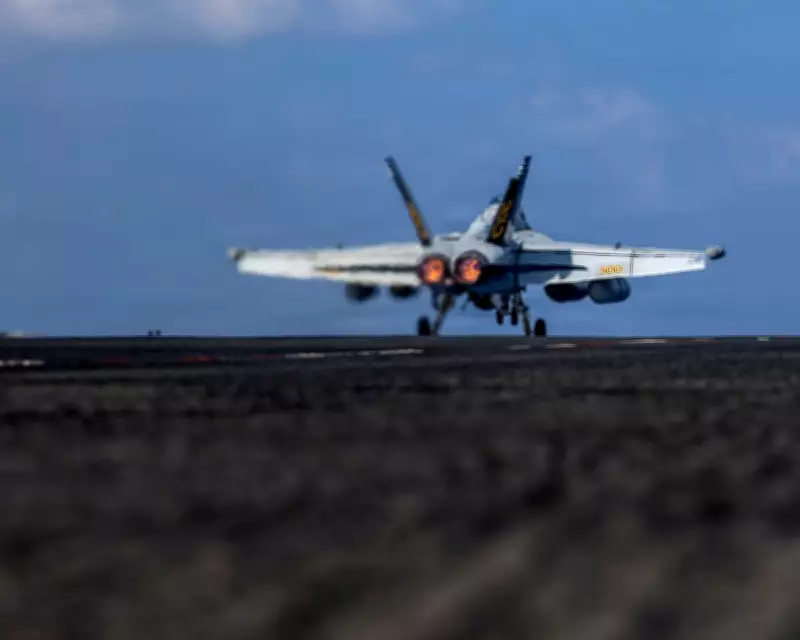
US President Donald Trump has delivered a forceful warning to Iran, demanding that the nation cease its nuclear ambitions and halt the violent suppression of protesters. The stark ultimatum comes as a significant armada of American warships, including the aircraft carrier USS Abraham Lincoln, has been deployed to the Indian Ocean and Middle Eastern waters, underscoring the heightened military posture.
Clear Demands and Military Posturing
Speaking to reporters, President Trump outlined two non-negotiable conditions for Iran to avoid potential military confrontation. "Number one, no nuclear. And number two, stop killing protesters," he stated emphatically, adding that "they are killing them by the thousands." The president emphasised that while a substantial naval force is en route to the region, "it would be great if we didn't have to use them."
This public declaration follows earlier social media posts in which Trump warned that a "massive Armada is heading to Iran" and is prepared to act with "speed and violence, if necessary." The White House appears to be leveraging this show of force to pressure Tehran into adopting a more flexible negotiating stance, though time is reportedly running short.

Diplomatic Manoeuvres and Regional Reactions
The warning coincided with diplomatic movements, as Iranian Foreign Minister Abbas Araghchi arrived in Turkey for discussions regarding potential negotiations with the United States. However, initial remarks from Araghchi offered little indication of an imminent breakthrough. He reiterated Iran's longstanding position, stating that the country "has always welcomed a mutually beneficial, fair and equitable nuclear deal" and has never sought nuclear weapons.
Regional dynamics are complex, with Araghchi holding separate calls with counterparts from Qatar, Egypt, the United Arab Emirates, Oman, and Turkey. Notably, Arab states have insisted their air and ground facilities cannot be used by the US for any offensive action against Iran.
Broader Demands and International Tensions
Beyond the public ultimatum, the US has articulated a series of broader demands through special envoy Steve Witkoff. These include:
- An end to Iran's nuclear enrichment programme
- The transfer of existing stocks of highly enriched uranium out of the country
- Limitations on Iran's missile development programme
- Cessation of support for proxy groups in Lebanon, Iraq, and Yemen
From Tehran's perspective, these cumulative demands represent an existential threat to national sovereignty. The situation is further complicated by the European Union's recent decision to designate the Islamic Revolutionary Guards Corps as a terrorist organisation, a move likely to be followed by the UK. Araghchi condemned this as a "major strategic mistake," warning of serious consequences for EU-Iran relations.
Uncertain Path Forward
With precise US objectives sometimes appearing unclear, Trump noted he has been communicating with Iranian officials, though it remains uncertain whether this involves direct dialogue or intermediaries. The UK Foreign Office has expressed concerns that the EU's terrorist designation could prompt Iran to sever diplomatic relations entirely.
As the naval buildup continues and diplomatic channels remain active but strained, the international community watches closely. The coming days will be critical in determining whether this heightened pressure yields negotiation or escalation in one of the world's most volatile regions.