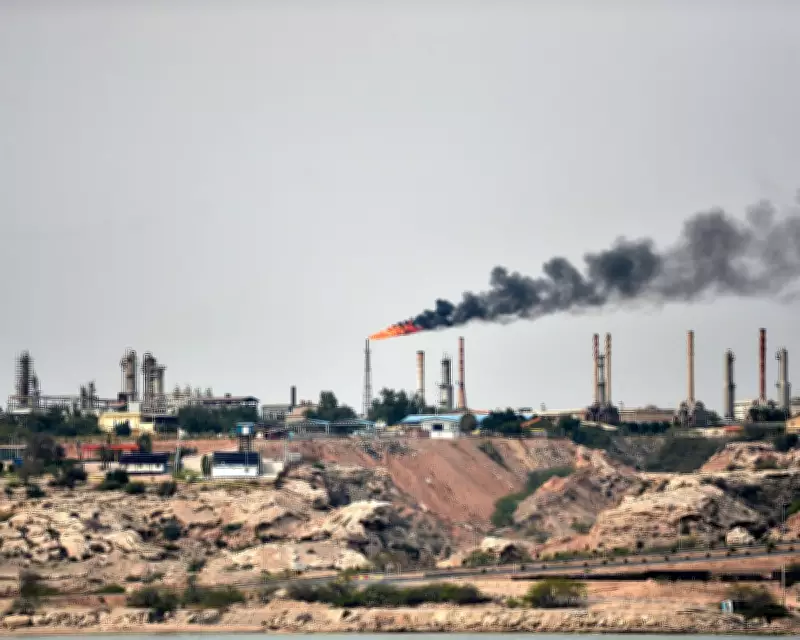
Trump Announces Destruction of Iranian Military Targets on Kharg Island
Former US President Donald Trump declared on Friday that American military forces have successfully "obliterated" designated military targets during a targeted raid on Iran's Kharg Island. In a significant escalation of rhetoric, Trump issued a stark warning that critical oil export infrastructure located on the strategic island could be the next objective if Iran interferes with maritime traffic.
Threat to Global Oil Supply and Economic Stability
Kharg Island, situated approximately 15 miles off the Iranian coast, serves as the primary hub for the nation's oil exports. The ongoing conflict has pushed the flow of oil and gas from the Gulf region to the forefront of international concerns. Iran has effectively sealed the narrow Strait of Hormuz, a vital maritime chokepoint through which an estimated one-fifth of globally traded oil passes.
This closure has triggered a sharp surge in global oil prices, raising alarms about potential severe damage to economies worldwide. In a statement posted on his Truth Social platform, Trump framed his decision with a conditional threat: "For reasons of decency, I have chosen NOT to wipe out the Oil Infrastructure on the Island. However, should Iran, or anyone else, do anything to interfere with the Free and Safe Passage of Ships through the strait of Hormuz, I will immediately reconsider this decision."

Defiant Iranian Response and Regional Escalation
Trump's pronouncements prompted an immediate and defiant reaction from Iranian military leadership. Senior officials reiterated previous threats to launch attacks against any oil and energy facilities across the Middle East that have American affiliations or cooperation, should Iran's own oil infrastructure be targeted.
Ebrahim Zolfaghari, spokesperson for Iran's joint military command, explicitly warned of retaliatory strikes on "all oil, economic and energy infrastructures belonging to oil companies across the region that have American shares or cooperate with America." The conflict, now entering its third week, has seen Iran conduct daily assaults on oil and other critical infrastructure around the Gulf region and against Israel.
Human Cost and Leadership Statements
The human toll continues to mount. Reports indicate over 1,400 fatalities in Iran amid relentless bombardment, with 13 killed in Israel and approximately 20 in the Gulf region. In his first public address since the conflict began, Iran's new Supreme Leader, Mojtaba Khamenei, vowed to maintain the closure of the Strait of Hormuz. He further urged neighboring countries to expel US military bases from their territories or face potential attacks.
Khamenei, who reportedly sustained injuries in an Israeli strike that killed several family members, was described by an official as not being "impaired." Meanwhile, Trump declined to set a public timeline for the conflict's conclusion, stating only, "It'll be as long as it's necessary."
Analyst Warnings of Deepening Global Crisis
Security and energy analysts have expressed grave concerns that military action directed at Kharg Island's oil facilities would precipitate a deeper global economic crisis. Neil Quilliam of Chatham House highlighted the extreme sensitivity of the site, noting, "We may see the $120 a barrel price we saw on Monday heading to $150 if Kharg were attacked. It's too vital for global energy markets."
Trump has previously employed highly inflammatory language against Iranian leadership, labeling them "deranged scumbags." US Defense Secretary Pete Hegseth echoed this tone, accusing Iranian leaders of being "desperate and hiding" and confirming Khamenei was wounded and likely disfigured.
Regional Violence Intensifies
The conflict continues to spiral across the Middle East. On Saturday, missile and drone alarms sounded across Israel following launches by Iran and the Tehran-backed Hezbollah movement in Lebanon. Gulf states reported ongoing Iranian drone and missile attacks targeting both US military installations and civilian infrastructure.

In Lebanon, the humanitarian situation deteriorated sharply, with nearly 800 reported killed and 850,000 displaced due to Israeli strikes against Hezbollah, with warnings of no respite. Concerns of a potential US seizure of Kharg Island were amplified by Washington's announcement deploying an additional 2,500 Marines and the USS Tripoli to the region, though officials clarified such deployments also serve non-combat roles like embassy security and disaster relief.
US forces have not been immune to casualties, including the tragic loss of all six crew members in a refueling aircraft crash in western Iraq. The situation remains highly volatile, with the stability of global energy markets hanging in the balance.