

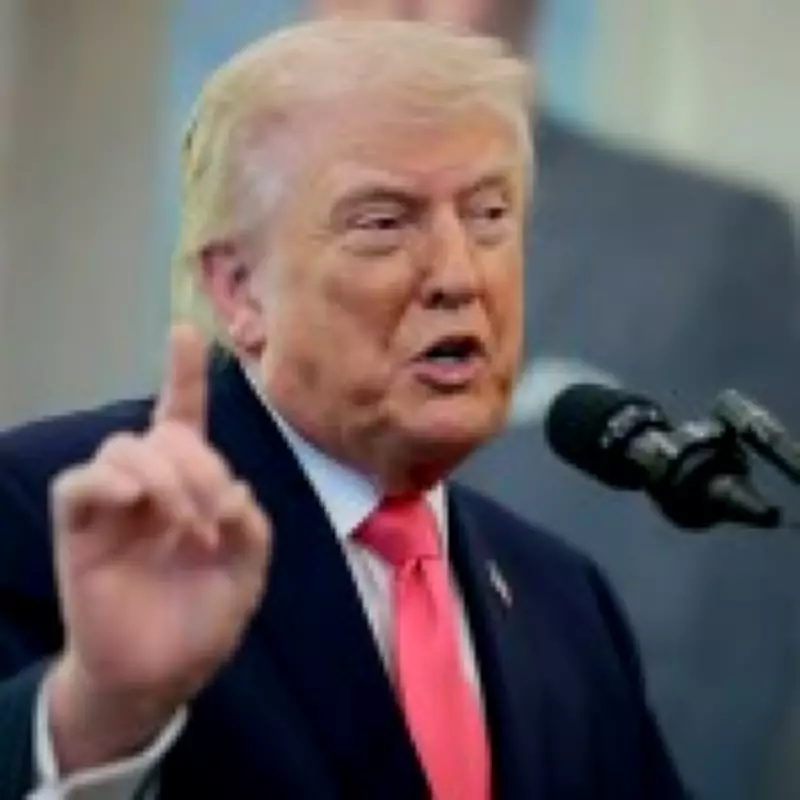
Trump's Daily Explosive Montage: A Window Into Iran War Strategy
According to exclusive reporting from NBC News, former President Donald Trump maintains a daily ritual of watching a two-minute montage showcasing the most significant military strikes in Iran. This visual "update" on the ongoing conflict has raised eyebrows among those familiar with the situation, with sources describing the compilation as consisting primarily of dramatic footage depicting various targets "blowing up." While these explosive clips are reportedly paired with briefings from top military and intelligence advisors, concerns are mounting about the potential for a distorted perspective.
Concerns Over Incomplete Picture
Several sources close to the former president have expressed apprehension that these condensed, action-oriented videos fail to convey the complex, multifaceted reality of the war that Trump himself initiated. They worry that such a presentation might obscure crucial strategic details, humanitarian costs, and diplomatic nuances, potentially leading to decisions based on an oversimplified narrative.
The White House has forcefully rejected these characterizations. Spokesperson Karoline Leavitt issued a sharp rebuttal, stating, "That's an absolutely false assertion coming from someone who has not been present in the room. Anyone present for conversations with President Trump knows he actively seeks and solicits the opinions of everyone in the room and expects full-throated honesty from all of his top advisors."

Public Opposition and Strategic Vulnerabilities
This controversy unfolds against a backdrop of significant public dissent. Most American voters continue to oppose the war in Iran, a conflict that has already resulted in the deaths of 14 U.S. soldiers and thousands of civilians, particularly through nearby Israeli strikes in Lebanon. When the intervention began, only 41% of Americans approved—a level of support markedly lower than for any other U.S. military engagement in recent decades.
Political analyst Robert Spitzer, a distinguished Service Professor and author of four books on the American presidency, previously noted that from Trump's perspective, this conflict aligns with an "America first" doctrine. "He insists this is in America's interests—though he has not produced a consistent rationale for starting this war," Spitzer explained.
A former senior aide to Trump echoed concerns about the president's strategic position, telling Metro that Trump finds himself in a "vulnerable position" regarding the Iran war and appears uncertain about how to extract the United States from it.
Diplomatic Stalemate and Unclear Objectives
John Robert Bolton, Trump's former national security advisor, argued that while a strong case for regime change in Iran exists—citing the country's pursuit of weapons of mass destruction, engagement in international terrorism, and domestic repression—Trump has failed to articulate this rationale clearly to the American public, Congress, or international allies.
"You've always got to be prudent, but when a country is seeking weapons of mass destruction—chemical, biological, or nuclear—and engaging in international terrorism while repressing its own people, it is a problem," Bolton warned. He added, "Trump didn't make it clear to the public, to Congress, or to the Allies. It's not too late, but it's getting close. By failing to make the case, he has put himself in a vulnerable position. He knows he's in a difficult place, and he doesn't know how to get out of it."
Recent Diplomatic Moves Meet Resistance
Amid this strategic uncertainty, diplomatic efforts continue to face significant hurdles. Yesterday, Iran reportedly received a U.S. proposal to pause the hostilities in the Middle East. This plan was delivered even as Washington deployed additional paratroopers and Marines to the region, signaling a simultaneous preparation for both diplomacy and escalation.

The proposal, conveyed by officials from Pakistan, addresses several key issues: sanctions relief for Iran, a rollback of Iran's nuclear program, limits on its missile capabilities, and the reopening of the strategically vital Strait of Hormuz. An Egyptian official involved in mediation efforts noted that the plan also includes proposed restrictions on Iran's support for various armed groups across the region.
However, Tehran has publicly dismissed these diplomatic overtures. Iranian officials did not confirm receipt of the plan and have continued to launch attacks against Israel and Gulf Arab countries. Iran has firmly stated it will not negotiate on two pillars of its national security strategy: its ballistic missile program and its support for regional militias, which it views as essential deterrents.
This combination of daily explosive montages, unclear strategic communication, public opposition, and stalled diplomacy paints a complex picture of an administration grappling with a conflict that shows no signs of easy resolution. The gap between the visceral, simplified narrative of the videos and the intricate, stubborn realities on the ground appears to be widening, leaving many observers questioning the path forward.





