

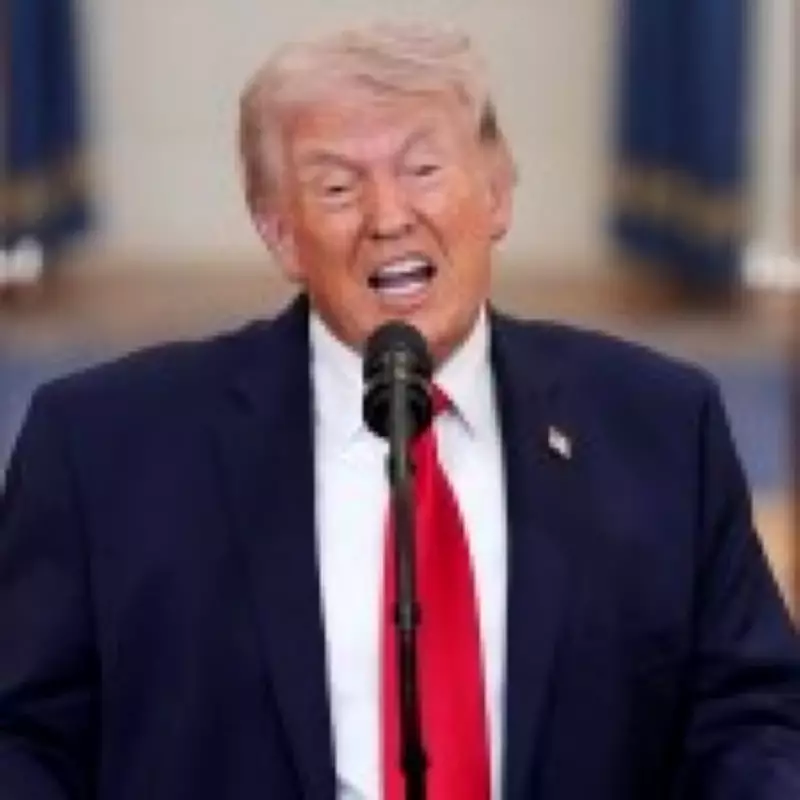
Trump's Explosive Easter Sunday Post Triggers International Concern
When Donald Trump published a shocking message on Truth Social at approximately 1 p.m. UK time on Easter Sunday, media outlets worldwide scrambled to capture the moment. The immediate reaction was one of disbelief: could this be a hack, or would the post vanish swiftly? Why would a U.S. president deploy such crude language and sign off with 'Praise be to Allah' on a Christian holiday? Yet, over twenty-four hours later, the statement remains live on Trump's feed, marking what may be his most outrageous public declaration to date, even for a figure notorious for extreme rhetoric.
The Content of the Controversial Message
The post reads: 'Tuesday will be Power Plant Day, and Bridge Day, all wrapped up in one, in Iran. There will be nothing like it!!! 'Open the F***in' Strait, you crazy b******s, or you'll be living in Hell – JUST WATCH!' If uttered by any other president, this would likely prompt calls for mental health evaluation under the 25th Amendment. However, given Trump's history of wild statements, analysts have instead launched into a speculative frenzy. Is this a hollow threat meant to confuse adversaries, or a genuine intent to target civilian infrastructure, potentially constituting a war crime? The ambiguity leaves even experts uncertain.
Expert Analysis and the 'Madman Theory'
Michael Cox, Emeritus Professor of International Relations at the London School of Economics and a leading authority on U.S. foreign policy, expressed his perplexity. 'The answer is, I just don't know,' he stated. 'I think, to be totally honest, very few of us do know, and maybe even Donald Trump doesn't.' Cox highlighted Trump's pattern of making threats without always following through, but emphasized the dangerous uncertainty it creates. This aligns with the 'madman theory,' a strategy famously used by President Richard Nixon during the Vietnam War to appear unpredictable and compel concessions from foes. Trump, who corresponded with Nixon in the 1980s, is a known advocate of this approach, applying it not only in conflicts but also in economic policies like tariffs.

Historical Context and Escalating Tensions
The use of expletives in Trump's post may be a deliberate tactic to reinforce his unpredictable image. This isn't his first instance of vulgar language in Middle East contexts; last June, he publicly criticized Israel and Iran with similar profanity. By breaking presidential decorum, he signals a propensity for sudden aggression. Alternatively, the rant could reflect genuine frustration as Iran's retaliatory actions have inflicted significant damage on the global economy, with little visible success from Trump's strategy beyond the elimination of key figures. If background negotiations fail by Tuesday evening, Trump may feel compelled to act on his threat, prolonging the war and causing immense suffering for Iranian civilians.
Broader Implications and Public Reaction
Professor Cox noted, 'It's just one more indication of the style of a president who, frankly, is difficult to interpret, and worries the life out of a lot of people over here on this side of the Atlantic.' He added that the war is unpopular in the United States, and any escalation could further diminish public support. This Easter Sunday outburst may signal cracks in Trump's conflict strategy, highlighting the risks of his madman theory backfiring and leading to irreversible consequences.






