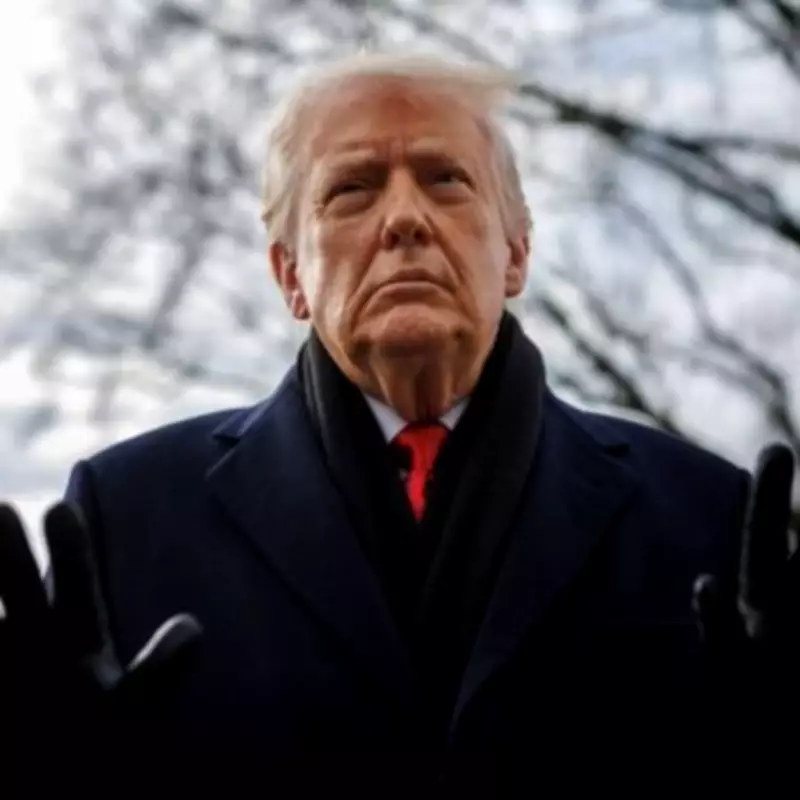
Trump's Military Moves Against Iran Criticized as Predictable and Childlike
Former US President Donald Trump has been compared to a child entering the famous Hamleys toy store, overwhelmed with excitement over what he can play with, by a leading defence expert. The analogy came following Trump's confirmation that the United States and Israel conducted targeted strikes across Iran, resulting in the death of Ayatollah Ali Khamenei.
Security Expert Questions Legitimacy of Military Action
Karin von Hippel, former director of the Royal United Services Institute, expressed deep concerns about the legitimacy of the military action during an interview on Sky News's Sunday Morning With Trevor Phillips programme. She described the situation as the "usual story," suggesting Trump appeared to be grasping at straws to justify his actions.
"It's almost as if he's grasping at straws to come up with an excuse to do something he wanted to do," von Hippel stated. "He campaigned on avoiding military entanglements in the Gulf, not making mistakes like George Bush had in Iraq, and here he is enamoured, like others have been, of his military equipment and what he can do."

The defence expert elaborated on her toy store comparison, noting: "He's almost like a kid who's gone into the Hamleys toy store and is so excited by what he can play with. That's really the challenge we're facing."
Retaliation and Regional Fallout
The US-Israeli strikes prompted immediate retaliation from Iran, with attacks reported in several Gulf countries including the United Arab Emirates, Qatar, Bahrain, and Saudi Arabia. This escalation has created significant regional instability and raised concerns about broader conflict.
Von Hippel pointed to Trump's predictable pattern of behavior, noting his movement of military equipment into the region represented the largest build-up of military force since the 2003 Iraq war. "If you move that much military equipment into the region, you either have to use it fairly soon or you have to remove it," she explained. "He would look weak if he removed it, and I think he's becoming kind of predictable."
Broader Implications for Iran's Future
In a separate development, Bronwen Maddox, chief executive of Chatham House, warned that Iran is heading toward a "very, very messy picture" with no clear opposition leader positioned to take control. Speaking on the BBC's Sunday With Laura Kuenssberg programme, Maddox expressed skepticism about democratic transition in the country.
"I think it's pretty clear there isn't such a person at the moment," Maddox said regarding potential opposition leadership. "At best, there's a very confused picture. I'm afraid we're heading for a very, very messy picture, which is an enormous risk to those who want to come out and protest."
Historical Context and Nuclear Concerns
Von Hippel contextualized the current conflict within decades-long tensions, particularly concerning Iran's nuclear ambitions. "It's a concern that has been under way for decades now, really, it was the threat of building a nuclear bomb," she noted. "The negotiations were under way to get that under control and then, of course, Trump was coming up with all sorts of other reasons."
The defence expert questioned the validity of Trump's justifications, pointing out that Iranian chants of "death to America" have occurred for decades and that previous incidents involving American deaths in Iraq had been addressed, albeit imperfectly, at the time they occurred.
Potential Outcomes and Regional Stability
While acknowledging the remote possibility that significant military action could create space for popular uprising in Iran, von Hippel cautioned that such scenarios more typically lead to "looting and anarchy" as witnessed in Panama (1989), Iraq (2003), and Kosovo following NATO bombing campaigns.
Maddox added her assessment of regional dynamics, stating: "I don't think it's realistic to see an all-out war, because so many countries don't want it, but a destabilisation and the Gulf and Saudi Arabia pulling away from the US – I think that is likely."
The combined analysis from these security experts paints a troubling picture of predictable military escalation, questionable justification for action, and potentially destabilizing consequences for the entire Middle East region.