Trump's Military Strikes on Iran Unleash Regional Turmoil and Global Alarm
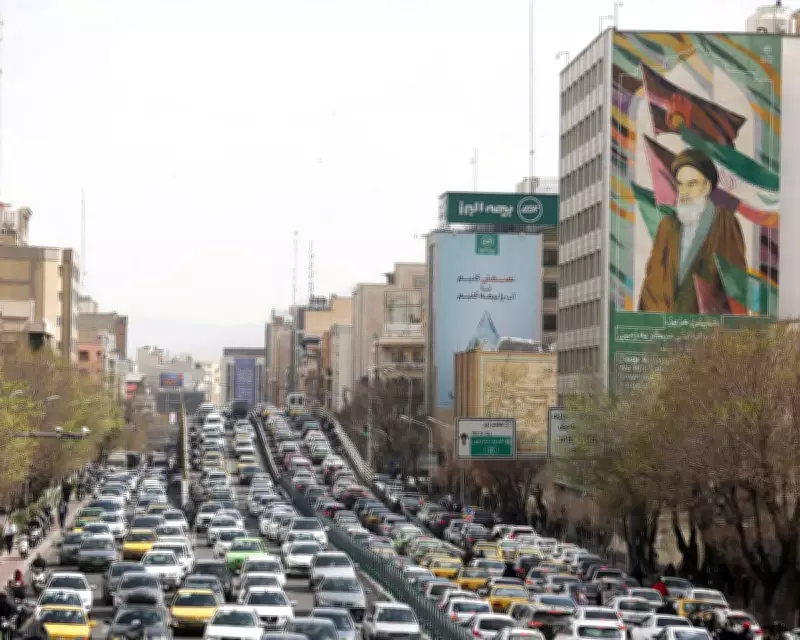
The streets of Tehran were clogged with blocked roads and debris on February 28, 2026, following coordinated Israeli and American military strikes against Iran. This aggressive action, ordered by President Donald Trump, has thrust the Middle East into a state of heightened conflict and uncertainty, with immediate repercussions spreading across the region.
A Pattern of Reckless Intervention Repeats Itself
Once again, a bellicose U.S. president has deployed overwhelming military force in an attempt to subjugate a sovereign nation. The justifications for this attack are built upon a foundation of exaggerated claims and blatant falsehoods, echoing the deceptive narratives that preceded the disastrous 2003 invasion of Iraq. International law, United Nations protocols, and the cautious counsel of allied nations were all disregarded in favor of a premeditated act of aggression.
The predictable outcomes are already materializing: civilian casualties, orphaned children, and families torn apart. Regional chaos has intensified, and global oil markets are experiencing panic in anticipation of Iranian retaliation, which may be bolstered by Tehran's allies, including Hezbollah and the Houthis. This intervention, lacking clear objectives or a long-term strategy, risks seeding new generations of hatred and fueling terrorist vendettas, mirroring the bitter failures of U.S.-led campaigns in Afghanistan and Iraq.

Historical Parallels and Manufactured Crises
The similarities between Trump's assault on Iran and George W. Bush's invasion of Iraq are striking and deeply troubling. Both operations fit into a broader, costly pattern of unsuccessful American interventionism that dates back decades. Trump, who once promised to avoid foreign entanglements, has instead embraced the same imperial hubris that has characterized U.S. foreign policy since the mid-20th century.
Like his predecessor, Trump has manufactured a crisis based on false premises. His unsubstantiated claims about Iran's nuclear capabilities and ballistic missile threats recall the fabricated intelligence about weapons of mass destruction used to justify the war in Iraq. Furthermore, Israeli assertions of "pre-emptive" strikes are misleading, as there is no credible evidence that Iran was planning an imminent attack. In reality, Iran was actively seeking to preserve peace following previous military onslaughts.
Delusional Demands and Dangerous Rhetoric
Prior to the attack, Trump refused to articulate clear goals, despite warnings from Arab and European allies about the risk of a regional conflagration. His stated demands now appear delusional: the complete obliteration of Iran's nuclear facilities, the destruction of its ballistic missile arsenal, the dismantling of the Islamic Revolutionary Guards Corps, and the neutralization of Tehran's proxy forces across the Middle East.
Adding to the peril, Trump has openly encouraged the Iranian people to overthrow their government, promising American support for an insurrection. This irresponsible rhetoric invites anarchy and could trigger a catastrophic civil war, potentially fracturing the Iranian state along ethnic and religious lines. Such a scenario would draw in neighboring countries and create a humanitarian disaster of immense proportions.
The Folly of American Exceptionalism
Ben Rhodes, former deputy national security adviser to President Barack Obama, recently warned that Trump embodies the worst impulses of American exceptionalism. This ingrained belief in the United States' unique right to dictate global affairs has repeatedly led to aggressive actions cast as necessities, despite the world's clear reluctance to submit to American will.
For the second time, Trump engaged in negotiations with Iran while secretly planning a military strike, rendering diplomatic efforts in Geneva a mere charade. There is little indication that Trump or Israeli Prime Minister Benjamin Netanyahu will halt the attacks soon, as doing so would be perceived as an admission of failure. Both leaders are driven by personal and political motives: Trump seeks to avenge historical humiliations and boost his domestic approval ratings, while Netanyahu pursues an unattainable guarantee of permanent security on Israel's terms.

An Uncertain and Perilous Future
The ultimate conclusion of this ill-considered intervention remains uncertain. While reports indicate attacks on "leadership targets," including Supreme Leader Ayatollah Ali Khamenei, a sudden collapse of the Iranian government is unlikely. Instead, a wounded and resentful regime will likely continue to pose significant domestic and international challenges. Iran cannot be bombed into becoming a functional democracy, and its defiance of Western pressure cannot be mitigated through social media posturing.
Despite the escalating conflict, common ground exists between the American and Iranian people. Both populations largely oppose tyranny and seek principles of democratic self-determination, political autonomy, and individual rights. The real adversaries are not the citizens of these nations, but their authoritarian leaders. This unnecessary fight, driven by hubris and misinformation, risks catastrophic consequences for the entire region and beyond.