

The Inevitable Conflict: Why Peace with Iran's Theocracy Was Never Possible
Donald Trump's administration appears fundamentally confused about whether its military campaign against Iran focuses on nuclear capabilities or regime change. What remains unequivocally clear is that Iran's brutal theocratic government represents a significant and enduring threat to British national security and Western interests globally.
Operation Epic Fury's Global Consequences
The joint United States and Israel military campaign against Iran, launched on the final day of February under the American designation Operation Epic Fury, has triggered severe global economic repercussions. Oil prices have surged to two-year highs, with Qatar's energy minister warning that Gulf production could cease entirely within days. The strategic Strait of Hormuz, responsible for transporting one-fifth of global oil and liquefied natural gas, has seen traffic nearly disappear after Iran declared it closed.
Iran achieved this maritime blockade through relatively simple drone strikes on commercial vessels, causing maritime insurance costs to skyrocket to prohibitive levels. Beyond energy markets, global shipping costs have increased dramatically, threatening to raise consumer prices across numerous sectors since 80-90% of worldwide trade occurs via sea transport.

Tourism in Gulf states including Dubai, Qatar, and Saudi Arabia faces potential 25% declines, while Asian stock markets have shown particular vulnerability to the conflict's economic shocks. Should the confrontation between the United States, Israel, and Iran extend beyond current expectations, the economic situation could deteriorate rapidly.
Strategic Confusion in Washington
The Trump administration's contradictory messaging raises serious concerns about strategic clarity. Officials have failed to articulate whether military action aims to prevent nuclear development or facilitate regime change in Tehran. President Trump previously declared Iran's nuclear capabilities "completely and totally obliterated" by June's Operation Midnight Hammer air strikes, yet nuclear concerns continue to justify current operations.
Regime change presents different challenges, typically requiring ground troops and potentially violating international law. The White House appears increasingly focused on damage metrics rather than coherent strategic objectives, echoing concerning parallels with late-stage Vietnam War decision-making. Neither President Trump nor Secretary of War Pete Hegseth has articulated a clear vision of success beyond inflicting damage on Iranian infrastructure and leadership.
Iran's Longstanding Hostility
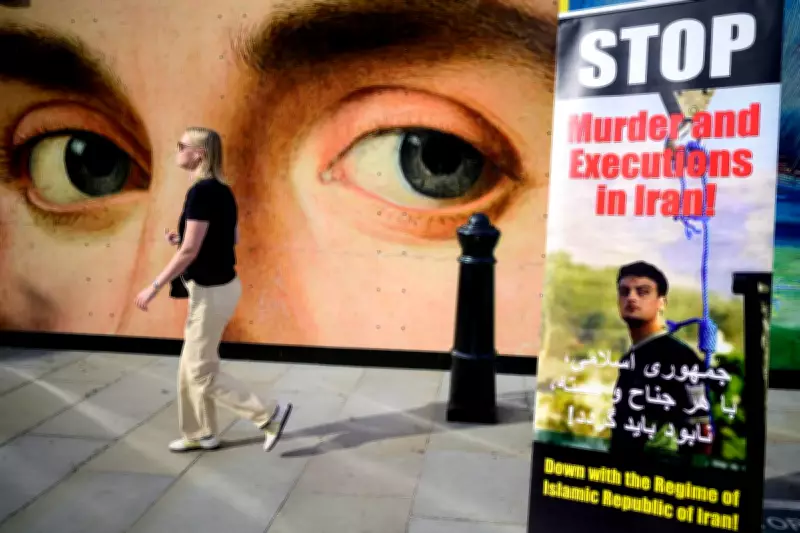
Despite legitimate concerns about the conflict's conduct and consequences, realistic assessment reveals that peaceful cooperation with Iran's Islamic Republic was never genuinely attainable. For 47 years, Tehran has chanted "Death to America" while conducting campaigns of violence targeting American troops, interests, and innocent civilians globally.
Iran maintains its designation as the world's leading state sponsor of terrorism, funding, training, and supporting numerous terrorist proxies across the Middle East that repeatedly attack American allies and interests. The regime attempted to assassinate Donald Trump in 2024 and continues to view the United States as "the Great Satan," a characterization originating with Ayatollah Ruhollah Khomeini during the Islamic Revolution.
The British Perspective
Britain possesses particular reasons to recognize Iran's threat. Tehran kidnapped Royal Navy personnel in the Gulf during 2004 and 2007, permitted the storming of the British embassy in Tehran in 2011, and continues to view the United Kingdom as a significant adversary according to Parliament's Intelligence and Security Committee. Their 2025 report concluded unequivocally that "Iran poses a significant threat to the UK."
While the current conflict's management raises serious concerns about strategic planning in Washington, and while criticizing Donald Trump's approach provides intellectual satisfaction, the fundamental reality remains unchanged: sustainable, peaceful relations with Iran's theocratic regime were never realistically achievable.

The Path Forward
The critical challenge now facing analytical and creative minds involves charting a constructive path forward. Trump has effectively burned diplomatic bridges in the manner of Cortés scuttling ships in Mexico centuries ago, eliminating retreat as an option. The essential question becomes how to achieve a settlement fostering greater freedom, peace, and prosperity throughout the Middle East region.
This complex geopolitical puzzle demands sophisticated solutions beyond simplistic military responses or wishful diplomatic thinking. The Iranian regime's nature and history suggest that only fundamental changes in Tehran's approach to international relations and human rights could create conditions for genuine peace.





