Trump's Unclear Iran War Stance Raises Concerns Amid Escalating Conflict
More than a week into the intensifying US-Israel military campaign against Iran, President Donald Trump has provided minimal clarity regarding how this dangerous conflict might ultimately conclude or what specific conditions would constitute a definitive victory for American forces. The president's contradictory statements have created significant uncertainty about strategic objectives and operational timelines during this volatile period of heightened international tensions.
Air Force One Remarks Reveal Presidential Uncertainty
During an informal press gaggle aboard Air Force One while traveling toward Florida, President Trump struggled to articulate a coherent message about the ongoing military engagement with Iran. The president, who typically prefers these less formal settings for media interactions, offered meandering responses that revealed substantial uncertainty about his administration's desired outcomes from the Iranian conflict. Accompanying Trump were Defense Secretary Pete Hegseth and Special Envoy Steve Witkoff, with the customary presidential seal displayed prominently on cabin screens throughout the discussion.
When questioned about what would constitute victory in the conflict, Trump referenced his previous demand for "unconditional surrender" from Iran but failed to clarify what this meant in practical geopolitical terms. "I said 'unconditional'. It's where they cry uncle or when they can't fight any longer and there's nobody around to cry uncle – that could happen too," the president remarked, providing no indication whether he expected regime change or negotiated settlement as the conflict's endpoint.

Contradictory Timelines and Controversial Claims
The president offered particularly confusing signals regarding the war's anticipated duration. Despite having stated in recent interviews that he expected the military campaign to conclude within four to five weeks, Trump adopted a far more ambiguous position during the Air Force One discussion. When pressed about the timeline, he simply shrugged and stated, "I don't know. Whatever it takes."
Perhaps most startling was Trump's response when questioned about American responsibility for a devastating strike on a girls' elementary school in southwestern Iran that killed more than 160 people, many of them children. Contrary to weapons analysts' assessments that video evidence showed what resembled a US Tomahawk cruise missile hitting near the school, Trump asserted, "No, in my opinion based on what I've seen, that was done by Iran. They're very inaccurate as you know with their munitions. They have no accuracy whatsoever, it was done by Iran."
This unexpected claim appeared to surprise even members of the president's own team. When Defense Secretary Hegseth was subsequently asked about the incident, he offered only that the matter remained under investigation, providing no confirmation or denial of the president's controversial assertion.
Changing Rhetoric on Military Sacrifice
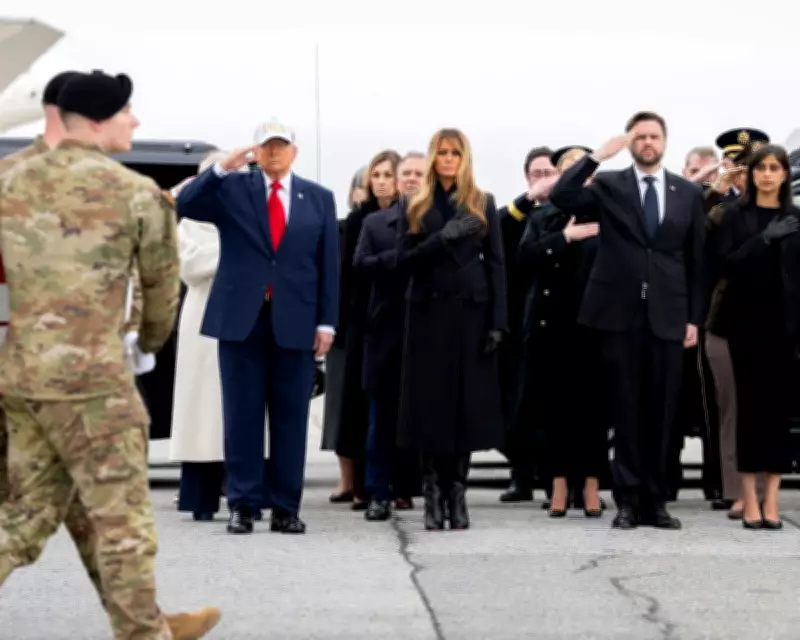
The Air Force One discussion occurred shortly after President Trump participated in the dignified transfer ceremony for six American service members killed in Operation Epic Fury at Dover Air Force Base in Delaware. During the solemn March 7 ceremony, Trump saluted as the remains of the fallen military personnel were transferred under overcast skies that cast a pall over the proceedings.
When asked whether this experience had prompted any reconsideration of the war's course, Trump responded without hesitation, "No, we're winning the war by a lot. We decimated their whole evil empire. It will continue I'm sure for a little while but I'm very proud of the people." He later added matter-of-factly that casualties represented an inevitable "part of war."
This marked a notable shift from Trump's previous rhetoric during his 2024 presidential campaign, when he frequently spoke about the emotional difficulty of signing letters to families of fallen soldiers and emphasized his commitment to avoiding protracted foreign conflicts. The president's bright white "USA" baseball cap, which he wore both during the Dover ceremony and when announcing the war's commencement, served as a visual reminder that ultimate responsibility for military decisions rests with the commander-in-chief.

As the conflict enters its second week with expanded scope and regional allies increasingly drawn into the fighting, the only certainty emerging from the president's remarks is his determination to continue military operations despite mounting questions about strategic objectives, ethical considerations, and ultimate endgame scenarios.