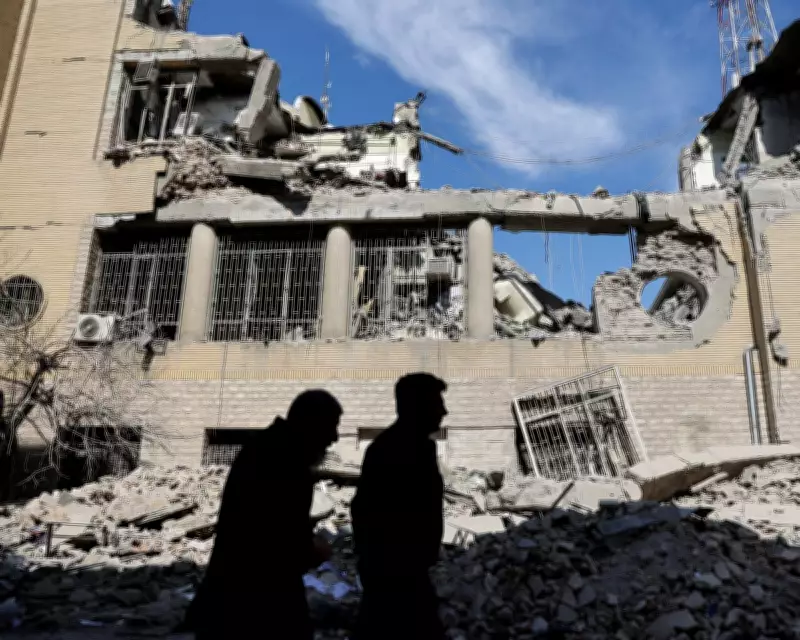
The Sequence of War: Action Before Justification
When American bombs fell on Iranian targets, they did so in the nation's name before most citizens even knew about the operation. Only afterward did the president see fit to inform the public, setting in motion a familiar but troubling pattern where military action precedes democratic debate and constitutional scrutiny.
Constitutional Checks Arriving After the Fact
In a system deliberately designed with checks and balances to constrain executive power, those constraints are now arriving reactively rather than preventatively. Lawmakers are belatedly invoking war powers resolutions, constitutional scholars are debating whether strikes stretch or violate legal limits, and markets have already responded with volatility.
Most tellingly, Pentagon officials reportedly told Congress in private briefings that there was no intelligence showing Iran was about to attack U.S. forces first. This directly contradicts the urgency President Donald Trump presented to the public as justification for emergency military action.

The Weakening of Institutional Guardrails
The theoretical framework for limiting presidential war powers remains intact on paper. Congress declares war, the War Powers Resolution attempts to limit unilateral hostilities, impeachment exists as a check against abuse, and criminal liability for egregious official acts has historically operated as a distant but real constraint.
In practice, however, these guardrails have significantly weakened. War powers are invoked reactively rather than preventatively. Impeachment has become structurally partisan, functioning more as political admonishment than genuine accountability. The Supreme Court's expansion of presidential immunity for official acts has narrowed one of the last theoretical avenues for post-office liability.
From Nuclear Agreement to Acts of War
The regression in U.S.-Iran relations is stark and troubling. From the historic nuclear agreement reached under President Barack Obama, the relationship has deteriorated to acts of war and possible war crimes. This escalation raises fundamental questions about whether the institutional guardrails around presidential power still function as anything more than decorative features of our constitutional architecture.
Deterrence does not equal constant punishment, but it does require the credible possibility of meaningful consequences. When that possibility disappears through weakened institutional constraints, the political cost of unilateral military escalation falls correspondingly.
The Human Costs Materializing Rapidly
The human consequences of military action are not waiting to materialize in some distant future. They are already landing with immediate impact. The State Department has urged thousands of Americans across the Middle East to evacuate, even as airlines cancel flights and embassies warn they cannot guarantee safe passage.
Americans calling for travel assistance have been told help is not yet available. When asked why there was no evacuation plan prepared, President Trump responded that events had unfolded "very quickly" and that officials believed an attack was imminent. That answer serves as its own indictment of the planning and consideration preceding military action.
Wars of Choice Demand Higher Standards
Responsibility in matters of war is not rhetorical. It is fundamentally anticipatory, requiring careful weighing of consequences before force is deployed, not explanatory press conferences after bombs have fallen.
Not all wars carry identical civic burdens. When a nation responds to an attack already underway, urgency understandably shapes decision-making. Wars of choice are fundamentally different. They demand higher standards of proof, clearly defined aims, and presidential candor before the first strike is authorized.
The United States has lived through this pattern repeatedly. In Vietnam and Iraq, justifications shifted, aims blurred, and consequences were borne disproportionately by those who had no seat at the decision-making table.

The Enduring Legacy of Military Decisions
These disfiguring decisions outlast the headlines that announce them. They survive the presidents who made them. What remains are the people left to carry the consequences—the service members who bear visible and invisible scars, the civilians caught in conflict zones, and the citizens who must live with the geopolitical repercussions.
When presidents ask the country to support military action, honesty is not optional. It is fundamentally owed to the nation, particularly because those who bear the true costs of war are almost never those who made the choice to initiate it.
Congress can object and impede after the fact. Courts can review and rule. Markets will react as they always do. But none of this changes the fundamental sequence that has become normalized: presidential action first, democratic debate and constitutional scrutiny afterward.