Questioning Official Narratives: The Struggle for Truth in Turkish Women's Deaths
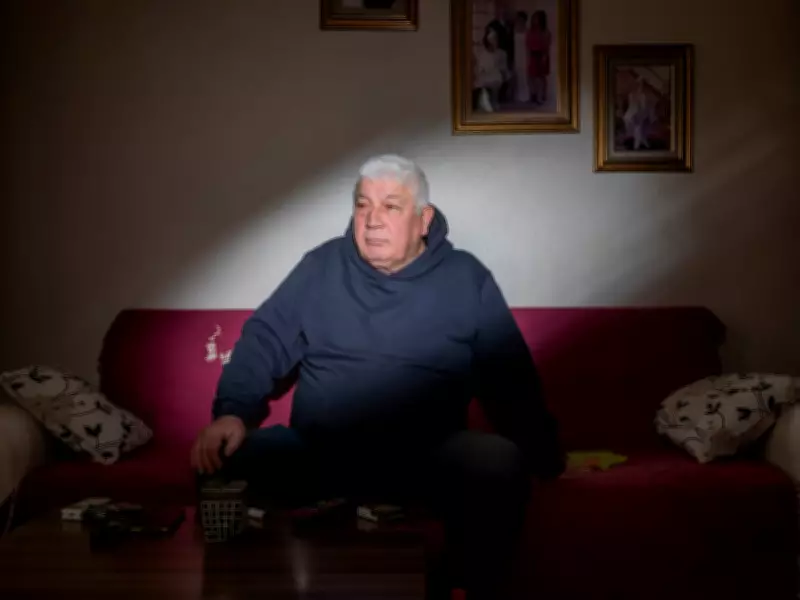
Abdullah Köker remains haunted by the official explanation for his daughter's death. "The police were guiding me to believe it was suicide," he states, reflecting on the loss of his 29-year-old daughter, Şebnem. This sentiment echoes across Turkey, where hundreds of women are annually recorded as having taken their lives by "throwing themselves from a high place"—a statistic that has grown exponentially in recent years.
A Fearful Daughter and Unanswered Questions
Şebnem Köker, a nurse with fire-engine red hair, lived boldly in İzmir but harbored one profound fear: heights. Her father recalls she wouldn't even step onto their third-floor balcony. "She wouldn't have a cigarette or eat out there. She wouldn't hang laundry on the balcony," Abdullah says. When police suggested she jumped from a hotel window, he was stunned. "There's no way my daughter would have jumped," he insists, pointing out her fear would have made such an act impossible.
What authorities initially omitted was crucial: another person was present in the hotel room. Şebnem had mentioned meeting a married ship captain, Timuçin Bayhan, for a casual weekend. The last time Abdullah spoke to her, she sounded uncharacteristically distressed after losing her phone. Hours later, he received the devastating news of her fall from a ninth-floor window.

Systemic Patterns and Suspicious Statistics
Turkish government data reveals troubling trends. One in every four female suicides is now attributed to falls from height, compared to one in five a decade ago—with over 250 such deaths recorded in 2024 alone. Campaigners argue these figures may conceal femicides, where women were pushed rather than jumped.
Dr. Gülsüm Kav, founder of We Will Stop Femicide, explains: "Autopsies start at the crime scene: police must treat these cases as suspicious and collect all the evidence available." She notes that improved forensic techniques have shifted methods, making falls harder to investigate than poisonings. Her organization recorded 394 femicides and 258 suspicious deaths in 2024, including 40 attributed to falling.
Contradictory Evidence and Legal Battles
In Şebnem's case, contradictions emerged quickly. Bayhan initially told police he was asleep in another room when he heard a thud, suggesting she fell while drunk. Yet a hotel worker testified Bayhan gave a different account privately. Security footage showed the couple arguing violently before her death, and crime scene photos revealed blood spots and a torn fingernail in the room.
Şebnem's childhood friend, lawyer Nevraz Sığın, took up the case. She discovered text messages where Şebnem expressed discomfort about Bayhan reading her messages and overhearing him use the same nicknames for her as for his wife. "This entire fling had been a waste of her time," Şebnem told a friend.
Parallel Tragedy: Aysun Yıldırım's Case
Similar questions surround the death of Aysun Yıldırım, a 26-year-old aspiring customs official found below her office window in 2018. Her parents, Hüsniye and İbrahim, were pressured to sign a suicide declaration to release her body. "The prosecutor wouldn't say why he thought it was a suicide," İbrahim recalls, noting authorities never visited the scene.
Evidence gathered by lawyer Leyla Süren suggested foul play: DNA under Aysun's fingernails matched a client she had asked to stop contacting her; his phone placed him at the scene; and no fingerprints were found on the narrow window she allegedly jumped from. "There was enough evidence for a criminal case," Süren asserts, yet the case remains unresolved.
Forensic Possibilities and Institutional Resistance
Campaigners emphasize that forensic science could clarify many cases. Researchers have developed computer modeling to determine whether falls were jumps or pushes, and a 2019 conviction in the Şule Çet case—where a physics report proved she was pushed from a high-rise—shows it's possible. However, requests for such reports in Şebnem's case were denied.

Bayhan was acquitted in 2022, with the court citing a "lack of concrete evidence" and Şebnem's intoxication. Yet Turkey's highest appeals court later noted the initial trial failed to interview key witnesses and examine evidence tampering, recommending the physics report Sığın had sought.
Enduring Grief and Unyielding Advocacy
Years later, families remain in limbo. Abdullah stays in the apartment he shared with Şebnem, preserving her room as a shrine, while Sığın carries crime scene photos on her phone, determined to continue fighting. "It's a struggle against a system," Sığın says, now working with WWSF.
Hüsniye Yıldırım voices a widespread frustration: "It feels like there is only justice for the powerful. Even if it comes late, justice must be served." As these families await answers, their cases highlight broader concerns about how Turkey investigates women's deaths—and whether the truth will ever emerge from the shadows of official statistics.