

UK Engaged in Ongoing Talks Over Hormuz Escort Mission Amid Persistent Iranian Threat
Britain has confirmed it is actively involved in discussions with the United States and European allies regarding the escort of merchant shipping through the strategically vital Strait of Hormuz. However, defence officials have emphasised that the current situation remains too perilous for any immediate deployment of warships to the region.
Iran's Military Capabilities Pose Significant Danger
Despite nearly three weeks of intensive US-led bombing campaigns targeting Iranian naval and coastal installations, Iran is still considered a formidable threat. The country retains a wide arsenal of weapons, including cruise missiles and sea drones, which could be deployed against shipping in the strait. A UK defence official highlighted Tehran's "very effective disaggregated command and dispersal system," enabling continued attacks even after significant losses among military and political leadership.
The challenging terrain of Iran's mountainous coastline complicates surveillance efforts, making it difficult to detect incoming missiles and drones. The defence official added, "The level of threat is such that I don't see many nations being willing to put warships into the middle of that threat right now."

Impact on Global Oil Markets and Shipping
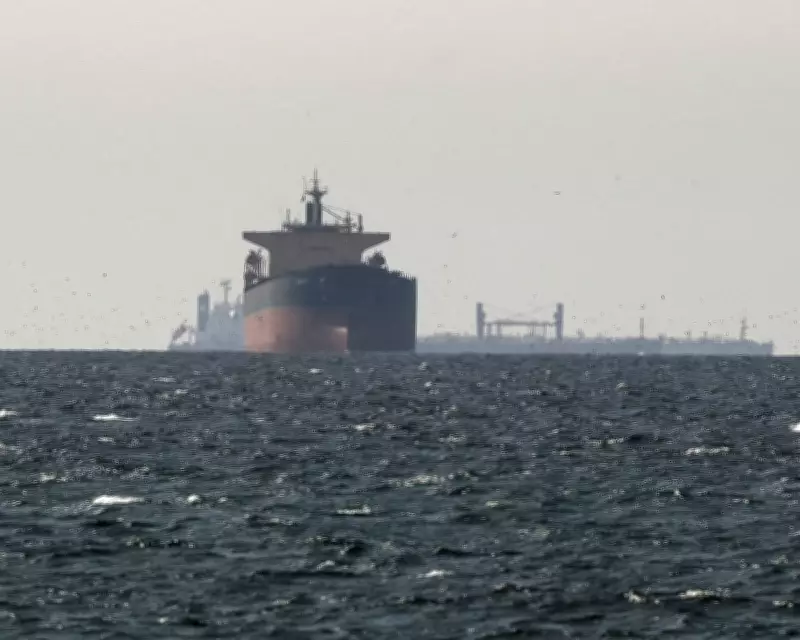
Iran has effectively closed the Strait of Hormuz through periodic assaults on oil tankers and other vessels. Prior to the conflict, approximately one-fifth of all seaborne crude oil traffic transited through this narrow waterway. The dramatic reduction in exports has contributed to oil prices soaring above $100 per barrel, underscoring the strait's critical role in global energy supplies.
International Coordination and Political Dynamics
Former US President Donald Trump has publicly criticised the UK and other NATO members for not providing warships to assist in patrolling the strait. In a recent post on Truth Social, Trump stated that the United States "no longer 'need' or desire the NATO Countries' assistance." Despite this, the UK maintains that military-level contacts continue, with additional British planners dispatched to liaise with US Central Command (Centcom), which is leading the American military efforts against Iran.
On Wednesday, UK Defence Secretary John Healey discussed the situation in the Strait of Hormuz with his counterparts from France, Germany, Italy, and Poland. France has expressed willingness to deploy warships, but only after the "most intense" phase of the conflict subsides.
Logistical Challenges and Historical Context
Al Carns, a UK junior defence minister, pointed to the 1987 escort operation during the Iran-Iraq war as a benchmark, noting that it required 30 warships. "That gives you just an example of the resources required. So it's a major undertaking," he stated during a briefing. Carns stressed that any solution must be multinational, asserting, "But I would say this: there is one thing worse than working with allies and that's working without them."
Potential UK contributions to an escort mission remain unclear, though the Royal Navy could theoretically redeploy HMS Dragon, a destroyer currently en route to Cyprus, into the Arabian Sea. No other warships are immediately available for such a task.
US Strategy and Expert Analysis
The US Navy has not yet signalled readiness to initiate an escort operation, focusing instead on the ongoing bombing campaign. However, officials have suggested a shift could occur next month. Overnight, Centcom reported using 5,000lb "bunker buster" bombs on hardened Iranian missile sites along the coastline near the Strait of Hormuz, as part of efforts to neutralise anti-ship cruise missile threats.
Kevin Rowlands, a naval expert at the Royal United Services Institute thinktank, warned that while Iranian capabilities are being degraded, risks to shipping persist. "It is almost impossible to reduce the risk to zero and we can expect ships to face a residual level of threat for some time to come," Rowlands said. He noted that the strait's narrow width of 20 nautical miles "effectively creates a kill zone" where warning times for attacks may be mere seconds.






