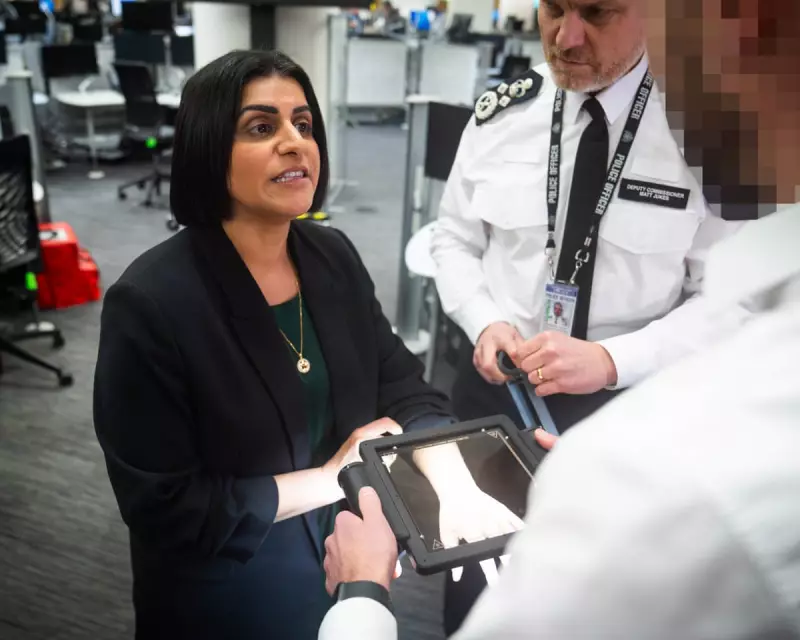
Government Launches National Police Service to Combat Serious Crime Across UK
The Home Office is set to establish a new National Police Service, informally referred to as the "British FBI", in a significant overhaul of policing structures across England and Wales. This initiative aims to centralise the investigation of serious and complex crimes, including organised criminal activities, terrorism, fraud, and online child abuse.
Centralising Resources for National Threats
Under the proposed framework, the National Police Service will assume responsibility for UK-wide counter-terrorism operations, fraud investigations, and cases involving organised crime gangs. This move will consolidate functions currently managed by a patchwork of agencies, such as the National Crime Agency and regional organised crime units operated by local police forces.
Home Secretary Shabana Mahmood emphasised the necessity of this reform, stating: "The current policing model was built for a different century. Some local forces lack the skills or resources they need to fight complex modern crime such as fraud, online child abuse or organised criminal gangs."

She added: "We will create a new National Police Service – deploying world-class talent and state-of-the-art technology to track down and catch dangerous criminals. In doing so, local forces will be able to spend more time fighting crime in their communities."
Enhanced Capabilities and Controversial Technology
The NPS will be led by a national police commissioner, who will become the most senior police chief in the country. This commissioner will oversee the setting of national standards, training programmes, and the acquisition of advanced technologies for all police forces.
Among the technological enhancements planned are facial recognition cameras, a development that has sparked considerable debate regarding privacy concerns and potential human rights implications. The integration of such tools aims to bolster the service's investigative capabilities but continues to face opposition from civil liberties groups.
Support from Senior Policing Figures
The proposal has garnered backing from key figures within the law enforcement community. Neil Basu, former head of counter-terrorism policing, endorsed the plans, suggesting that a unified national security system would be "far more capable" in addressing major crime, organised crime, and terrorism in all its manifestations.
Graeme Biggar, Director General of the National Crime Agency, which is slated for merger into the new service, also expressed support. He remarked: "I am proud of the brilliant work NCA officers do to protect the public from serious and organised crime and new and emerging threats. But the overall policing system is out of date. Crime has changed, technology has changed, and how we respond needs to change."
Biggar further elaborated: "As part of reform, we need a single, stronger national law enforcement body, building on the NCA and others, to more coherently tackle organised crime, fraud, terrorism and the new international and online threats we face."
Concerns Over Implementation and Local Links
Despite the broad support, the plans have not been without criticism. Graham Wettone, a policing analyst and former frontline officer with three decades of experience, raised concerns about the consultation process. He questioned whether operational frontline officers and detectives had been adequately involved in the planning stages.
Wettone stated: "My concerns with these proposals, firstly, hopefully they have consulted with those people actually doing the job – operational frontline officers and frontline detectives. I don't believe they have. From what I'm hearing, it seems to me, it's largely come from the Home Office, from people that have advised or guided the Home Office as to what policing needs, having never actually done the job at all."

However, he acknowledged the logic behind nationalising certain aspects of policing, noting: "Fraud investigations are complex, so probably does need a national overview. Because there's now a huge amount of online fraud, it covers many areas of the country, so having one force managing it is very, very difficult when your offenders and your victims can be in Lancashire, Yorkshire, and Devon and Cornwall. So it makes sense. It makes sense to nationalise some aspects as organised crime groups don't stick to county boundaries."
Transition and Future Outlook
The National Police Service will be implemented in phases, working alongside existing agencies and regional organised crime units to ensure a smooth transition. A joint statement from the Metropolitan Police, counter-terrorism policing, and the National Police Chiefs' Council highlighted the importance of maintaining strong connections with local policing and communities throughout this process.
The statement read: "Modern crime requires a modern policing response. We support and have been calling for this ambitious step to bring together some of the most capable policing teams in the country into a single National Police Service. This transformation, however, must be delivered with care. Its success depends on maintaining strong connections with local policing and the communities we serve."
It continued: "Neighbourhood officers remain indispensable in disrupting organised crime and countering terrorism. Their relationships, insights and presence on the ground are foundational to public safety. As we implement this reform programme, protecting those vital local links will be essential to ensuring the new National Police Service strengthens – not separates – the bond between policing and the public."
This restructuring represents one of the most substantial changes to UK policing in recent decades, aiming to create a more agile and effective response to the evolving landscape of serious crime while striving to preserve the essential role of local law enforcement in community safety.