UK Weighs Royal Navy Destroyer Deployment to Cyprus Following Drone Incidents
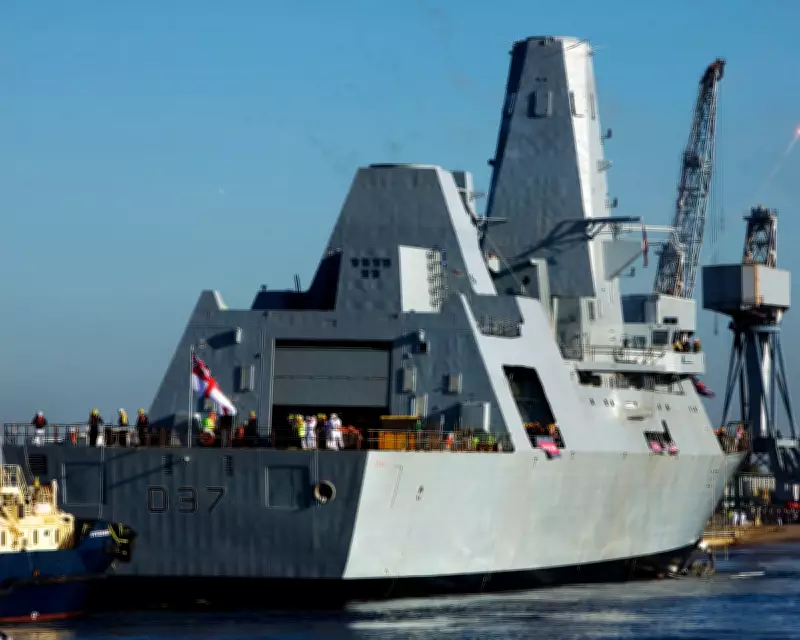
Defence Secretary John Healey is actively considering the deployment of a Royal Navy destroyer to Cyprus to enhance the protection of British bases on the Mediterranean island. This deliberation comes in response to several apparently hostile drones that have targeted RAF Akrotiri, raising significant security concerns.
HMS Duncan as Primary Candidate for Counter-Drone Mission
Defence sources have indicated that HMS Duncan, currently stationed in Portsmouth, is under discussion for this critical assignment. This destroyer is specifically specialized in counter-drone operations, having recently completed a test exercise off the coast of Wales where it faced swarms of drones. However, the readiness of HMS Duncan to set sail immediately remains unclear at this time.
Alternative options include the potential deployment of one of two other destroyers, though HMS Duncan remains the primary focus due to its expertise. The journey from Portsmouth to Cyprus would take approximately five to seven days, with the vessel traveling at a speed of around 30 knots, equivalent to 34.5 miles per hour.

International Context and Criticism of UK Response
John Foreman, a former UK defence attache to Moscow, expressed surprise at the delayed consideration of deploying a warship to Cyprus. He emphasized that given the highly visible US military buildup prior to the joint attack on Iran, a UK destroyer should have already been positioned in the eastern Mediterranean.
Foreman criticized the Ministry of Defence, stating that this latest deliberation appears driven more by news of French military support rather than proactive planning. He highlighted a failure in planning, intelligence, and foresight, noting that the MoD has consistently been behind the power curve and is now scrambling to catch up with evolving threats.
Allied Support and Regional Security Developments
France has already agreed to send a frigate and anti-drone systems to Cyprus, according to Cypriot government officials. Additionally, a request for support has been made to Germany, which is currently under consideration. This international coordination underscores the growing concern over security in the region.
Notably, no large Royal Navy warships are currently deployed in the Middle East, despite the conflict entering its fourth day and British interests being directly targeted. The only Royal Navy presence in the area is a single mine hunter, HMS Middleton, based in Bahrain.
Details of Recent Drone Attacks on RAF Akrotiri
On Monday, a Shahed-type drone successfully breached Akrotiri's air defences, causing minor damage as it crash-landed on the runway. This incident occurred despite counter-drone units being deployed on site. Two other incoming drones were intercepted later that day, preventing further damage.
Cypriot sources believe the drone that hit the runway was flown from territory in Lebanon controlled by Hezbollah, a pro-Iranian proxy group. However, this has not yet been confirmed by the Ministry of Defence. In the aftermath of the first incident, Cypriots living near Akrotiri were advised to shelter in place, and families of UK service personnel are being relocated off the base as a security precaution.
Technical Analysis and Social Media Evidence
Images circulating on social media appear to show that the drone that struck the runway had a Russian-made antenna, though this detail has also not been officially confirmed. The ongoing investigation into the drone's origins and capabilities continues as defence officials assess the full scope of the threat.
The potential deployment of HMS Duncan represents a significant step in bolstering the defence of British assets in Cyprus, aligning with broader international efforts to address drone threats in the region. The decision reflects the evolving nature of modern warfare and the increasing importance of counter-drone capabilities in military strategy.