UK Prime Minister Firmly Rejects Participation in Offensive Strikes Against Iran
Prime Minister Keir Starmer has unequivocally stated that the United Kingdom will not join offensive military strikes by Israel and the United States targeting Iran, emphasizing that Britain does not believe in achieving "regime change from the skies." However, Starmer defended the use of UK military bases for defensive purposes, asserting this approach represents "the best way to protect British interests and British lives" during escalating regional tensions.
Learning from Past Conflicts: Iraq Lessons Inform Current Policy
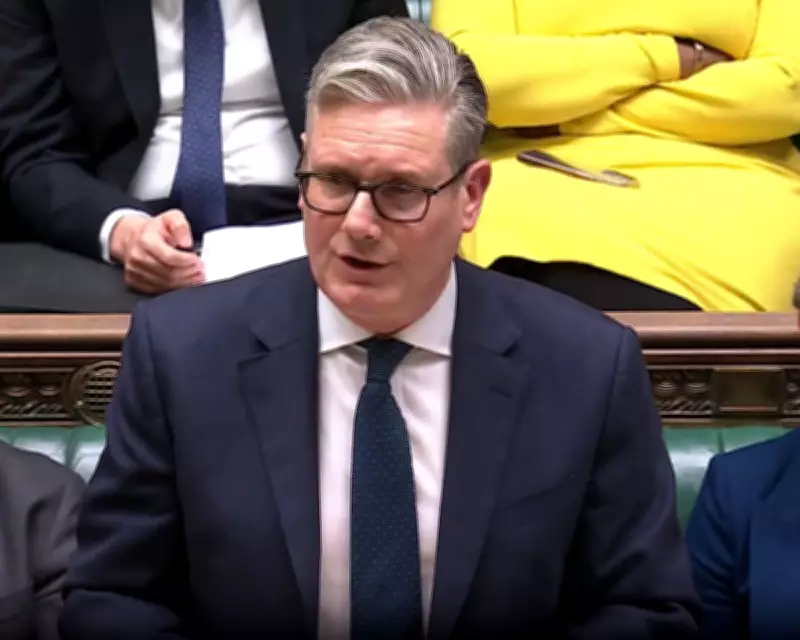
Speaking authoritatively in the House of Commons, Starmer referenced the UK's involvement in the Iraq War as a formative experience shaping current foreign policy decisions. "We all remember the mistakes of Iraq, and we have learned those lessons," the Prime Minister declared. "Any UK actions must always have a lawful basis, and a viable thought-through plan." This principled stance comes despite public criticism from US President Donald Trump, who expressed being "very disappointed" that Starmer blocked American forces from utilizing British bases to execute strikes against Iranian targets.
Defensive Posture and Regional Security Concerns
Starmer detailed that the UK is responding to Iranian aggression by deploying Royal Air Force aircraft and permitting defensive use of British bases, specifically citing retaliatory actions from Iran launching strikes against allies across the Middle East. "It is clear that Iran's outrageous response has become a threat to our people, our interests and our allies, and it cannot be ignored," Starmer stated firmly. He emphasized that this defensive positioning operates "in accordance with international law" and serves the purpose of "collective self-defence of longstanding friends and allies and protecting British lives."

Specific Incidents and Military Responses
The Prime Minister revealed specific security incidents, including an Iranian drone strike targeting a coalition base in Iraq where UK forces are stationed, which was successfully intercepted by the RAF. Additionally, a drone was fired at the British base in Cyprus, RAF Akrotiri, prior to Sunday's official statement regarding US utilization of UK facilities. Defence Secretary John Healey confirmed minimal damage from these attacks but noted that families residing at RAF Akrotiri are being relocated to temporary alternative accommodation in Cyprus as a precautionary measure.
Legal Considerations and Diplomatic Positioning
While Starmer has not explicitly opposed the initial wave of US-Israeli attacks that resulted in the deaths of Iranian Supreme Leader Ayatollah Ali Khamenei and other senior officials, the UK refused permission for US forces to utilize Diego Garcia or any UK airbases due to significant doubts about the strikes' legality under international law. Since those initial attacks, Iran has launched retaliatory missile and drone assaults against numerous targets across the Gulf and Middle East, including the UAE, Saudi Arabia, Kuwait, Qatar, Iraq, Bahrain, and Oman.
Protecting British Citizens and Regional Stability
Starmer expressed grave concern for approximately 300,000 British citizens currently in the region, noting that "Iran has hit airports and hotels where British citizens are staying." The Prime Minister emphasized his "highest duty" to protect British lives, revealing consultations with Gulf partners who reportedly requested enhanced defensive support following Iranian actions. "I've been speaking to our Gulf partners over the weekend, they're outraged by Iran's acts, particularly as they played no part in any strikes, and they've asked us to do more to defend them," Starmer informed Parliament.

Strategic Limitations and Collaborative Defense
Acknowledging practical limitations, Starmer noted that British Typhoon and F-35 aircraft cannot intercept all Iranian strikes, justifying permission for US forces to target missiles at storage depots and launch sites. This coordinated defensive strategy aims to "prevent Iran firing missiles across the region, killing innocent civilians, putting British lives at risk and hitting countries that have not been involved." Simultaneously, the Foreign, Commonwealth & Development Office will deploy rapid response teams to assist British citizens stranded by closed airspace, particularly in the UAE, with Starmer urging all UK nationals in the region to officially register their presence with authorities.
Long-Term Diplomatic Vision
Looking beyond immediate military concerns, Starmer articulated a diplomatic path forward: "We believe that the best way forward for the region and for the world is a negotiated settlement in which Iran agrees to give up any aspirations to develop a nuclear weapon and ceases its destabilising activity across the region." He characterized this position as consistent with "the longstanding position of successive British governments," while reaffirming his commitment to prioritizing Britain's national interest despite international pressure. "President Trump has expressed his disagreement with our decision not to get involved in the initial strikes, but it is my duty to judge what is in Britain's national interest; that is what I've done, and I stand by it," the Prime Minister concluded resolutely.