

UK's Submarine Fleet Crisis Threatens AUKUS Agreement and Australia's Nuclear Ambitions
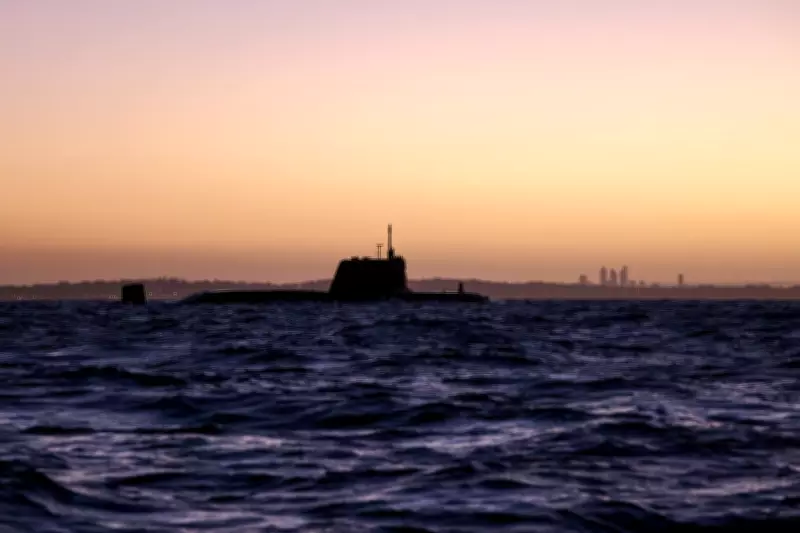
The recent deployment of HMS Anson to Australia was meant to symbolize strength and commitment within the AUKUS alliance. The Astute-class nuclear submarine's arrival off Perth last month was hailed as a historic moment, demonstrating political will behind the ambitious trilateral agreement between Australia, the United Kingdom, and the United States. However, the vessel's abrupt recall to potentially deploy in the Strait of Hormuz following Middle East conflict has exposed fundamental weaknesses in Britain's submarine capabilities.
Britain's Operational Submarine Scarcity
HMS Anson currently represents the only attack submarine in the British fleet that can be put to sea from a supposed complement of six vessels. The remaining submarines are all undergoing maintenance, refits, or have been stripped for parts to keep other submarines operational. This scarcity raises serious questions about the United Kingdom's capacity to fulfill its AUKUS commitments while maintaining its own defense requirements.
The situation has prompted defense analysts to question whether Britain should prioritize local concerns over foreign deployments. Navy Lookout, a respected naval news site, queried whether "perhaps more local concerns should be the priority" given the current operational limitations.

AUKUS Timeline Challenges and UK Priorities
Australia's nuclear submarine future depends heavily on the United Kingdom's capacity to design and build the first of an entirely new class of nuclear submarine: the SSN Aukus. The published "optimal pathway" forecasts the first Aukus class submarine being built by the UK for the Royal Navy in the "late 2030s," with Australia's first Aukus submarine due in the water in the "early 2040s."
However, the UK faces competing priorities that could jeopardize these timelines. Britain must first complete the seventh and final boat in the Astute class while simultaneously constructing four Dreadnought class nuclear ballistic submarines, which form the basis of the UK's nuclear deterrent. All these vessels are being built by BAE Systems Submarines at Barrow-in-Furness in Cumbria.
A senior UK defense source, speaking anonymously, confirmed that while upholding AUKUS remains politically important to the UK, other naval projects must and will take precedence. This reality places Australia in a precarious position, potentially at the "back of the queue" for submarine construction.
Industry Challenges and Historical Neglect
Decades of neglect have left the UK's ship and submarine-building industries struggling to meet current demands, let alone expanded AUKUS requirements. The UK government insists it can build Aukus submarines at a rate of one every 18 months, yet the smaller Astute class submarines have been launched at an average rate of one every three or four years.
HMS Agamemnon, the penultimate Astute class boat, took more than 12 years to build—the longest construction time of any British submarine ever. Okopi Ajonye, co-director of the Nuclear Information Service, notes that "a lot of the UK industry's problems are rooted in the fact that it's highly consolidated: there's only one site that makes all the submarines."
Compounding these challenges, the UK's National Infrastructure and Service Transformation Authority has rated the Rolls-Royce-led project to build nuclear reactor cores for Britain's new submarines as "unachievable" for four consecutive years. These reactor cores are essential components without which no nuclear submarine can function.
Strategic Implications for Australia
Australia finds itself in an increasingly vulnerable position within the AUKUS framework. The country has committed substantial financial resources—A$1.6 billion of a committed A$4.7 billion to the US and A$452 million of A$4.6 billion to the UK—yet maintains the least control over how the agreement unfolds.
Marcus Hellyer, head of research at Strategic Analysis Australia, describes himself as "Aukus agnostic" but notes serious questions about the process that led to the agreement. "Aukus was announced to the Australian people without any public debate or a proper assessment of alternative defence strategies," he observes.

Meanwhile, China—the superpower AUKUS is designed to counter—has launched 10 nuclear submarines since the agreement was announced in 2021. During that same period, the US has built seven nuclear submarines and the UK has launched just one for its navy.
Environmental and Infrastructure Concerns
The UK's nuclear legacy presents additional challenges that Australia must consider. Despite having nuclear submarines since 1963, Britain still lacks permanent storage for high-level nuclear waste from its submarines—toxic material that will remain hazardous for millennia. The UK has decommissioned 23 nuclear submarines but has never dismantled a single one, with ten retired submarines remaining nuclear-fueled in docks around the country.
Australia faces similar challenges, having promised to outline a process for identifying a nuclear waste site "within 12 months" more than three years ago, with no site or process yet established.
Conflicting Perspectives on AUKUS Viability
Despite these challenges, some analysts remain cautiously optimistic about AUKUS prospects. Dr Marion Messmer, director of the International Security Programme at Chatham House, argues that UK investments are beginning to bear fruit, with Dreadnought submarines meeting construction milestones and capacity expanding at Barrow-in-Furness.
"I would be incredibly surprised if, by the time the first Aukus submarines are in service, we would see that everything went exactly to plan and exactly to cost," Messmer acknowledges. "But at this point in time, there's nothing to suggest to me that we're actually going to see anything beyond the usual delays and cost slips that you almost have to expect on a project of this size."
However, former Royal Navy rear admiral Philip Mathias offers a more pessimistic assessment, stating last year that "the UK is no longer capable of managing a nuclear submarine program" due to "gross mismanagement" and a "catastrophic failure of succession and leadership planning."
The House of Commons inquiry into AUKUS heard testimony describing Britain's treatment of its nuclear submarine building enterprise as "a source of national shame," with Lord Case, formerly head of Britain's civil service, noting that "somehow, we became the world's most embarrassed nuclear nation."
As geopolitical tensions continue to evolve, the AUKUS agreement faces mounting pressure to deliver on its ambitious promises while navigating complex industrial, strategic, and political challenges across three nations.





