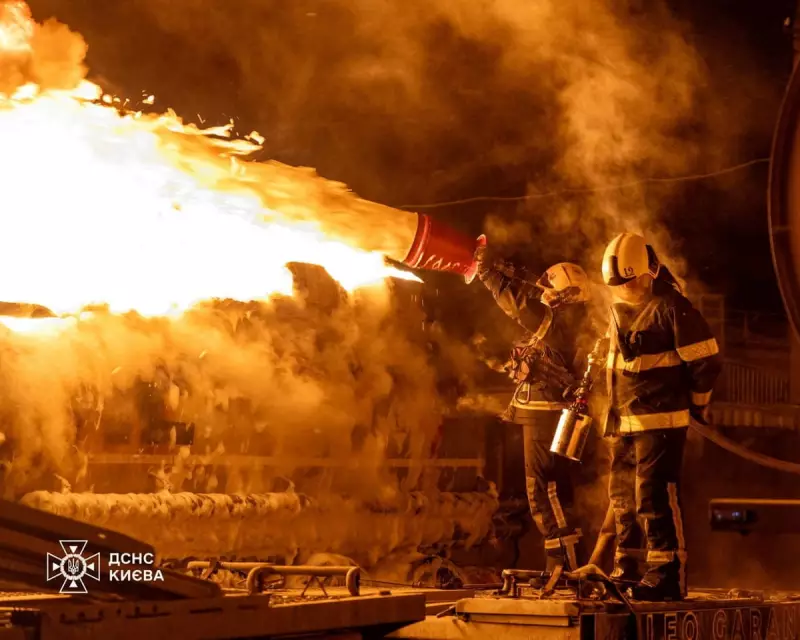
Ukrainian emergency services were engaged in intense firefighting operations in Kyiv on Saturday, responding to the aftermath of a combined Russian drone and missile assault. This attack occurred even as diplomatic efforts to end the nearly four-year conflict showed tentative signs of progress through US-mediated discussions.
Diplomatic Moves Amid Ongoing Hostilities
The United States has announced that Ukraine and Russia have agreed to hold a second round of direct, trilateral peace talks next weekend, following an initial two-day meeting in Abu Dhabi. A senior US official described the first round as "a big step" and indicated that "a lot of progress has been made to date in really defining the details needed to get to a conclusion." These talks represent the first known face-to-face contact between Ukrainian and Russian officials concerning a peace plan championed by former US President Donald Trump.
Ukrainian President Volodymyr Zelenskyy characterised the Abu Dhabi conversations as "constructive," noting that substantial issues were discussed. However, the diplomatic atmosphere was severely undermined by concurrent military actions. Russian forces launched significant drone and missile strikes against Ukraine's two largest cities, Kyiv and Kharkiv, during the peace negotiations.

Civilian Impact and Official Condemnation
The attacks on critical infrastructure in Kyiv resulted in one confirmed fatality and at least fifteen injuries, according to capital officials. The strikes exacerbated existing widespread outages of heat, water, and power across multiple cities, a persistent crisis following earlier Russian targeting of energy networks.
Ukraine's Foreign Minister, Andrii Sybiha, condemned the timing of the assault, stating, "Peace efforts? Trilateral meeting in the UAE? Diplomacy? For Ukrainians, this was another night of Russian terror." This sentiment highlights the profound challenges of pursuing dialogue while combat operations continue.
Military Developments on the Ground
On the battlefield, the Russian defence ministry claimed its forces had secured control of the village of Starytsya, located in Ukraine's north-eastern Kharkiv region near the border town of Vovchansk. This area has been a focal point of fighting since a Russian incursion in May 2024, with Moscow's troops persistently attempting to expand their territorial gains.
The Ukrainian military's general staff reported late Saturday that Russian forces had launched six separate attacks in the area encompassing Starytsya. However, the Ukrainian side made no official acknowledgement that the village had fallen. Independent battlefield reports, including from Ukraine's DeepState military blog, noted continued Russian pressure in the Vovchansk sector but did not specifically confirm the loss of Starytsya, underscoring the difficulty of verifying real-time claims in the conflict zone.
Cross-Border Strikes and Shadow Fleet Interception
In a related development, the governor of Russia's Belgorod region, Vyacheslav Gladkov, reported that Ukrainian forces executed a "massive" attack on the region's main town, also named Belgorod. He stated the assault damaged local energy infrastructure and set a building ablaze, though no casualties were initially reported. Gladkov also mentioned a downed drone causing damage to homes in a nearby village.
Separately, in a significant enforcement action linked to sanctions evasion, French authorities intercepted an oil tanker suspected of belonging to Russia's so-called "shadow fleet." The vessel, named the Grinch, was detained in international waters and directed to the port of Fos-sur-Mer near Marseille. French President Emmanuel Macron confirmed the interception, and prosecutors are investigating the tanker for allegedly operating without a flag as part of efforts to circumvent sanctions imposed over Russia's invasion of Ukraine.

The Path Forward for Negotiations
The planned resumption of talks on 1 February indicates a continued, albeit fragile, diplomatic channel. The discussions were preceded by a four-hour meeting in Moscow between US envoys Jared Kushner and Steve Witkoff and Russian President Vladimir Putin, which a US official characterised as "very, very productive." The official added the conversation focused on "the final issues that are open."
As the war enters its 1,432nd day, the juxtaposition of high-stakes diplomacy in the Gulf and lethal attacks on Ukrainian urban centres defines the current phase of the conflict. The coming week will test whether the "progress" cited by US officials can withstand the relentless pressure of military realities and humanitarian crises on the ground.