As temperatures plummet to a bone-chilling -20C across Ukraine, millions of civilians are grappling with a brutal winter made exponentially worse by Russia's relentless assault on the nation's energy infrastructure. The conflict has been brought directly into people's homes, with repeated airstrikes severing access to heating, electricity, and water for days on end, creating a dire humanitarian emergency.
A Perilous Climb for Basic Survival
In a large apartment block in Kyiv, the sound of controlled, laboured breathing echoes up a frozen staircase. Tatiana, a 70-year-old resident, has mastered a technique to ease the strain on her heart as she navigates the nine flights to her home. With power cuts rendering the lifts inoperative, this arduous journey has become a daily necessity. "It is dangerous, but what can you do? Freeze to death?" she questions, having spent a fortnight without heating, resorting to the perilous use of a gas oven in her kitchen to generate a scant amount of warmth.
Life in a Deep Freeze
The Ukrainian authorities have declared a state of emergency in the energy sector, a move underscored by the visceral reality for residents like Tatiana. Wrapped in a long sheepskin coat, she describes a constant state of shivering, particularly upon waking in her frigid apartment. The situation is emblematic of a nationwide crisis where the threat of missile and drone attacks on residential areas is compounded by the loss of basic utilities.

In the same building, a strike on a nearby block on 9 January knocked out the central heating for all 380 apartments. While electricity has begun a tentative return, water supplies remain disrupted for many. The corridors are plunged into darkness, navigable only by the torchlight from mobile phones.
The Impossible Choice for Families
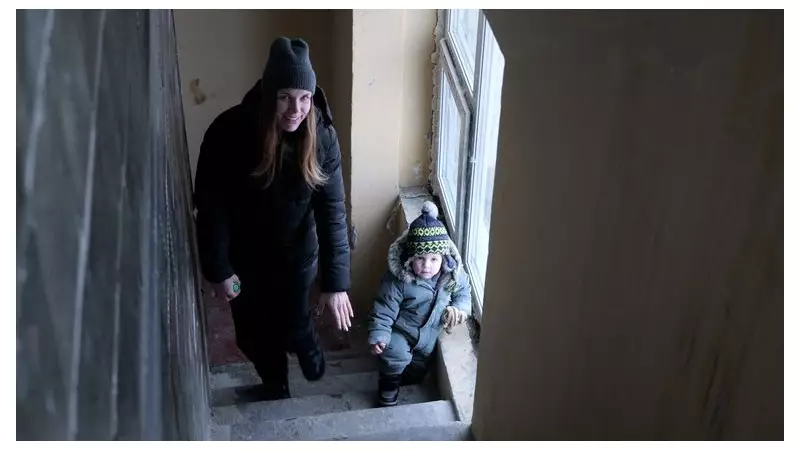
For young families, the conditions are untenable. Daria, 29, who is pregnant, guides her two-year-old son Misha up sixteen flights of stairs, encouraging him with promises that they are "almost there." Inside their flat, the temperature hovers at a mere 3C. "You come in, and there is literally steam [icy breath] coming out of your mouth all the time. With a small child, it's simply impossible," she explains. Having temporarily relocated to relatives, she returns periodically to check on their home, each brief visit leaving her physically ill from the cold.
Community Resilience in the Face of Adversity
Amidst the struggle, a powerful sense of communal solidarity has emerged. Residents, with the very young and elderly most vulnerable, use messaging apps to coordinate aid. Those who are able-bodied embark on perilous journeys down icy staircases to fetch essential supplies—food, water, medicine—for their less mobile neighbours trapped on higher floors.
Yeva, a 23-year-old resident who remains in her apartment with her boyfriend and their dog, embodies this spirit. Dressed in a bright pink coat, she helps distribute supplies. "We try to be strong, we try to smile," she says, highlighting humour as a vital coping mechanism. Her attire reveals the harsh reality: multiple layers are a non-negotiable rule for survival. "A must-have rule is trousers tucked into socks and warm sweaters," she notes, describing a system of "socks inside socks" to combat the extreme cold.
Desperate Measures to Restore Heat
The community's fight extends beyond mutual aid to direct action. Vsevolod, 34, who has temporarily moved his wife and young child out of their second-floor flat, returns to assist neighbours. He describes a coordinated, if desperate, effort to unfreeze the building's vital water pipes using blow torches. Official emergency crews found the task futile, as pipes would refreeze faster than they could be thawed. "But when many people work at the same time, heating everything in sequence, you get results," Vsevolod explains, his words visible in the frosty air.
The Psychological Toll of Endurance
Despite these efforts, the heating remains off, and the unrelenting cold exacts a heavy psychological toll. Yeva speaks to the profound exhaustion that defines daily existence. "Every day you have to fight, you have to survive. You are not really living," she confesses. The rhythm of normal life has disintegrated; days blur into a single, continuous struggle for survival, erasing the distinctions of a weekly calendar.

This report from Kyiv illustrates how Russia's strategic bombing campaign has transformed a harsh winter into a weapon, testing the limits of human endurance. The resilience of Ukrainian civilians, from elderly residents like Tatiana to young volunteers like Yeva, shines through the darkness, but their plight underscores the severe humanitarian cost of the ongoing war.