

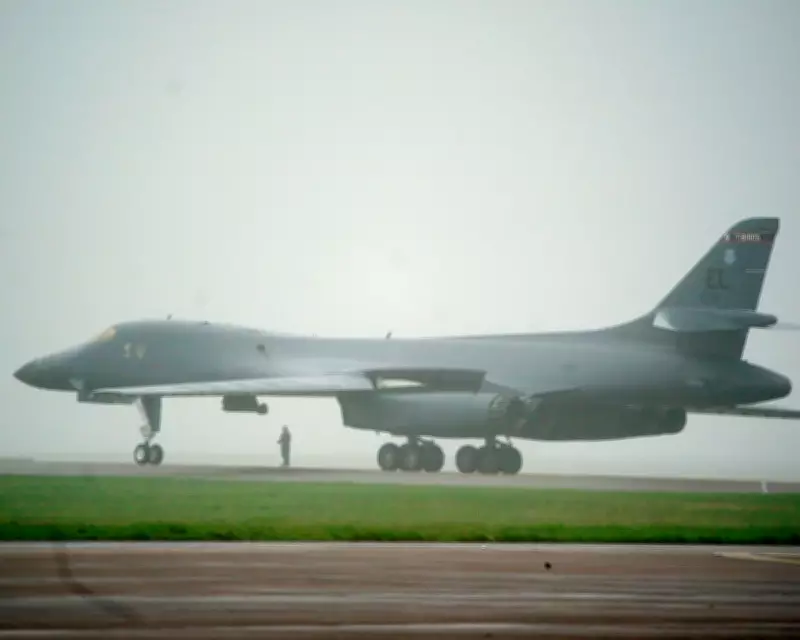
US Bomber Touches Down at RAF Base Following Stark Warning on Iran Strikes
A United States Air Force Rockwell B-1 Lancer bomber has landed at RAF Fairford in Gloucestershire, marking a significant development in the ongoing Middle East crisis. This arrival comes shortly after US defence officials issued a stark warning that strikes against Iran are poised to surge dramatically in the coming days.
Strategic Deployment and Political Backdrop
The 146-foot B-1 Lancer, capable of carrying up to 24 cruise missiles, arrived at the UK base on Friday evening. This deployment follows Prime Minister Keir Starmer's decision to grant permission for defensive US military actions against Iranian missile sites from British bases. The move has sparked intense political debate and international scrutiny.
Armed forces chief Richard Knighton confirmed that missions from RAF Fairford are expected to commence within the next few days. The prime minister's authorization extends to both Fairford and Diego Garcia in the Indian Ocean, highlighting the UK's strategic role in the conflict.

Escalating Tensions and Diplomatic Fallout
The bomber's landing coincides with heightened military activity across the region. On Friday, Israeli warplanes conducted bombings in Tehran and Beirut, while Iran launched retaliatory strikes against Israel and Gulf nations. US defence secretary Pete Hegseth had previously warned of an impending surge in military operations, emphasizing increased fighter squadrons and bomber pulses.
Prime Minister Starmer has faced criticism for his handling of the situation. He defended his initial block on offensive strikes, stating he stands by his judgment and denying any damage to the special relationship with the US. However, this position prompted former US president Donald Trump to launch a personal attack, claiming Starmer is not Winston Churchill.
Internal Opposition and Security Council Discussions
Reports indicate that Starmer's proposal to allow defensive strikes from UK bases met with opposition from several cabinet ministers during a top-secret national security meeting. Key figures such as Ed Miliband, Rachel Reeves, Yvette Cooper, and Shabana Mahmood reportedly expressed reservations, though Starmer insists all ministers supported the final UK position.
London mayor Sadiq Khan publicly backed Starmer's resistance to US pressure, criticizing what he termed a war of choice waged without international consensus or UN approval. Meanwhile, Starmer held discussions with Saudi Arabia's crown prince, reaffirming the UK's readiness to assist in defence if necessary.
Regional Concerns and Military Preparedness
The UK's response has drawn criticism from Gulf states and Cyprus, where a drone recently struck RAF Akrotiri. Concerns have been raised about the protection of regional allies and British citizens. Air defence destroyer HMS Dragon is not expected to deploy to the eastern Mediterranean until next week, as it undergoes preparations for extended sea operations.
Tory leader Kemi Badenoch is set to renew attacks on the government's handling of the conflict, arguing that allies feel they can no longer rely on the UK. Her comments about UK military jets just hanging around have sparked controversy, though supporters claim she was highlighting slow ministerial support for allies.
Evacuation Efforts and Ongoing Crisis
Amid the escalating violence, a second government charter flight carrying British citizens from Oman landed at Gatwick airport on Saturday. This effort brings the total number of Britons returned from the region to approximately 6,500 since the conflict began, underscoring the humanitarian dimensions of the crisis.
As tensions continue to mount, the arrival of the US bomber at RAF Fairford symbolizes the deepening international involvement in the Iran conflict, with the UK playing a pivotal yet contentious role in military and diplomatic strategies.






