US Authorities Heighten Security Amid Fears of Iranian Retaliation Attacks
Federal and local officials across the United States have implemented significant security enhancements in response to growing concerns that Iran or its supporters may launch retaliatory attacks on American soil. This heightened security posture comes following recent military actions by the United States and Israel against Iranian targets, prompting fears of potential retaliation through various means.
Enhanced Security Measures Implemented Nationwide
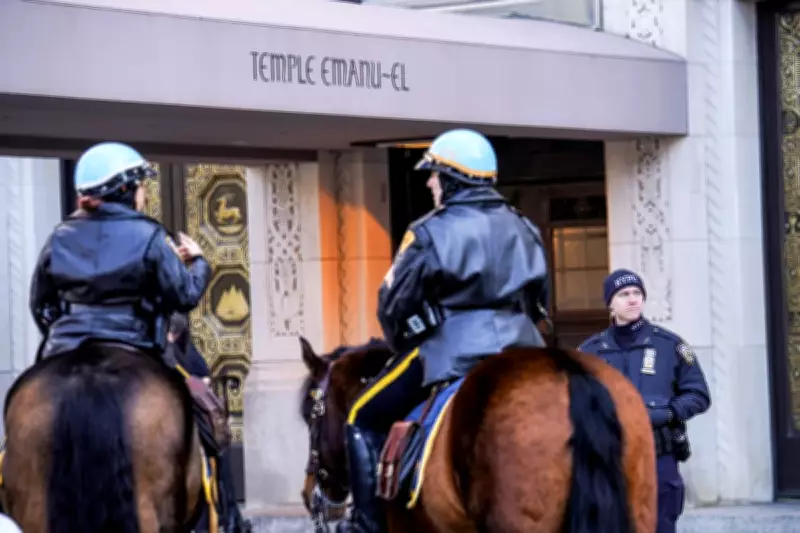
Government officials have announced comprehensive security upgrades including increased law enforcement patrols, enhanced counterterrorism operations, and intensified monitoring of potential threats. Major cities including New York, Los Angeles, and Miami have deployed additional security resources around sensitive locations such as places of worship, cultural centers, and educational institutions.
"If there were ever a time when Iran would want to put into place all the different capabilities it's built up over these years as off-the-shelf operational planning ... now would be it," stated Matthew Levitt, director of the counter-terrorism program at the Washington Institute for Near East Policy.

Federal Agencies on High Alert
Following the US military action against Iran on February 28, FBI Director Kash Patel issued directives for counterterrorism and intelligence teams to maintain heightened alert status. The Department of Homeland Security has also confirmed ongoing coordination with federal intelligence and law enforcement partners to monitor and prevent potential threats to national security.
Rebecca Weiner, deputy commissioner of intelligence and counter-terrorism for the NYPD, revealed that New York City has been operating in a "heightened threat environment" since June, when the United States supported Israel's attack on Iranian nuclear facilities. She described recent developments as "definitely an escalation" requiring enhanced deployments and specialized resources.
Multiple Threat Vectors Identified
Security experts have expressed particular concern about several potential attack methods Iran might employ:
- Direct operatives: Iran could utilize existing operatives within the United States
- Inspired attacks: The potential for Iran to inspire individuals to carry out independent terrorist acts
- Cyber warfare: Possible cyber attacks against critical infrastructure including banking systems and energy markets
- Proxy actors: Utilization of third-party organizations or "guns for hire" to conduct operations
Jake Braun, executive director of the Cyber Policy Initiative at the University of Chicago, warned that cyber attacks could target banking infrastructure, spread election disinformation, or compromise water and oil systems. "We could easily see that again, and that of course prevented millions of people from online banking, and we're only more reliant on that now than we were 15 years ago," Braun noted, referencing previous Iranian cyber operations against US financial institutions.
Challenges in Current Security Landscape
Experts have identified several factors complicating the security response:
- Recent organizational changes at federal agencies including the FBI and DHS
- Potential loss of institutional knowledge and capabilities
- The difficulty of defending against "soft target" attacks and cyber threats to civilian infrastructure
- The inherent challenge where counter-terrorism efforts must succeed every time while attackers need only succeed once
Matthew Levitt expressed concern about potential capability gaps, noting that "there has been a bit of a brain drain from some of the federal law enforcement agencies" and that "there is the potential for having lost some constitutional memory and capabilities."

Public Response and Preparedness
Despite the heightened security environment, experts emphasize that the public should maintain perspective while remaining vigilant. Richard Frankel, a retired FBI agent, advised that "we don't have to change everything we do" but stressed the importance of situational awareness and reporting suspicious activities through established channels.
Law enforcement continues to investigate potential connections between recent violent incidents and broader geopolitical tensions, including examining whether the conflict with Iran motivated a recent shooting incident in Austin, Texas.
The security enhancements represent a proactive approach to addressing potential threats while maintaining normal civic functions, with officials balancing increased vigilance against the need to avoid unnecessary public alarm.