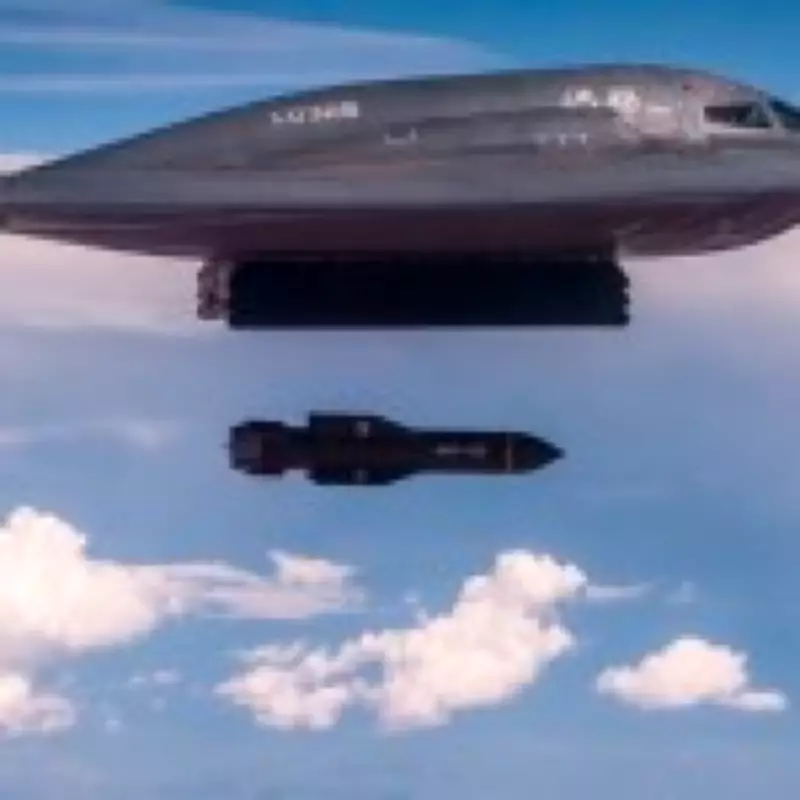
The United States Central Command has confirmed that American forces have deployed 5,000-pound penetrator bombs against missile sites positioned along Iran's coastline. These munitions, officially designated as GBU-72 Advanced 5k Penetrator bombs, were initially introduced in 2021 and have now been employed in a strategic operation targeting Iran's defensive infrastructure.
Targeting Hardened Iranian Installations
The primary objective of using these formidable weapons is to address what military officials describe as 'hardened, deeply buried target challenges.' Specifically, the strikes aim to neutralize missile silos located near the strategically vital Strait of Hormuz, a critical chokepoint for global oil shipments.
Advanced Design and Lethality
According to the US Air Force, the GBU-72's design and projected effectiveness were developed through sophisticated modeling and simulation techniques prior to manufacturing. James Culliton, the GBU-72 program manager, emphasized that this process is repeatable for future direct attack weapons and that lethality is expected to be significantly higher compared to legacy systems like the GBU-28.

These penetrator bombs, often referred to as 'bunker busters,' feature a robust steel casing that enables them to burrow through soil and reinforced concrete structures. The warhead, constructed from hardened ferro-cobalt alloy to withstand immense impact forces, weighs approximately 5,291 pounds and can penetrate nearly 200 feet of concrete before detonating at a predetermined depth.
Previous Use of Massive Penetrator Bombs
During the summer 2025 conflict, the United States utilized an even larger variant—the GBU-57 30,000-pound precision-guided bomb—to target Iran's underground nuclear facilities. Iran's state-run IRNA news agency reported that nuclear sites at Fordow, Isfahan, and Natanz were attacked in those operations.
Delivery Systems and Capabilities
The B-2 Spirit stealth bomber, exclusively operated by the US military, is the only aircraft capable of carrying and delivering these penetrator bombs. In the recent strikes, B-2 bombers released the GBU-72 munitions, which were guided to their targets via GPS systems. These bombs achieve supersonic speeds prior to impact, enhancing their penetration capabilities.
The GBU-72 represents a significant advancement in aerial bombardment technology, with its limited combat use underscoring its role as a specialized tool for high-value, fortified targets. The deployment against Iranian missile sites highlights ongoing tensions and the US military's focus on countering underground threats in the region.